
episode #60
The Restaurant Growth Equation: Product, Operations, and Culture with Joseph ChartouniIn this episode, Joseph Chartouni, CEO of Al Sayer Franchising (Caribou Coffee, Five Guys), shares what it takes to scale restaurant brands. He unpacks the link between marketing and operations and why execution is what makes the brand real. A practical roadmap for restaurant leaders to turn strategy into results.
ABOUT THE HOST
Ashish is a serial entrepreneur and serves as the CEO & Co- Founder of Restroworks. He is one of the entrepreneurs who has mastered the art of bootstrapping startups to scale. Ashish is a prolific angel investor and mentors budding entrepreneurs and startups in Silicon Valley and India.
ABOUT THE GUEST
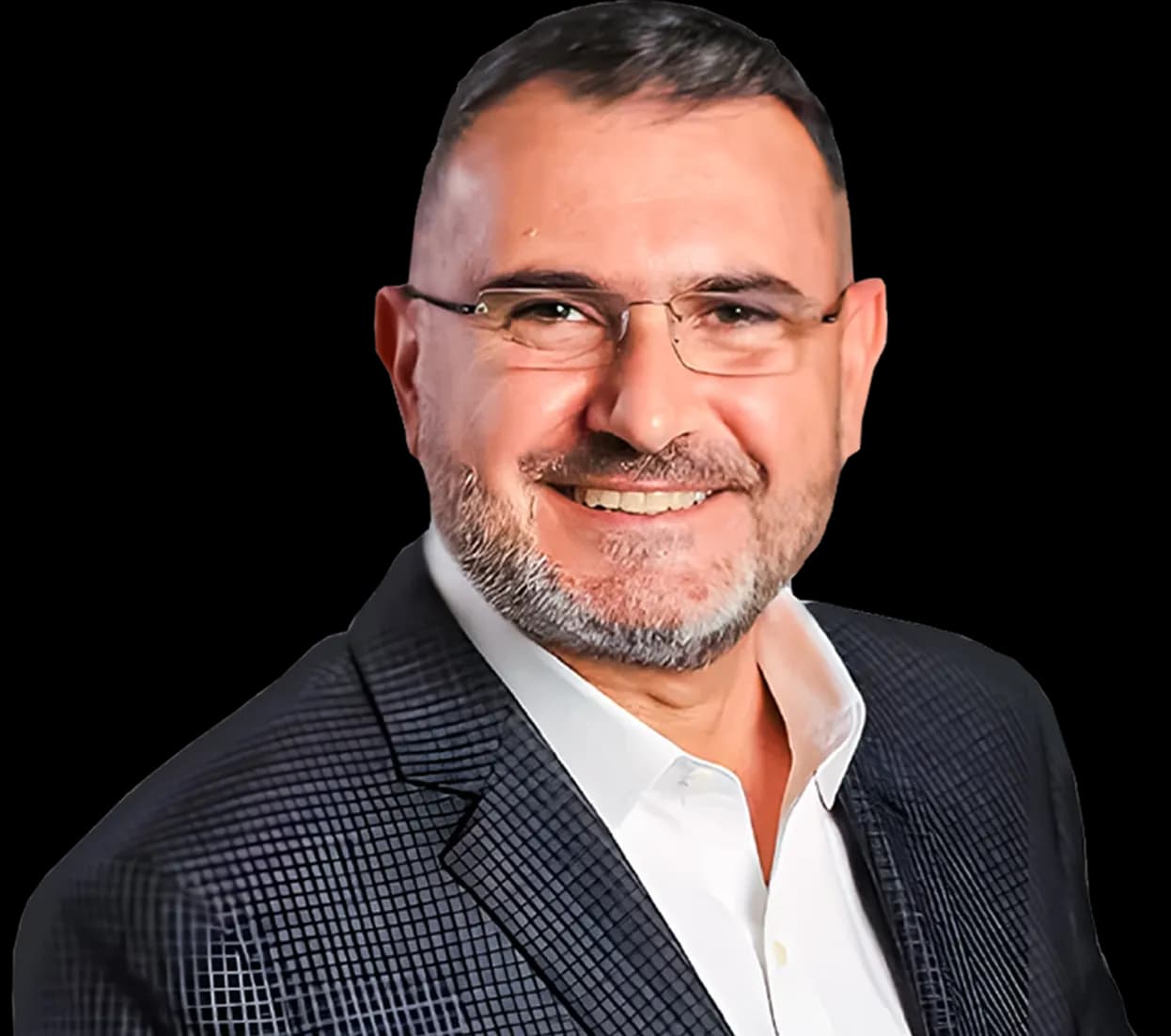
Joseph Chartouni is a seasoned executive with 25 years of experience across multinational and regional conglomerates. Over the last eight years, he has specialized in the food and beverage sector, driving growth and operational improvements. As CEO of Al-Sayer Franchising Company since February 2023, he leads Caribou Coffee and Five Guys in Kuwait, focusing on customer experience, digital transformation and ESG-led sustainability.
Speakers
Episode #60
In this episode, Ashish Tulsian sits down with Joseph Chartouni, CEO of Al Sayer Franchising in Kuwait (Caribou Coffee and Five Guys), to unpack what actually drives restaurant brands at scale. Joseph shares how resilience shaped him early, growing up between Lebanon and Kuwait during the civil war, and how those experiences influenced his leadership style.
The conversation challenges the common view of marketing as “messaging.” For Joseph, marketing starts with product, innovation, and understanding what customers are becoming, but it’s only real when it’s fulfilled through operations, store experience, SOPs, training, quality assurance, and food safety. He explains “marketing as a life benefit”.
Joseph also reflects on values learned from his father, lessons from bringing restaurant concepts to life, the shift from marketing to operations at Americana, and why leadership, focus, and partnerships drove key results. He closes with a practical reminder: strong culture is built in small details, and strategy only works when backed by P&L discipline and relentless execution.
Find us online:
Ashish Tulsian- LinkedIn
Joseph Chartouni- LinkedIn
Ashish Tulsian:
Hi Joseph, welcome to restrocast.
Joseph Chartouni:
Thank you so much. Pleasure to be here. Thanks for inviting me.
Ashish Tulsian:
This is my second time officially in Kuwait. And I think the more and more I’m learning about the market, looking at the market, coming here, I’m kind of, I feel like that I’m loving it. First time I came, honestly, I was like, okay, you know, from flashy Dubai to, you know, chilled out Kuwait. It looked very different. How’s the market been for you?
Joseph Chartouni:
Kuwait has been amazing. Obviously, there’s so much that Kuwait offers me beyond business, realizing that, you know, my sisters, brothers, all were born here. My dad was here in 56 when Kuwait was just simply emerging, still spent about 36 years before he left. And obviously, at the age of two months, I was here and I stayed here until the age of four, then almost every summer back and forth until the age of 12 when I moved because of the civil war in Lebanon to Kuwait. And so all of it is nostalgia for me.
Ashish Tulsian:
You were born in Lebanon?
Joseph Chartouni:
I was born in Lebanon. Those sisters and brothers were born in Kuwait. I was the only one actually born in Lebanon. But at the age of two months, I came with the family here. And then obviously, consecutively, I stayed in Kuwait between the age of 12 until the age of 15 in a French school. So I’m French educated. I learned English at the age of 15 and a half. So having obviously born and stayed in Lebanon during the civil war, there were times where, you know, to be able not to skip school and not to lose any year of my schooling, there were times where I had to switch between schools once or twice a year. So it’s a story of resilience from the beginning and continues to be until today.
Ashish Tulsian:
Yeah, that’s true, I think. I think people in Lebanon continue to… I think the environment is just…
Joseph Chartouni:
Challenging.
Ashish Tulsian:
Yeah, challenging. And I mean, I think also makes them enterprising and resilient, you know, at the same time.
Joseph Chartouni:
Absolutely.
Ashish Tulsian:
And I feel that, you know, today, you know, tell me, maybe just talk about what you’re doing today.
Joseph Chartouni:
So I’ve been since January of 2023, I’ve really had the privilege and the opportunity to work with an amazing people and literally family in every sense of the world, particularly when I found early on that my values and their values really are alike. We’ve been managing the business of Caribu, which is coming November, we’re celebrating 20 years in Kuwait. Since 2017, we’ve been also operating Five Guys. So there’s a big celebration coming up in November. And it’s been really an amazing ride so far since 2003, managing the business and seeing the business really going through. It’s mainly ups more than downs. It’s a challenging year during the 2024. But we weathered it and we’re back on the amazing, superbly growth path, reaching 100 stores.
Ashish Tulsian:
Congratulations.
Joseph Chartouni:
And thank you so much. And we’re looking for the next 100 now. Now it can be Caribu, another 100 can be more brands. So hopefully our portfolio continue to grow.
Ashish Tulsian:
Fantastic. So, you know, going back to your story on, you know, on your early years, tell me about, you know, of course, you switch schools and switch locations.
Joseph Chartouni:
Yeah.
Ashish Tulsian:
But what was the, what were these, you know, cementing years like? What did you graduate in? And tell me about your early education.
Joseph Chartouni:
So obviously, you know, I went to French schools all my life. Like I said, at the age of 15 and a half, since dad had an engineering company here, you know, Kuwait was building cities way before Dubai did, right? And he was one of the top three companies actually building cities. And the plan that I would go to the States, learn to be an engineer, come back and my brother and I come back and take over his company. 87, heart attack, some other issues that he was facing as well, you know, force him to close the company and go back to Kuwait. What I said in the US for a total of 12 years and a half.
Um, like I said, I was sent to be an engineer early on in my life, realized that I wasn’t made up for engineering. There was something inside of me about to be discovered, which is marketing. So I’m a marketeer by heart. And I stumbled into marketing despite that I was doing well in accounting courses, finance and general management undergrad. I found myself fully in marketing in general.
Ashish Tulsian:
But did you realize that in the grad school?
Joseph Chartouni:
I realized that undergrad, no, to the undergrad, to last year. So even marketing at the time was not as advanced as it is today, right? People were still unfolding what marketing is all about. There’s a lot of aspects of marketing courses being taught today that weren’t even in the curriculum back then. So discovered marketing and I actually came out. This is an interesting story. So when I finished general management and I did minor in finance and I went to apply for a job, forgive me, I repeat again. So when I finished general management, I applied for a job. And then the CEO of the company told me, well, general management is very general. You need to tell me how we’re going to make money. Then I went and I took finance, right? Then he said, OK, we’re very good.
You know how to manage and you know how to manage money. But do you know how to create products? What are you going to sell? So this is when I then started to think about marketing. And he said, marketing could be an opportunity for you if you just go find out what it is. So the and this is exactly what I do today. So all the studies that I’ve done early on in my career be a general management operations, finance, KPIs and counting the money, making sure you have a healthy P&L, sustainable business, cash flow, management, et cetera. But the horse that you put in front of the carriage has always been the product, innovation, R&D, the customer, changing of trends, leveraging technology to improve efficiencies because that pours into the service, which is marketing as well. The customer experience as you enter the store, what kind of brand are you entering?
What kind of experience that sets you apart from everybody else? Starting with the look and feel, product display, but also the staff, the people which predominantly in that line of business, I believe are the most important element of the business. Early on during training, when I walk the office every single morning and I go to what I call mini training center or mini university in the office and I meet 8 a.m., 8.30 you’ll find new joiners who are undergoing training and I always ask them different batches come in and out and I always ask them the same questions. What business are you in? Obviously, given their experience, everybody tells you to make a great cup of coffee and I tell them there’s a lot more than making a great cup of coffee. Coffee is an enabler. But there’s so much more to the person who’s drinking the coffee. It’s about his life. What time of the day? Why is he there? Is he just for the coffee or is he there for the per cup? So that’s a functional benefit.
Is he there for a half day break between 11 to 12? Is he there for the afternoon because he’s hungry or is he for the late afternoons for the social reason? Or is he there simply because you want to get away from everybody and just to be alone and think and reflect? You got to read the customers and the best way to welcome someone is not just hello, sir, but to say hello with a name that will immediately set you apart from everybody else. So there’s so much more to coffee than just the coffee itself. It’s an enabler. But the real benefit, what a customer really take out from the total experience walking in and walking out at what value have you added? And I call it the life benefit. What kind of life benefit you had to be on the taste? And it’s a thrilling experience.
Ashish Tulsian:
I’m just observing that you’re clubbing everything that you’re talking about from product to R&D to customer experience, customer service. You’re clubbing everything under marketing? Did you just say that?
Joseph Chartouni:
I would say I club it in the customer journey more than just marketing. Some people think marketing is limited only to advertising and communication. It’s a very important component, but it’s not the only component. Marketing really starts from studying the product. What does it have to offer? Then you study the customer. What is the need and how do you marry both? And then you communicate it under what we call the big idea that connects the product to the customer in a very unique way and honorable way. Fulfillment is critical.
Operation sets in to fulfill the brand of promise day in and day out. Hence the importance of SOPs, standard operating procedures come into play. Training come into play. Quality assurance and food safety is superbly important that people don’t talk much about. One mistake is too many. Without naming brands, but obviously Kuwait, like any other market, has faced those situations with other brands. Where there were some poisoning or whatnot and stores being closed, that’s detrimental to the brand reputation and the brand trust.
Ashish Tulsian:
I remember there was this case, an infamous case in Saudi, a burger chain. They found salmonella infected patty batch and a lot of people got hospitalized that day in Saudi, in Riyadh. And I remember I was by chance in Riyadh that week and I met, you know, Sherif of Olayan. Burger King.
Joseph Chartouni:
Yeah, Olayan, of course.
Ashish Tulsian:
And I asked Sheriff, so how was business. I did not know about the news.
Joseph Chartouni:
Yeah, Sheriff, good man.
Ashish Tulsian:
So I said, so what’s up? He said, oh, you know what happened. I said, oh, I don’t know.
He said, well, you know, this brand, their entire batch of patty was infected and a lot of people got hospitalized. I said, oh, but how does it impact you? He said, well, you know, for the last one week, people are not eating burgers.
Joseph Chartouni:
Yeah, of course.
Ashish Tulsian:
And I was like, oh, wow. Yeah, so I’m sure, I’m sure, you know, there’s this entire industry gets impacted when, you know, somebody screws up.
Joseph Chartouni:
You remind me of a situation in Egypt. So obviously before Al-Sayer Group and Al-Sayer Franchising, I worked for Americana. I was in charge of a total of 11 brands and 10 markets. There’s another resilient story we can talk about. There’s somebody who’s completely from marketing and all of a sudden overnight, he becomes, jumps into operations. But what happened that day is I went on a market visit and without naming the particular brand, obviously preserving the reputation of those brands, is with my own restaurants, I caught a salmonella.
And then obviously this has taught me a big lesson. Had what you call a taste of your own medicine, of what it means to really hone in on the central kitchen and the importance of the food transportation, because you can necessarily, you know, with food you don’t know where the virus came from. It could be central kitchen, could be in transportation, could be in the retail once you place it there, could be in handling, who knows, customer touching it.
So every single, there’s so much details in our business. So those who love attention to details, they would love our business. And particularly who has the stamina and realize the importance of taking something from outside and putting it inside, outside. You know it outside from, you know, the farm, outside the kitchens, the food, and put it inside people’s stomachs. So you have a huge responsibility to make sure we deliver the best every day.
Ashish Tulsian:
So when did you, you know, you said you, you know, your CEO asked you to look at marketing. What were you doing there? Like what exactly was the job? Where were you working?
Joseph Chartouni:
So, you know, just an elevator speech on my resume, his life resume. So I started as a marketeer and coming back to the Middle East after 12 years in the US, 12 and a half years, landed on a really quite interesting opportunity working for one of the global advertising agency called LEO Burnett. And there I learned the fundamentals of marketing and communication. Again, I was fortunate to handle Procter and Gamble accounts. So I was more actually spending more time as a consultant.
Ashish Tulsian:
LEO Burnett in here or?
Joseph Chartouni:
LEO Burnett Middle East.
Ashish Tulsian:
Middle East, but where were you placed?
Joseph Chartouni:
I was placed in Jeddah at the beginning, then came to Dubai after that. So I started my career on P&G where I learned the science of marketing and communication, then moved on working on other retail brands. So by the way, back then I was called the Tide Man because for so many years I was managing a lot of tide and a lot of women product, which led me into the chocolate.
From there, we worked on the Mars business, Galaxy, which is majority of the customers of Galaxy are actually women. And then from there I worked on Nestle product, moving from LEO Burnett to another company called McCann. And I did Nestle, which was Nescafe, a completely different type of coffee, but it’s still coffee.
And then surprisingly, I was also commissioned a finance bank product, which is the MasterCard. So I also worked on MasterCard and that kind of get me closer to what the banking business model looks like. And after so many years in advertising, I decided to jump to the other side of the table. We call it the client side. And I worked as a regional marketing director for HSBC Middle East. So I spent a few years there where I learned the fundamentals of how you make the money. We know how to create products and whatnot, but how to make and to see really how the banking industry works is fascinating, fascinating experience. This is an interesting story about customer service. I remember quite well at HSBC that we had only fewer branches in Dubai. You’re not allowed by law to open more. I believe at the time we had eight or nine branches. We can’t even open more.
So back then the branch was an extremely important touchpoint with the customer. And we wanted to improve the investment products and to improve the customer experience as they entered the branch, because that’s where most of the sales were happening way before the app and the digital world really came to life and started to kind of use this as an efficient and effective channel. So what we did is we went out and we wanted to look at the best in class when it comes to customer service. And the best in class, initially we thought it’s going to come from traditional consultants that we know of companies. But the best in class came from hotel industry.
Ashish Tulsian:
You mean people?
Joseph Chartouni:
People, people industry. So we went to the Ritz-Carlton of this world and we got consultants from the Ritz-Carlton who came in and really taught us hospitality. And as you know, Ritz-Carlton ladies and gentlemen serving ladies and gentlemen. So that means a lot, right? Just a headline, but it means a lot. And the way you really project the employee when it comes to interfacing the customer, you can see that level of welcome, but same time confidence level of care, you know, from the beginning till the end, attention, et cetera. So there’s a lot of learning there. And obviously the-
Ashish Tulsian:
But for a bank to embrace that is big.
Joseph Chartouni:
It’s big.
Ashish Tulsian:
Yeah.
Joseph Chartouni:
It’s big.
Ashish Tulsian:
And money is generally, business of money is dry and, you know, I mean, totally current and dry.
Joseph Chartouni:
Disruptive. And in the way, even the way you build, obviously the space and the way you furnish the space has changed from the old bank, traditional feels more like a government or an old style hospital to more, you know, moving from hostile to hospitable, as we say. So it’s really been a- So I learned a lot there. And obviously this is another jump. This is talk about resilience and risk taking and the light and exciting opportunities I’ve had along the way. Back in 2007, the market was red hot in Dubai. And I said, you know, there’s that something inside of me that I picked up from dad, which is the entrepreneurship. OK. And I said, you know what? It’s now or never.
Ashish Tulsian:
From HSBC?
Joseph Chartouni:
From HSBC. Let me jump into setting up my business and see if I can create a consulting firm. Obviously, there was many insights in the industry that allowed me or led me to create an agency. And I called it Integrity. And there was a reason why Integrity Marketing was born because there’s so little of it in the industry at the time. A lot of hanky-panky. And given that I was representing a number of clients in the marketplace when I was still with HSBC on creating an audit committee represented by the McDonald’s of this world, the P&G, the Unilever of this world. And I was sitting representing HSBC. So I saw, you know, how, you know, the client side was really struggling and getting what we call a clean cut when it comes to dealing. So there was a committee and I was just contributing, you know, given my background. Coming from the, you know, the industry who understands also the challenges that advertising agencies go through. It’s not always a profitable business.
If one is not careful, as you know, the biggest asset that we have, and we don’t have warehouses, we don’t, but we have people and people are very expensive proposition. So one can understand why usually they charge what they charge in order to cover all the, what we call the brain power that exists in the agency. So we wanted to make sure there’s a field dealing and to make sure there’s transparency. We wanted to make sure that there is a, you know, there’s a structure to how things are audited, counted and whatnot. So to that end, I was influenced by that, created integrity. And so that was back in 2007, real estate market was red hot.
And somehow the, as you know, demand kind of led me to doing real estate. It was the first time I do real estate marketing, but you know, when you’re an entrepreneur, you always want to find your way. So I’ve given myself eight, nine months. Month number six, I got my big break. The smallest company in Dubai has one huge, huge real estate projects. At the time it was Mira Development, which is his highest owned company, as from what I recall, but it was completely different than what it is now. It was a massive, massive, unheard of, unthought of and seen, I would say, type of projects that Dubai was about to launch just before the crash in 2008. So sleepless nights, you know, working with Chicago architects coming from overseas.
Ashish Tulsian:
I think 2007 was a time when Dubai was kind of making a lot of noise. Burj Al Arab had come to life.
Joseph Chartouni:
Correct.
Ashish Tulsian:
Burj Khalifa was under construction announced. Yeah, so this was a buzzy time.
Joseph Chartouni:
Yeah. But I think the point here is the commitment is when you really think like an entrepreneur, act like an entrepreneur. And this is what I always vouch is operate like an owner. But obviously when you say operate like an owner, it’s also, you’ve got to make sure that you’ve got the systems to support it in companies. Then the company, ROI, and for me, you know, over time, will, you know, you’ll become more and more competitive. So when it comes to the culture and something we can talk about, it’s something we’re working on as we speak.
Trying to reset and relaunch the company has been really thrilling. I would very much say learning. So we’re talking about business, marketing, operation. But when we talk about the business of a human being, that’s a completely, you know, new learning path that’s been.
Ashish Tulsian:
I’ll take you back to the Miras. You got your first big break with Miras.
Joseph Chartouni:
Big break with Miras.
Ashish Tulsian:
As a client.
Joseph Chartouni:
Yeah, so I competed against an Italian company, one of the very conglomerate names. And I won it. I was the smallest company in Dubai, winning up against one of the largest biggest companies. And my company is called Integrity. So it’s all clean business. The question is why? And simply because we were hungry. We were knowledgeable, skilled, but we were also very close to solving the problem. While everybody’s sitting in Italy far away, giving their thoughts, we are very close. My office was in Fairmont and there was a building called One Dubai just a few minutes down my office where I can walk and sit with the architects. Not even with the marketeer because I needed to understand the product, the city. We were not actually positioning at the start. We’re not positioning a building or a tower. We were positioning a city. So city branding became really, you know, a science that we had to learn in no time in order to come in and be able to strategically plan to how to launch a city. And we did. We got our big break. And like everybody, starting a business, six months, you’re seeing the money started to roll.
There’s no contract that I would send at the time that comes back to negotiate the money. They were negotiating the time. How fast you can do it. It’s not how much you’re going to charge us, but how fast. Sleepless nights and we were delivering. We were delivering. Obviously, there’s a lot of creative ways of how we approach the business as entrepreneurs. We were not working in sequential way. We were working like warriors. And I know different armies focusing on different elements. Then we come back.
Ashish Tulsian:
Were you the sole founder?
Joseph Chartouni:
Come again? I was a sole founder. So this puts a lot of pressure, but I was a very generous sole founder. A lot of people did extremely well working with me. So I treated them, though they’re not on paper as partners, but from reward and remuneration, I treated them like partners and therefore they delivered. So we did extremely well until the rest of the world got hit in 2008.
And obviously, because we had done so well, I was in short, I was able to survive the next 10 years. As an entrepreneur, you needed to rethink your portfolio of services. Then we, I’m so extremely privileged to have been accepted to work with prominent government entities in Dubai, starting from the Chamber of Commerce. We worked on the loyalty program, Prime Minister’s Office, extremely privileged. I always usually joke. I said, I’m Lebanese. It will take me a million years before I can step into the doors of my Prime Minister’s Office in Lebanon, what I was able in Dubai to do it just across the road in fewer months.
Ashish Tulsian:
I think that’s true.
Joseph Chartouni:
That’s the magic of Dubai, I have to say. And there was obviously the other government institutions, what we call the Competitiveness Council of Dubai. How can you contribute to positioning Dubai as a great country to invest in and to attract foreign direct investments?
Ashish Tulsian:
It’s called Competitiveness Council?
Joseph Chartouni:
Competitiveness Council at the time, indeed.
Ashish Tulsian:
Wow.
Joseph Chartouni:
United Arab Emirates Competitiveness Council. It’s a UAE, not a Dubai entity. It’s a United Arab Emirates Competitiveness Council. I met some amazing people, amazing people, and they remain my friends until today. So I’m privileged in that way. Well, my wife was born in Dubai as well. So I also was introduced through my wife. And my wife’s dad also is one of the very early engineers who set up Emirates Airlines as well. So he had spent 17 years before that with Middle East Airlines. So we have equity in Dubai. So while I was born, or almost was born, my family was born in Kuwait, I had left Kuwait 13 years. And when I came back, came back to Dubai, and I spent 20 years in Dubai. Sorry, forgive me. The first step was Saudi Arabia, Procter & Gamble. Then with a labor net group, I came to Dubai. And I had spent 20 years in Dubai, working for companies and obviously setting up my own business.
Ashish Tulsian:
How long did you run Integrity?
Joseph Chartouni:
10 years.
Ashish Tulsian:
10 years.
Joseph Chartouni:
It was 10 years, right?
Ashish Tulsian:
From 2007 to 17.
Joseph Chartouni:
Ashish Tulsian:
Oh, wow.
Joseph Chartouni:
And this is when I switched to Americana. I’ll tell you why.
Ashish Tulsian:
Yeah, but no, but tell me those 10 years, because you know, Joseph, I can tell you that running your own business changes you. It changes you as a person. It challenges every part of your being in more ways than one. People from outside will then look at entrepreneurs, they only look at money as the final output or as the initial input, you know. But in reality, like it’s funny at times, startup entrepreneurs will come to me and they’ll ask me, Hey, I’m starting up. What advice do you have for me? I’ve raised a couple million dollars already and in tech, this is quite, yeah, I mean, it’s quite common for a lot of people in tech to just come and bag like a few million dollars. It’s not easy, but it’s common. So I generally tell them that, well, I don’t have any advice for you. You will figure your path. I mean, everybody does, there’s no big deal.
But because you mentioned money, I should tell you that the biggest ingredient or thing that you need is stress management. You need nerves of steel and you need, you just need to be a great stress manager. If you can be a good stress manager, first for yourself. Second, you know, for people who you work with and third, probably, you know, for your customers, if you can just take everybody’s stress at any given point in time and just manage it nicely, you don’t need coding. You don’t need to know how to build a product. You don’t need to know anything. Just figure out how to manage everybody’s stress and you’ll be fine. And some of them will look at me quizzically and I’m like, don’t worry.
I’m not expecting you to understand what I’m saying right now. Just keep this with you. It will percolate down. It will percolate drop by drop. And you will, you will realize what I’m saying, you know, on the way, because the biggest killer is that and it also changes you. So those 10 years, one, how was that journey in terms of that you, of course, you’re working with great clientele, but why 10 years and why did it end? And where were you in it? Like, what was the size of, if you can just take me through that journey?
Joseph Chartouni:
Amazing question. But before I start telling you about the question, I’ll just want to, you know, reiterate that everything you said was kind of playing back what I call my life movie during the time, uh, trying to manage the people around me. And like I mentioned, there’s a lot of major, major projects, high profile that required, you know, kind of managing the world around you. And, but something very important, I would say, you know, manifest and make believe is also very important. You have to, uh, create your own motivational, um, and despite all, all, all what could happen or has happened during the 10 years, uh, there were times I would always say that I would go to sleep thinking this is the end of it. Then I wake up in the morning and a new opportunity comes in that opens a new path, a new door, a new hope.
And then you, um, you know, and it’s contagious the way I would show up at the office with the fewer employees, you know, in consultancy, you don’t need a lot of people. This, this is another story I can also talk about is about managing people and managing the world around me. The business was so fast in 2007, since I started and the number of contracts was getting, I’m not going to say the number, but it was in the millions, millions, um, of dirhams. Um, the, it was so fast that I couldn’t hire people.
Ashish Tulsian:
Fast enough.
Joseph Chartouni:
Fast enough.
Ashish Tulsian:
Wow.
Joseph Chartouni:
And, and this is what I believe that if you have strong values and people believe you and believe your value, they, they, they’ll take the risk with you and they’ll give you their hearts. Back then there were businesses working with me without a contract. And when the crash happened in 2008, I made sure that I would go in and negotiate every single contract to collect as much money and give them back.
Obviously we had to negotiate a discount, trickle down discounts from the customer down, but integrity and transparency and making sure you keep them updated. That’s that for me, that was just as important as winning the project is how you exited, uh, clean and, and kept your reputation to then come back and pitch for other government projects and be able to continue for the next 10 years. Um, the, what’s really critical also is, is this is where your personal ambition also requires a skill, a skill of understanding, uh, what I call a lot of time is transferable skills. And I had a lot of transport skills that got me to into the food business, right? Because I didn’t start in the food business though, though, though I can argue that my first job ever, when I was still in high school, serving food over the counter in a bingo place, and I came back to do food toward the end of my life career.
Ashish Tulsian:
But that’s the story of anybody who grew up in the States.
Joseph Chartouni:
Yeah, absolutely.
Ashish Tulsian:
Your first job always is like a busboy.
Joseph Chartouni:
It was, it was nothing less than that, of course. And, uh, it’s a thrilling taking that first dollar and, and I didn’t want to spend it because I didn’t want it to just vanish. I went and I bought a bag with it just to keep the bag as a memory, like a lot of people would do. You could either frame it or buy something with that. So coming back to, uh, to, to the 10 years experience, uh, there were definitely ups and downs. There were times where we win contracts. Um, then there were times where unfortunately you would win a contract and you would lose a contract despite that you’ve been told you want it and you don’t understand why, right? Yeah. It could have been an integrity game in it. No issues, questions, it doesn’t matter. That’s, that’s life. That’s how life was.
So, uh, but so what you needed is, is, is a transferable skills, which means you needed to understand, and this is something of, as a marketeer will always stay with me until the day I die. Even when I think operation today, always there is a presence of the marketing in me and everybody knows this in the office, right? Um, so when I wanted to manage a portfolio, so when I needed to recreate the reset the business after the downturn of the 2008 crash, 2008 crash, you needed to rethink of what would the portfolio look like?
What kind of industries? The low hanging fruit would have been retail because PNG and whatnot, but there weren’t too many retails out there. Uh, working with a government entity, at least got the proximity was you were closer to other government offices. Uh, there were skills you know, you know about, but you don’t know how to fulfill what kind of talent you can bring in like loyalty program and chamber of commerce. That’s not just any loyalty program. That’s about cities competing, right?
And membership competing between one city and another and or one city with other countries. So, uh, and that’s nothing I have ever done in my career, but when you’re an entrepreneur, there’s always that level of invention and, and, and daring to try because you have no other choice, right? Uh, and, and how you bring people together as a tribe in order to, to fulfill an objective or, or, or, or a project after you commit to, um, and, uh, is really thrilling, fascinating. We did that in the belief that we can, uh, and I believe that when you manifest success, uh, it comes to you. Uh, especially when there’s a reason to believe is there, which is the education. You know how to think what does school teach you?
Ashish Tulsian:
Yeah.
Joseph Chartouni:
School teach you how to think. I don’t think it’s any less than when you leave the school, you’re still at a zero degree experience, but it teaches you how to think. Same thing when you do the business, you know, you, you, you bring those transferable experiences that they taught you how to think, find the problem, overcome it, go out. So from there, we started with it from real estate, went to government from government, obviously, you know, one day I’ll be selling a government. The next day I’ll be selling a tuna fish can, right? That’s retail from a tuna fish can I’ll be, you know, selling, then lend me to, this is the story, right?
Right. So it meant me to come from conceptualizing the city to conceptualizing, which is an experience that we had. Then we realized we got an opportunity in Saudi to conceptualize, um, a mall from a mall. We did the hotel from a hotel. Then we landed on a restaurant, right? And, uh, and then we discovered, wait a minute, we’ve got an opportunity here to create a restaurant. What is a restaurant business? Right. So we’ve, we’ve, um, and I did a very nice trick.
I said, you know, as a marketer, I need a USP. I need a unique selling position. When I develop restaurants, if I approach it like everybody else, and the output is going to be the same. So what are you going to do, Joseph? I said, well, we, we, we have in my agency, big ideas, but realizing them, which is the execution is as important as the idea. It’s exactly how the food business is. You can have an amazing idea in the food business, but if you don’t execute it perfectly well, right, the chain, full chain, then you’re always going to be limping.
Ashish Tulsian:
And you always… So what was your first introduction to restaurants? So, part of Integrity?
Joseph Chartouni:
So it was, it was part of integrity. And, uh, we got this, um, you know, this, this, this, this client who said, uh, Joseph, you know what, you’re helping me here thinking to turn around existing restaurants. I’m going to reward you to create a restaurant this time. Can you do it? Automatically I said, yes, without even knowing if I can do it right. Is that confidence, if that urge, you know, wanting to win. So what we did is I said, I’m not just going to do it, but I’m going to do it differently. And we’re going to create a brand story before we create the brand name from the story we created the name. And for the name, I brought excellent people who know how to do the name, not just Joseph, you know, dreaming at night, waking up with a name.
I wanted experts for the name, you know, because I was also learning from them. Every expert brought to the table was a school for me, every single individual. Then we said, if we were to bring people from the Middle East, they’re going to give you almost a copycat. There’s a lot of companies who would, uh, you know, architect companies who will realize, you know, the idea and the story. And we decided to do it differently. I said, I did a little bit of research and I landed through the person who created the name for me, who happened to be Croatian, to an architect company in Croatia.
And that was really thrilling because Croatians and the Middle East have something in common, 400 years of domination by the Turks. A lot of, um, cultural, interesting food. Um, they understand the culture, they understand the Middle East. They’ve been through the same..
Ashish Tulsian:
Croatians?
Joseph Chartouni:
Croatians, Big time. So for instance, olive oil is something very important for us in Lebanon. Well, guess what my, my architect came from Croatia. He brought me an olive, you know, olive oil in the jug. Uh, so when, when I,
Ashish Tulsian:
I thought Croatia was more European than Middle Eastern.
Joseph Chartouni:
Well, they, well, like I said, right, there’s a lot of influence from the Turks that unites all of us. You know, the Turks was predominantly all over the world. So what, what the story really has there is, is when I, when I briefed them, they understood the Middle East and they said, you know what, we’re going to create a concept, build on the story that this restaurant is inspired by the countries around the, um, you know, around the, the sea where the Middle East come from, you know, we call it Bahrain, which is, which is the, the, the sea in the middle, you’ve got Lebanon, you’ve got Syria, you’ve got, by the way, France on the opposite side, you’ve got Greece, you’ve got Turkey, you know, so all the countries are Italy. So it was an inspiration of, and this is the idea, this was the big idea at the time, is we’re going to look, huh?
Ashish Tulsian:
This was a story?
Joseph Chartouni:
The story, the thrill of the idea is if you look around all these countries, um, their, their perfection comes from their imperfection. When you look at nature, right, the beauty of nature, the fact that you don’t see a straight line, very rarely you see a straight line if it ever exists. So anything that really brought into this restaurant, um, uh, we, we called it ambience, ambience in French. Um, I’m sorry, forgive me. No, no, that was, that was another restaurant I created. It’s called Verdura. Verdura from verde, from green, you know, we call it Verdura. Um, it was really, you know, an inspiration of creating imperfection from perfection. And then almost there’s no, no straight plates.
All the plates were made by hand in Croatia. Um, even the food, the presentation, uh, even the, the, the people we trained, how, how we train people to talk, to just be themselves as human beings, not as, you know, people who have this standard text, you know, um, taught how to serve customers. And obviously there is the, you know, the, the way the place was built and the architects. So the whole story, so they understood the story and they were able to, uh, to create the restaurants. And obviously we launched it and, uh, and, and that gave me a credential. And it’s going to surprise you now of how I entered Americana.
Ashish Tulsian:
But what, what year was this? Verdura?
Joseph Chartouni:
2017.
Ashish Tulsian:
Oh, 2017 is when you opened Verdura?
Joseph Chartouni:
No, no. Verdura, it was around 2015, 16.
Ashish Tulsian:
Okay. Yeah. Run up to that. Okay. Awesome. And this was, Verdura was done for a particular client?
Joseph Chartouni:
Yes. Uh, an Abu Dhabi based client, uh, but who was obviously wanting to launch, you know, in, in Dubai and Abu Dhabi.
Ashish Tulsian:
And it went, how, how did it go?
Joseph Chartouni:
It went extremely well at the beginning. Uh, I had left and I had last touch. Uh, I don’t know later, honestly, I don’t know the status where it is today. I know they opened, uh, after I had left, after I entered Americana, I was a bit disconnected, obviously from, from everything, but they had opened somewhere near, uh, uh, Nakhil area.
Ashish Tulsian:
How did the transition happen?
Joseph Chartouni:
This is interesting. Uh, this is another, you know, so obviously being somebody who spent many years in marketing, when you apply for a job, what are you going to apply for after all these years? At best, the CMO, chief marketing officer. So I was, uh, I had this interview with Americana.
Ashish Tulsian:
I’m sorry, I’m going to interrupt you in between. Why did you, why were you applying for a job? Like, why were you, were you shutting down? Were you selling?
Joseph Chartouni:
Let me be quite transparent. So what happened is in doing a business in Dubai is cyclical, up and down, up and down, up and down. I literally had more receivables on paper than I actually had in cash in my pocket. So it was a cashflow situation and, uh, and I couldn’t collect, I couldn’t collect enough money at the time. There’s more receivable than my expenses. And there was a situation where, um, remember my company name is Integrity and there was a huge, huge project that I won and I needed that money and I needed that project. And I was told, congratulations. But then in the, in the, in the closing of the project, signing off the project, you know, one of the finance guys said, okay, so how can we work together? And me being me, and this is the worst part of me is, uh, I don’t even speak that language, that language.
Uh, and I lost the project and that really, really, you know, we had worked so hard at it. And after so many years of, uh, up and down and obviously having a lot of receivables on the table and when I needed that money, same thing happened. I said, you know what, I’ve had enough. I’m tired now. Uh, I was extremely demotivated and, uh, obviously there’s a family, there’s kids, there’s a, you know, college, there’s a lot of people grow and their expenses grows with them. And Dubai is not a cheap country, uh, you know, to, uh, to live in.
Uh, but I think fundamentally I was a little bit disappointed, disappointed, but, but I, what I didn’t understand is this and this is life. This is reality. It can happen just like you have the clean, the perfect, you have the unclean and the imperfect. So, um, I, I just, uh, you know, I was just tired and I just wanted to kind of, but I did something very, very, you know, very good is, um, I let go with few people and those who I really felt I owe it to them for their loyalty. I made sure that I found everybody a job before I closed the company. And that, that something caught the attention of my interviewee, the person who was interviewing me at the time, cause he knew I was closing my company.
And, uh, obviously he, he, he wanted to know what I do and I, and they needed somebody with my skill. They needed somebody who doesn’t. So Americana has, is a huge, powerful company. It’s probably the best operators you can think of, um, that I personally have ever met there. They’re managing a huge conglomerate volume of business across so many geographies
Ashish Tulsian:
And they continue to.
Joseph Chartouni:
And they continue to absolutely. And when I, when I, uh, was interviewed by a gentleman called Yusuf and he’s, I think, spent 24 years with McDonald’s president, you know, middle East, you name it. Um, and because he comes from McDonald’s, he understood marketing. He understood who I am and what I’m made of. And he was able to read through the line for somebody sitting on the opposite table, thinking he’s applying for CMO. And when I finished the interview, he told me, uh, well, Joseph, um, we don’t have a CMO. It was recently taken. I’m wasting my time here, but I have something else for you. Said, yeah. So what else? What are you thinking of?
He said, are you ready to be, uh, uh, you know, an operations manager or GM for a number of businesses? And in my mind, I know Americana has one brand, one brand little. I knew that there is a group of brands called the growth brands, which made up of nine brands, 11 brands, nine markets at the time, which expanded, you know, all the GCC, Lebanon, Jordan, including Iran, and obviously Egypt and Kuwait and Gulf. And I just looked at him. I said, is he mad? Is he out of his mind that talking to myself? Of course I said, what is he talking about? I’m not an operation guy, but what did he say? He didn’t say operations man. He said, GM, you want to manage a GM. He said, well, listen, uh, but before we get there, let’s continue to a few interviews. Let me go out and see some of the restaurants you built.
He went and visited those restaurants on his own to know that I’m not just bullshitting, right? So sorry for the word, but to make sure that I’m real. And after a few interviews, he realized that I’ve got a brain who knows how to manage portfolio of businesses, not just one business, because tendency of operators, one brand, one methodology, push the button, tuck, tuck, tuck, tuck.
Consistency is king, obviously, but to be able to manage portfolio of brands and to decide what to focus on and then be able to build success on success is, uh, is not easy. And you, you, you didn’t need to think just like a, like an operator. You had to think like an entrepreneur and you had to be a really good leader that make very quickly people believe in you realizing all of them know I don’t come from operations, but you, you, you, you say something that make them believe, you know, this is the guy who’s going to, you know, show us where Northstar is.
Ashish Tulsian:
I think, I think, I think while you, I mean, in your head, you might be thinking that you’re a marketer, but running your own business for 10 years makes you almost a jack of all trades and a natural operator. Like, you know, a lot of people who call themselves operators who are trained in operations, you know, they call themselves operator correctly, but I think ownership teaches you something, you know, very, very different. I think somebody, somebody just saw that.
Joseph Chartouni:
Yeah. I mean, he’s, he’s a, he’s a wise man. He’s a wise man. And, uh, he took a chance on me and I think probably took chance on me also not knowing what’s, what’s, you know, not just his eyes, but everybody’s eyes. Who’s this guy? You know, what has he done? Why is he here? And I say, 2017, we stopped the decline. So I came in, in July, end of 2017, we stopped the decline. 2018 was a turnaround. And I’ll tell you how just in a minute. And then 2019 was all time high sales reaching up to the, uh, up to the pandemic, up to the, you know, when COVID hit.
Um, so, uh, but obviously it’s required to understand, you know, if you want to call your chips, how you call your chips. And at the time I had a brand called Krispy Kreme. Krispy Kreme represented 50% of the market, but more so you also had Saudi Arabia, which represented also another 50% of total portfolio. If you can’t break it there, if you cannot make it there, you’re not going to make it anywhere. So what you needed to do is focus. That’s something I learned from Americana’s operators is if you want to get something out of something, you got to focus.
Ashish Tulsian:
So, you know, open that, open that up for me like a little, what do you mean?
Joseph Chartouni:
So you have a portfolio and you have a pot of money. Where do you spend it? You spend it, you got to look at the portfolio, realize obviously what’s the biggest contributor, top line, bottom line. And then whatever investment you want to make, you have to make sure that you place all your effort in turning around what I call the vertebra of a portfolio. So whenever I build a portfolio, I have to see the vertebra that own it like a tree, then I need to build success on it. So we focused on that.
I think what also helped is Krispy Kreme was not just about the doughnut, it’s also about the story. So there again, you know, the marketing acumen and the communication and how I decided to the budget, it went on simultaneously. Upgrading the operation and not being an operator needed to bring the best of the operators, veterans, 30 years plus. I take pride, I always tease them, you know, I came in, you taught me the business and I’m now challenging you on what you taught me. So I was always curious. So when you’re an entrepreneur, also you have to be curious, you know.
So I brought the operators, they were amazing operators. And then we cleaned up, the business needed some cleanup. Then we moved to stage two, which is optimization. And in parallel, while building the operation, improving the quality of the stores, the location of the stores, the service of the stores, the supply chain of the stores, a lot of work. The channels, some channels were absent, even imagine back then they were accepting only cash or even credit card. So it’s a lot of low-hanging fruits where nobody paid attention to. That’s common sense, doesn’t require, that’s common sense.
Ashish Tulsian:
But wasn’t, I’m just wondering, like a brand like Americana or rather a company like Americana, which runs such a large portfolio and has some of the fantastic operators, seasoned people in one or the other part of the business, the smaller parts of the business or some other parts of the business, are you saying that we’re still shadowed or completely blindsided?
Joseph Chartouni:
Good question. Remember when this happened, it happened around 2016-17. The business was bought out in 2000, end of 2016. So it was a time when Americana also themselves, they were doing right, they were focusing on the big brother, which is KFC.
Ashish Tulsian:
Correct.
Joseph Chartouni:
And they were orphan brands. Krispy Kreme was just a small brand, you know, who’s gonna pay attention to a small brand.
Ashish Tulsian:
Also the Americana, the original Americana DNA was shifting, it was moving.
Joseph Chartouni:
Correct.
Ashish Tulsian:
Gone.
Joseph Chartouni:
Correct. So when the business was bought out, obviously the focus on KFC, but they also realized that there’s a lot of smaller brands and portfolio that can give you something, but you need somebody to sit down and focus on it. This is where I came in. And like I said, while we were focused on Krispy Kreme, which is operations, we also were, you know, building the brand story. We needed to understand the brand DNA. Krispy Kreme is about a happy day, what it means to have a happy day and a happy experience.
How do you exploit that in the marketplace? How do you behave completely different than any other brand that Americana had? What I call the serious brands, you know, we are anything but serious, we are un-serious. Actually, if you tell me, you know, the best experience I’ve had is when I visit the stores and I see kids. Santa Claus is in town. I was very generous, would give donuts left, right and center, but the joy and the experience probably anchored into their brain and memory and their family’s memory. So I remember the story one day. This is really, really mesmerizing. I love these stories, never forget them.
I walk into the store and I see a mom coming in to Krispy Kreme with two of her little baby kids. She’s holding in her hand a Dunkin and she’s in Krispy Kreme buying donuts. I said, I walked up with her, I’m curious why you’re holding a bag of Dunkin Donuts and yet you’re here in Krispy Kreme trying to buy our donuts. He said because I believe the ingredients are healthier over here and I wanted the kids, while they’re so mesmerized by the look and feel of Dunkin Donuts in terms of visual presentation, you know, they’re very colorful and exciting for the kids, as I wanted them to focus and get them used to the quality taste that I believe you have as parents, you know, as a parent speaking. So we knew we were doing something right and obviously this came after, you know, upgrading the quality and the variety that we were offering and a lot of other stuff. So we built the business on Krispy Kreme and obviously there were other businesses like Costa Coffee was doing extremely well.
We just needed to maintain that. That’s another core is to maintain what is successful, right? And then Baskin-Robbins needed some support to bring it back to its, you know, historical heights here in Kuwait. We were operating here, yeah, we were sub-franchise at the time and obviously Kuwait being a very profitable market for us really required a lot of attention, you know, to the remaining of the brands. Another homegrown brand called Chicken Tikka.
Ashish Tulsian:
Yeah, that was, yeah, absolutely.
Joseph Chartouni:
So, but I think the big question you have is somebody, you know, from no operation comes in and overnight from managing, you know, probably the biggest project I had is maybe 35 people I was managing to deliver on a project with a very high level, you know, architects and whatnot. And then overnight to have 3,700 employees across so many geographies, that’s another big call that this person has taken on. He saw some leadership qualities that he said, you know what, we need that now. So, and obviously…
Ashish Tulsian:
How empowering was this for you, you know, from being an entrepreneur for a decade who was on one side, of course, you know, showing up every day with ambition, but at the same time was getting, you know, loaded with people, money, you know, commitment and all kinds of load. And now you transition back into, you know, a role where all those were not technically your direct pressures, you could just, you know, go and perform. Like, what was that switch like? Did you feel super light? Or did you feel, you know, heavily loaded with responsibility? What was your first reaction?
Joseph Chartouni:
None. I needed to feel none. You can’t be scared. It’s a responsibility. I felt the responsibility indeed, but I felt numb. And I wanted to feel numb. And more like, more like I do now, I’m extremely energized by people around me. I hate it when in my office, I needed to focus on the presentation. I love, I love to be around people. I draw my power from the people around me. So when I, when I, when I landed on that opportunity, and it’s nice to talk about it now, I had no clue. People will talk to me and I just was, you know what? I was a good listener though. I gave them an ear to talk to. People needed to talk to. They were, during transformation and such a huge transformation, obviously there was a lot of challenges, a lot of culture shock, a lot of left alone. There’s a lot of more emotional draining, emotionally drained, capable people, right? They weren’t looking at me to tell me, you know, how do I need to do my job? They just needed somebody that can listen to them.
More importantly, represent them. When they tell you the story, and you believe in it, that you have the guts to stand out and talk, show up and speak. And listen, my first meeting wasn’t always the best meeting, right? Especially when they asked you about numbers. You had to know from no experience, you sit and you’re talking, you’re sharing sales performance. Obviously, I had my finance guy next to me, but they look at you as a GM reporting these numbers. You had to articulate these numbers. And you’re talking about, again, I repeat, 11 brands, nine markets. Some of the brands, 11, they were small orphan brands, more like, you know, some baklava type of brand, sweet brand and whatnot.
Ashish Tulsian:
But they were still there.
Joseph Chartouni:
But they were still there. They still have people working in them, they still have their own P&L and whatnot. But I was, I think, I think, you know, I was given the chance. Obviously, I didn’t, I didn’t do good in the first time. But with every other meeting, I was doing better and better. See, when you see somebody’s not doing good, you forgive them. But when you see progress, you start to forgive them. There was a progress to the point where I had the guts one day, and I made that big mistake to challenge KFC. They were still struggling with KFC at the time.
I said, well, if you do it differently, you’ll get this result. Group CFO looked at me and he said, who the hell are you? You’re miniscule here to tell us you’re the KFC, what do you need to do? You know, and then the group, the group CEO really respect him. He said, well, we need to respect Joseph and let him speak his opinion, irrespective if it was right or wrong. That was really an important moment for me. And I had carried actually with my own thoughts and I continued and I had the other, you know, Joseph at the time sitting next to me. And obviously, I wasn’t bullshitting because before I said what I said, I had done my homework, but it was more of a theoretical rather than experiential experience. From there on, we built, we turned it around, like I said, to an all time high.
And then you started building strong partnership and presence, not just within your company, but also with the partners, international partners, Krispy Kreme International. And those people, you know, they’ve grown up in the yums of this world before they took over. So you learn so much from them as well. So it was a learning trip. So in summary, I’ll say I learned operations. Sorry, forgive me. I learned how to, I learned finance because I’m so good at finance when it comes to Americana as a finance led company. So I learned finance in Americana. I learned something, we didn’t talk about the cloud kitchen and how I stepped into it and set up a business for Icon, became later Reef in Saudi Arabia, and how to set it up from scratch from a hotel, how you were able to hire people from a hotel then to lead up to become a 250 people operation.
Ashish Tulsian:
You set up Icon?
Joseph Chartouni:
Yeah, I set up, in Saudi I set up Icon.
Ashish Tulsian:
Post Americana?
Joseph Chartouni:
Post Americana.
Ashish Tulsian:
We’ll talk about that. But I have a follow up question on Americana. You know, how did your leadership style change? And I’m just, you know, doing a building on top of what you just said where you left.
Americana, a behemoth company with not only large size, but a solid legacy. What I understand about Americana is that a ton of people are 10, 20, 30 years old in the company, veterans. And when you have a company full of veterans running in thousands, it also poses another problem, which is, you know, you being an outsider, then you’re up against the wall for most of the things, even if they’re right. I’m sure that your leadership style also evolved. Give me a couple, you know, anecdotes or things that changed in you between 2017 and like in those three years.
Joseph Chartouni:
Amazing question. Amazing question. If you tell me if there is one thing that I believe I did right at the time that helped reshape focus to then stop the decline in 2017 is leadership meaning. Obviously, when you walk in, and I hate this term called Deadwood, right? When you walk into such transformation, identify your Deadwood, fire them, right? And just get a new blood and get going. I don’t think I could have done that even if I wanted to, because part of me is not that. Part of me is, you’ve spent 30 years here. No matter how much I know, I’m not going to go much. Plus, I need you. You’re the continuity. You know, there’s something you know, I don’t know. And I just walked into the business. So instead of firing people, I went around obviously having a meeting with the people that I think are coordinated with an old timer HR person who knew the people and knew their background. I told them, identify for me winners.
I want to go around the region immediately on a plane, fly to all these countries, all these brands, and start giving the words to people and thank them for their time that they’ve spent with the company. So in their mind, initially, they thought, you know what, this guy is coming with a fire list. What they actually saw is extremely the opposite. It’s somebody who is coming in there to listen, to first of all, recognize, then to listen, right, then to evolve with them, which meaning give everybody a decent chance. Right. And I knew that time will filter out those who can join the new culture and those who can’t. And a lot of people, believe it or not, while if I had fired them the first day, they would have hated me forever. But they didn’t. Some of them that we had to let go with later, they didn’t hate them, but we’ve given them the time and they realize they don’t want to be there.
They have a skill, they can find it, but they don’t want to be part of the new journey. Right. The mindset has changed, obviously, with the new American leadership and management. I’m also an embryo to that. I cannot just come in and open my own, you know, completely my own show. I have to say within the realm of that, but how you executed was, I think, more than a fair game. And I tell you more than that. There were people because of seniority, sometimes you leave people unnoticed, especially in the bottom echelon. I took those and put them on top. Those are the people doing all the hard work. So I took them and I put them on top. So all of the overnight, they became recognized. And with that comes appreciation. With that comes loyalty. With that comes, Egypt is a tough market. Not every, you know, and by the way, Egyptians in Egypt are different than Egyptians overseas. Who’s this guy? Lebanese guy is coming to tell us what to do.
But I came in with the right spirit, with the right mindset, with the right support. And literally, there’s a proverb in Arabic, you can eat their heart. They’re good hearted people in Egypt. You just have to talk to them, know how to respect them and value them. And they will be your greatest asset. They will support you. So when we move people from, am I going to lose my job? I got a sense of security, right? But what’s the result of that is focus.
Ashish Tulsian:
Beautiful.
Joseph Chartouni:
Then they came back to focus on what they’re supposed to do, right, in terms of their KPIs and whatnot. And then the turnout took place. It was a leap of faith, but it was, people call it luck. I don’t believe in 100% luck. But there’s always an element of luck in what you do. But I believe in good deeds. And I believe, obviously, in them feeling that I’m doing my best to represent them in the best way possible in every single monthly board meeting where they had to stand in front of the group CEO and group CEO and present the performance of these individuals. So more or less, I would say, you can say somebody been praying for me. And I literally have to say that because I come from completely different industry overnight to so many thousands of people.
But I also say that if you’re raised, and I believe in this, I repeat, and I tell it to my team, a lot of what you learn at home from your family, you bring to work. We can talk about cultures, behaviors, power, a lot of what you learn at home, and how you raise, you bring to work. And I remind them of that, because I tell them, when you do wrong, you’re representing your family also.
Ashish Tulsian:
100%. So because, and that will be a question that I’m going to point again, because in all that you are telling me, so far, I can see a lot of empathy at play. I can, I can almost see that empathy is your second nature, or it comes naturally to you, because what you’re telling me about, you know, you know, taking over a portfolio that large in a company like Americana, you’re coming from, you know, managing less than 35 people and, you know, getting 100x, you know, only empathy could have, you know, led you to look at people as people, appreciate their experience before, you know, you fire them or before you school them. I think that that’s, that’s big. Where did you, what, you know, take me to your growing up years, we’ll come to what happened post Americana, but take me to your growing up years. And, and where did empathy manifest in that?
Joseph Chartouni:
I think grandmother and father. So grandmother is somebody who lived until the age of 96. Dad 94. I’m hoping I can live as long, but she lived the era of the Turkish Empire, ruling Lebanon, obviously, the resilience and the fight, she had to fight through the, you know, famine that the country went through. So we know all these stories. But more importantly is, is obviously I was still very young at the time, but when I started really to see my father in action, when I was here in Kuwait, living with him, waking up five o’clock in the morning, despite that he wasn’t extremely well off at the time, this guy’s got 2000 employees building, this is not even talking about the Chinese army that he would bring from China to come to build the cities.
So thousands, thousands of employees, he would wake up every single day at 5am. And, you know, extremely humble man, he would put himself in a car and he would drive through the campus in the morning before he goes to the office to manage so many engineers, extremely intelligent engineers, and that he didn’t finish elementary school, he learned English at the age of 50. Yet he was a leader in every sense of the world, that he would, you know, I don’t know how, but he literally didn’t finish elementary school, but you can give him any number divided by any number multiplied by any number in no time will give you the answer that actually, a lot of the engineers had to refer to him for the final decision.
So he was decisive, right? And he always mixed the, you know, he was, sorry, forgive me, he was a humankind person. He was a humankind person. He also, like me, in many ways, is driven by the energy of people around him. And he’s given as much as he was taken. And he’s built loyal people all around. I can’t even, no matter what I talk about and what I’ve achieved, I’ve talked about all the good stuff, I’ve even talked to you about my failures, tons of them along the way. But he’s somebody who came to Kuwait in the 50s, built a company without being an engineer, from nothing to building cities in Kuwait, building relationships, winning all these huge contracts. But same time, he was giving people, you know, there’s no embassy back then, there’s no minister, so he was the one that, say, if somebody dies, he would buy tickets, you know, to send them home, or if somebody’s getting married, he would buy them.
And by the way, though he was Christian, Maronite Christian, which some people look at them as hardliners, he never saw religion. He’s done this to all religions and all type of people and all nationalities.
Ashish Tulsian:
So you experienced it up close.
Joseph Chartouni:
I was going with him, I was seeing that, and I was living that with him. So that kind of feeds into you without you knowing.
Ashish Tulsian:
Yeah, subconsciously.
Joseph Chartouni:
Subconsciously, yeah. And he was, so I can’t say I’m quarter as good and quarter have achieved what he achieved, despite that at one time with his health deteriorating, he lost a lot of it. But one thing he is, I think his biggest asset that he’s given us is love. And he lived, and I asked him one day, I mean, what’s the secret to living a lot? You and my grandmother, he said, it’s your sisters, it’s the love of your sisters. I think I was too busy away from him working and whatnot.
So when he left Kuwait to retire, 30 years after, obviously, before he passed away, he literally, his big payback after 36 years working here, for the family, is the family giving back and the love that we share. And I think this is very important, because this is not just a family, but also friends and extended family. So it’s been, he’s been an inspiration. And he was honest. And the time and people who lived here, they would know in the 70s, there was something called the Manakh, which is a stock market crash, late 70s, I believe, and he was in the midst of it. And he lost millions and millions and millions of dollars at the time.
And they had a lot of assets in Lebanon. He tells us that he went to Lebanon, sold everything to come back and pays his debts in Kuwait, while a lot of people flee out. So for me, that level of integrity is also driven by, to make sure that he gives his kids a reputation, you know, a good reputation. And thank God, when I come here, some people still remember that.
Ashish Tulsian:
That’s beautiful and extremely, extremely powerful. That also, you know, ties beautifully back into why your company was called Integrity and why you did not work together with the finance guy for the contract.
Joseph Chartouni:
Yeah, it’s a choice, right? Because some people, I lost business because of it, but I won business because of it as well. There were people who actually were drawn to that.
Ashish Tulsian:
When did you leave Americana?
Joseph Chartouni:
- When was Covid 2020?
Ashish Tulsian:
2020 you joined.
Joseph Chartouni:
So the emerging business at the time was the tech food business, which was Icon. Yeah. Icon. It’s an opportunity for me. So again, there’s always there will always be that small entrepreneur sitting in front of me. So the opportunity came in Saudi Arabia to set up to set up the business from scratch. So so the concept was proven. Extremely intelligent founder and they found Icon from the Abu Ghazali family. And then he said and it was Covid time.
So you really needed somebody who was superbly resilient and got you to go even during Covid. So we set up the business remotely from Dubai because you couldn’t travel. Then I had to find my way through Bahrain and then from Bahrain into Saudi Arabia. It was an opportunity. They gave us shares. So whoever was setting up the company was also awarded beyond beyond the business was given shares and set up the business. And it was when I after that, you know, when we sold the company and some of the employees left, I asked him, what did you join? They said your energy, you. We were hiring people without an office, didn’t have an office.
Ashish Tulsian:
What’s your learning system? How do you keep yourself nurtured?
Joseph Chartouni:
You know, like any leader, there’s always beautiful questions. Like any leader, there’s always somebody who inspires you along the way. I’m not a guy who has too many friends, by the way, very selective. And even in business, there are people who have been fortunate enough in the F&B business also, you know, learning in business. That inspired me when they were facing challenges, what it means. I tell you even names, you know, Niran Chaudhry of Panera Bread.
He’s a great leader when it comes to, you know, building cultures and organizations. And he talks a lot about during tough times to define what is in your control, what’s not in your control and how to focus on what is controllable. There were a lot of phone calls back and forth. By the way, I know Niran from Krispy Kreme. So I think he appreciated the relationship together. We did a lot in the Middle East.
Ashish Tulsian:
Awesome. I know him as well. So in fact, he’s in Boston. I was about to meet him three weeks back, but couldn’t.
Joseph Chartouni:
Yeah, he’s just a wonderful human being, you know, who’s also had a lot of personal challenges and life challenges. So he’s an inspiration. There’s the gentleman, Yusuf, that I mentioned until today. Despite he hired me, he said, you know what, Yusuf, even I left the business, you didn’t let me down. You still turned around the business like I expected. So for him, he feels like he scored with me. But obviously, we kept a very healthy relationship. And it continues to be. You know what, sometimes people inspire me from a distance. I don’t even know them, but I follow them. You know, Virgin Megastores, you know, the chairman and owner, you know, really inspires me about how he built his culture. And listen, there will be times where I don’t have the patience to read books anymore like I used to.
I’d love to watch videos. I love to see, you know, even with Excel sheet and numbers, I hate numbers, but I love the story behind the numbers. I love graphs. So I always love to see stories. Same thing with training. I love visual, audio, visual. So I go to LinkedIn. There’s a lot of very great courses on LinkedIn that has helped me.
Ashish Tulsian:
Courses on LinkedIn?
Joseph Chartouni:
Courses on LinkedIn, yeah, training. Training is a great training. You just pay a couple of bucks and get a lot of training about any topic you can think of in business. Quite inspiring, quite inspiring training, particularly during COVID time. I did a lot of them, especially when I was setting up the business, you know, for the first time in F&B in Jeddah. Also a great, great inspiration that I learned about.
Ashish Tulsian:
And when you say you watch videos, like anything specific that you’re watching right now, or are there any specific courses or videos that you follow?
Joseph Chartouni:
I just finished a book about office politics. So I wasn’t watching the video this time. No, I was, I was,
Ashish Tulsian:
what book is that? Tell me about it.
Joseph Chartouni:
It’s a book about, in a way, trying to understand people’s motives and try to work with, try to identify the people that you can fix things with, but when you can’t fix to call the shots, it’s very important. And also it shares with you the dynamic and the challenges of managing upward. I’ve all along been managing downward or crossways, but to manage upward has been a school by itself for me. But I also had advisors. So even within the board, I have people that I trust a lot and I look up to, extremely sharp, smart individuals who has been in emotional support, realizing that what they’re giving me, despite in business is not as conglomerate of a business as what they have, but they realize the detail that goes into our business that is as challenging.
But more importantly, they realize the potential and they’re doing everything in their power as individuals, as family, as you name it, is for us to realize our potential organization and as individuals. So training, for instance, is something extremely important for us as KPI, and we count a number and average hours of training per employee. I’m telling you, there is a level of dedication.
I may be talking too much about, you know, obviously with the board, there’s a lot of challenges, but the fundamentals are there. You know, the trust is there, the human values, the decency is there, but also they cough up the investment and the support when it comes to spending money in order to develop yourself as individuals. Training is extremely important. We’re talking about culture and training. So culture and training, that’s all about people. You do a great job. You have happy people. Well, guess what’s going to happen in the food business? You’re going to have a happy customer, right? It’s a straight line.
Ashish Tulsian:
But what’s the book? What’s the book called?
Joseph Chartouni:
Office Politics.
Ashish Tulsian:
Oh, it’s called Office Politics. Oh, the title is Office Politics.
Joseph, this is, this has been a really, really awesome conversation because, you know, one, of course, I feel that I know you, you know, a little better now, but I also, but I’m also inspired because it’s not only about hardships, but it’s really about, you know, how you have taken a positive leaf learning and, you know, imbibed something great out of each and, you know, built it up, you know, to this point. Your story of the last one, you know, where, you know, going from a business to being a real company, I think is a story in making. So, you know, I’m glad that I’m listening to this today and we are a very, very small, you know, part of that as well. So I’m very happy to see that we are getting a chance to also see that in making.
Joseph Chartouni:
I want to say something. So, so I know I’m expressive, but I’m not an organized, a thought sharing person, but the way you also conduct the, you know, the discussion, and I told you this when we met you last time, listen, you become natural. So you also get me to express a lot. And you made me feel comfortable. And I think this is a quality that you possess as a human being. And this comes, emanates from a good heart that you also have.
And I think you’re successful as well in your own ways. And you’ve had your own also set of challenges. And I really, really respect when you said, you know, I make it a policy that I, my contract is to defend me, not to use it to go after people. That really also shows the, you know, that, you know, that we’re all going to go one day and we’re going to leave a reputation behind. I think you don’t really worry about that reputation. What you’re going to leave behind is my reputation. So great, wonderful. So thank you to you and we’ll see you again tomorrow.
Ashish Tulsian:
Thank you, Joseph. And thank you for doing this. I’m really glad. Thank you.
Joseph Chartouni:
Great. Thank you so much.
WANT THE LATEST SCOOP?
Subscribe to the Restrocast newsletter
Get the updates on the upcoming episodes, insider news, and email content full of value right in your inbox, never pushy, always free.
Home | Episodes | Newsletter
TUNE IN RESTROCAST ON
Podcast powered and distributed by Restrocast Inc.