
episode #50
Leading with Balance: How Filippo Sgattoni is Steering Alamar Foods into the FutureIn this episode of Restrocast, Filippo Sgattoni joins Ashish Tulsian to share his incredible journey from finance to food leadership as the CEO of Alamar Group, the master franchisee of Domino’s and Dunkin’ across the Middle East. Filippo talks about adapting global brands for local markets, leading Alamar through its IPO, and reinventing customer engagement for Gen Z.
ABOUT THE HOST
Ashish is a serial entrepreneur and serves as the CEO & Co- Founder of Restroworks. He is one of the entrepreneurs who has mastered the art of bootstrapping startups to scale. Ashish is a prolific angel investor and mentors budding entrepreneurs and startups in Silicon Valley and India.
ABOUT THE GUEST
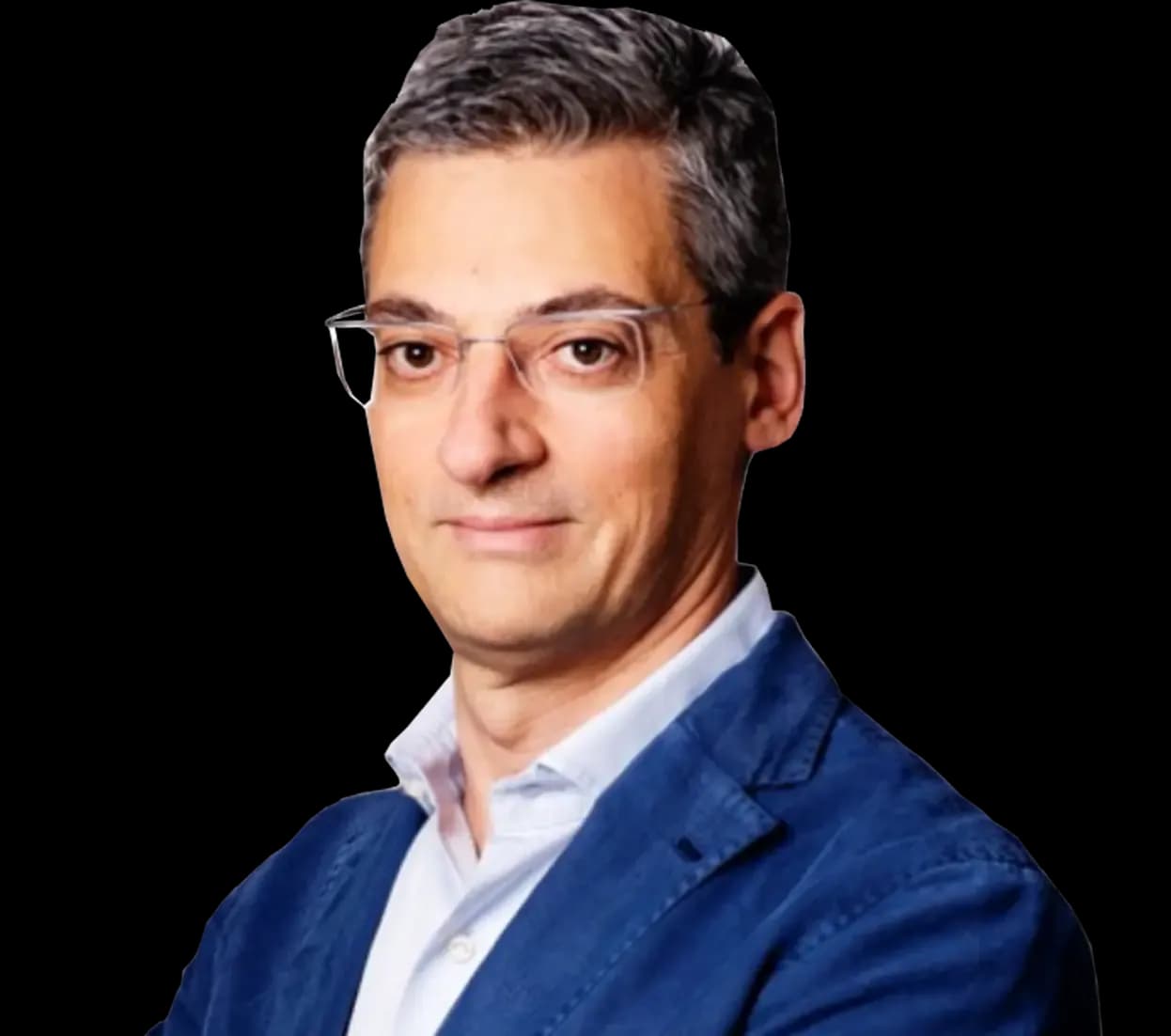
Filippo Sgattoni is the Group CEO of Alamar Foods Company, the master franchisee for Domino’s and Dunkin’ across the Middle East. Based in Riyadh, he previously held leadership roles at Autogrill, where he gained global experience across Europe and the U.S. A graduate of Stanford University’s Interpersonal Dynamics Program, Filippo is known for his strategic, people-first approach to leading global food brands.
Speakers
Episode #50
In this episode, Ashish Tulsian sits down with Filippo Sgattoni, CEO of Alamar Group, the master franchisee for Domino’s and Dunkin’ across the Middle East, to explore his remarkable journey from finance to food leadership. Filippo shares how his years at Autogrill shaped his understanding of global operations, cultural intelligence, and the art of balancing numbers with intuition.
He opens up about adapting to Saudi Arabia’s evolving market, leading a family-founded company through an IPO, and modernizing legacy brands for new generations. From introducing localized innovations like the “dates pizza” to experimenting with food trucks and engaging Gen Z through eSports and female empowerment, Filippo reveals how Alamar is redefining fast food for the future.
This episode dives deep into leadership, mindset, and reinvention, showing how curiosity, adaptability, and self-awareness can turn a finance professional into the visionary behind one of the region’s most successful restaurant groups.
Find us online:
Ashish Tulsian- LinkedIn
Filippo Sgattoni- LinkedIn
Ashish Tulsian:
Hi, welcome to Restrocast. Today we have on the pod, Filippo Sagatone, Group CEO Alamar Foods, a company that runs Domino’s and Dunkin’ in the Middle East. Filippo’s journey is one of inspirational journey where a finance professional who trains himself slowly by taking the opportunity to be very, very close to business, does a balancing act and successfully converts to being in the role of a CEO by taking the company public.
Filippo was a small town boy in his own admission in Italy, explored the world with Autogrill, working in various different countries and various different cultures, remained very close to the business to really understand the nitty-gritties of not only just finance but execution. Joined Alamar Foods 10 years back as a CFO, took them IPO and took over the position of a CEO and continues to thrive very, very well. This conversation is about one man’s deep understanding of himself and how he adapts and learns cultural nuances of various different countries and uses it to adapt successfully.
But at the same time, how self-awareness, how coaching, how this continuous effort to be better every day, makes you great. I love this conversation, I’m sure you will. Filippo, welcome to RESTROCAST.
Filippo Sgattoni:
Thank you for inviting, a big pleasure for me to stay with you.
Ashish Tulsian:
Absolutely, trust me, pleasure is all mine. An Italian man in Saudi Arabia, selling pizzas, surprise, surprise, I mean that matches, but not trained in restaurants to start with. You come from finance background.
Filippo Sgattoni:
Yes, I have a financial background, but let me say a very unique financial background, because I spent almost 17 years with Autogrill. Autogrill at that time was the largest operator for food service for traveler people, so serving motorway, airport, railway station mainly. And somehow they helped me and helped them to combine numbers with the business.
So, you know, you can approach, you can have a financial background, but if you have the curiosity, the passion for food, for retail. And I was so lucky that the company offered me the opportunity to engage with the business, and this somehow has helped me in my growth. And also to test some of the skills, like influence others, influence also senior business people, by using, yes, by using numbers.
Ashish Tulsian:
I’ve always seen that, you know, and I’ll give you a little bit of my view of, you know, where am I coming from. I’m a tech guy who always loved business. I started my business when I was 19.
Not this company, I used to run a telecom company before, sold it, invested in a restaurant, thinking it’s a good idea, or an easy idea. So, but ended up in restaurant tech, you know, tech is what I learned, I mean, knew better. I always, you know, when you’re building a business from scratch, you always believe that it’s the art, you know, it’s only, it’s your business, only you can understand it, only you can do it.
But as I grew, you know, up, both in, you know, age and business, the realization kept on getting stronger, that, you know, of course, taking it off the ground, maybe the art and the brute force, but cruising is not, you know, cruising and accelerating is a numbers game. And anybody who is better at numbers, of course, with context, will be a better operator than just, you know, being the artist and the, you know, pushing the envelope. And that is where I see finance people in the business world.
I mean, people who are trained in finance, in the business world, they do better in even leadership positions. For industries that may be hardcore or vertical, you know, but still people do that. What has been your journey? And where, how much do you conquer with the statement? And can you give me like some nuggets on, you know, how it helps?
Filippo Sgattoni:
I tell you, for me, let me say, it’s always depending on, you know, which situation are you going to work or which situation are you going to lead. So sometimes, for example, to have a strong financial background can, let me say, limit the growth of the company. Because of, yeah, because the financial people are always risk conscious.
Okay. So that’s why for me, and that this was, you know, what was my privilege in my previous company is, let me say, to head to the financial background, this capacity to risk, to take some risk. Because otherwise, I mean, it’s not only based on Excel and it cannot be the decision, especially today in the business, but also in the recent past, that cannot be only financially driven.
No, because from one side, it’s like, let me say, it’s like when you design a new car. So from one side, you need to make sure that the engine works and deliver the right horsepower, that yes, there is the right control in terms of brakes, wheels, everything, the right safety. But then the design is also as well as important. So the same is when you run a business where operation is very, very important. But on the other side, you have also the customers. And yes, the customers appreciate the consistency of the quality, appreciate the right value proposition.
But then you need also to deliver them a feeling and emotion. So that’s why, again, sometimes if you have only a financial background, and this is a very, very solid, you risk to limit marketing, you risk to explore the unknown. Okay, so that’s why, you know, if you are, let me say, into a turnaround situation, yes, to have a strong financial background, a logical background can really help.
But then this will be only for this season. In the moment that the company or the business gets stable, and it’s ready to grow further, you know, probably the same leader is not, let me say, needs to change, you know, you need to do some change management also in the leadership. So that’s why, again, if you are able in your growth, even with a strong financial background, or even with a technology background, if you are able to add the components that are really from the business, able to understand a little bit marketing, their language, the way of thinking, I mean, these help you to have a better tool, eventually to lead, you know, you need to mix.
Even to manage sometimes the polarity between known and unknown, between a stronger business plan, but a flagship location. You need to have, let me say, this capacity.
Ashish Tulsian:
You need to have a balancing act and you can’t be just cost conscious.
Filippo Sgattoni:
Otherwise, I mean, the same even for, you know, if you send the technology, I mean, it’s a very powerful, I mean, now you can see that a lot of CEO have also from a technology background, because the world is becoming digital, so on, so on, so on. I mean, it’s always important to add to them also some components that they are missing. These will help them to lead better and especially to have a very, let me say, healthy and durable growth for the company, not just for three years, four years, five years.
Ashish Tulsian:
Filippo, take me to your early days. You know, tell me a little bit about where did you grow up, your early years, and how did you get into your first, you know, first professional, I mean, how, what was your first role in the professional life? How did you get there? Take me through that.
Filippo Sgattoni:
Very briefly, I mean, I came from, originally from a smaller town in Italy. It’s on the Adriatic coast. So I’m 52 years old, and I’m always saying that I had like two life, the first 25 years and the second 25 years.
So the first 25 years is the life of someone at the sea on the beach, 200 days per year, sailing, swimming. And again, this is not to, you need also to be lucky in your life. And somehow helping my father in the retail business that he was doing. Retail business is about all accessory for apartments. So mattresses, furniture, this kind of stuff that were quite popular in Italy at the time. We’re talking about the 80, 70, 80.
So again, this again, for me, it’s important because I started, let me say, to deal with the money, to deal with the customers, even to go in their apartment for installation and delivery, you know, somehow. Then, and all my life was in this city. I didn’t travel that much.
And actually, most of my life was in my neighborhood. In my neighborhood, I had my school, my friends, my family members, the church, that for Italy is also very important. So that’s, then suddenly, I mean, I finished my university, and I wanted to explore the unknown. So I went to Milan, I did an MBA in the Polytechnic of Milan. And then after the MBA, started my career in Autogrill. In Autogrill, you know, this was the period of the ERP implementation.
So all of the company were looking for people either with an engineer background or financial background that was, let me say, understanding the processes of business process and engineering.
Ashish Tulsian:
What year was this?
Filippo Sgattoni:
This, we’re talking about 1999.
Ashish Tulsian:
- Yeah.
Filippo Sgattoni:
1999.
Ashish Tulsian:
Tech was at its peak.
Filippo Sgattoni:
Correct. And all of the companies were implementing ERP, blah, blah, blah. And so I started working in the accountable department of Autogrill. And after 17 years, I finished like deputy CFO for the company.
Ashish Tulsian:
Autogrill was a company that was doing food for?
Filippo Sgattoni:
Autogrill, I mean, Autogrill started, I mean, the company is an Italian company. So the business started from the, especially the motorway in Italy. But then the company started to do acquisition in Europe. Then they bought HMS Host in the US.
Ashish Tulsian:
Oh, they bought HMS Host?
Filippo Sgattoni:
Yes, in the US, as part of Autogrill. And then we started to develop in Northern Europe, India, Far East, Dubai airport. So basically, the company became a global and kept growing together with the company. So usually I was the first Italian to, let me say, to join any new legal entity that was acquired by the company.
So always doing this post-seminary. And this offered me the opportunity to explore a new country, to learn languages, to do my first expat experience. I spent three years in Madrid, three years in Amsterdam, almost three years between Germany and the Czech Republic, a lot of travels in all the other countries. So basically, again, someone that came from a small town in Italy, immediately you get exposed to the globe, dealing with the people with different cultures, that somehow they have also a different perception of the Italians. We were the first Italians to buy outside. So you can imagine the resistance, especially US or Northern Europe.
I mean, that’s life. But again, the time I spent in my town has been always important for me, because in my town was, let me say, was open, because it’s, let me say, it’s an holiday place. And then we were always hosting people.
So despite I was living in a smaller town, I was able to enter in contact with a different culture, even not only Italians, but also foreigners from Germany, Northern Europe, so on and so on and so on. So, I mean, in short, what I want to say is that, I mean, Autogrill accelerated or given me the opportunity to develop what was already part of my behavior or my tools. So the roots are always very, very important, you know, to start well, help you also in the future.
Ashish Tulsian:
Autogrill, I mean, this sounds, this sounds actually, you know, quite interesting, because, you know, the international exposure, plus, I’m sure the MNA, you know, the opportunity to take over, or rather understand the business of new entities in the new countries, made you really agile, made you really flexible, you know, to just adapt to any new business environment, you know.
But what was a point where you realized that, hey, I can, you know, I’m building that business muscle, because when you started, the point you made right at the start is beautiful, that you can’t just be a finance person, or you can’t just be a conservative cost, looking at the costs all the time, you have to, you know, be a risk taker, you have to understand when do you want business to step back, and when do you want it to just accelerate further, at the risk of losing some money. Where did, do you remember, do you, do you have a, I mean, did you introspect, where did you build that muscle?
Filippo Sgattoni:
Yes, I mean, this was when I moved to Netherland, because in Netherland, for the first time, AutoGrill that, again, has grown by acquisition, we were building a business from the scratch. So we were, from Netherland, we were entering the market, like Sweden, Denmark, Ireland, UK, with a smaller team of people. And again, my, let me say, I had the privilege to work with the head of this, let me say, business unit, Mr. Walter Seib, that completely empowered me. So basically, you know, and this is also the cultural difference, you know, while in Italy, I mean, the scheme was more hierarchical, there was, you know, more respect for the age, the role, so on. In Netherland, you know, in Netherland, they are lesser focused on the problem, you need to solve the problem. They don’t mind about your age, your experience.
I mean, if you are capable, you go ahead.
Ashish Tulsian:
As Dutch as possible.
Filippo Sgattoni:
As Dutch as possible, you know. They call it easygoing, but actually, you know, and sometimes, you know, I felt even, you know, bad, because, you know, in Italy, the meeting were very formal, they were very informal. There were no minutes, in Italy, we were all doing the minutes, no bureaucracy, but then fast, fast, fast and easygoing. So this, I mean, this really gave me the opportunity to test, and let me say, to touch the business.
So I was sent alone to open the business in Ireland. Yes, my colleagues, they did all the development, the construction, but it was very, and where I ran a lot of risk, even, let me say somehow, risk of non-compliance, you know. I always remember that when I was opening the airport in Cork, you know, we were endowing people from the former operator to the new operator, but also the airport was new. So the former people were working in the old airport, when the new terminal opened, we were missing people, because the people were still working in the old terminal. And, you know, someone, a Polish guy, came to me and he asked me, how many people do you need? And I told him, I need 50 people.
Why are you asking? Tomorrow I will give you 50 people. And because, you know, in that time in Ireland, there were a lot of, the Polish community were, very strong, were very strong in hospitality, in retail, and they had the manpower available. So, and then in overnight, we hired 50 Polish, to start the business. Again, you know, this is, you know, some of the, this will not be possible in Italy.
Ashish Tulsian:
Correct.
Filippo Sgattoni:
Okay. Cannot, not only for a rule of regulation, but the mindset. So then again, after this, we did Sweden, then after Sweden, we did Denmark, you know, working not only as an employee, but like we were the owner of this company, you know.
Somehow also having the privilege that the business was very small for Autogrill. So if we were doing something wrong, it would not impact on the financials of the listed group. So again, you know.
Ashish Tulsian:
You had a, you had a cushion and you had ground to play.
Filippo Sgattoni:
You have a sort of a garden, you know, you have this smaller piece of land, it’s completely yours. And you can really exercise all your tools and your capability. And this make me aware, okay, I can manage also the business, or not only I can manage a business, I can also influence the business. Because it’s also important that the others follow you, you know. And they start seeing you not only as the finance manager or finance director, but someone is also able, you know, even to protect them, to challenge, but also to build together.
Ashish Tulsian:
That is beautiful. And how did you, how did you land in Saudi?
Filippo Sgattoni:
Oh, I land in Saudi. I mean, for me, you know, my personal target as a career is always to build ecosystem and to help this ecosystem to grow. So on 2015, Autogrill for multiple reasons, you know. A company that were growing double digit, also organic and inorganic for 10, 20 years, somehow was quite tired, you know. I mean, this is not just the management itself, but even the shareholder. Okay.
And I was perceiving this, you know, this lack of energy that was still a target, you know, or still grow, but we were not, we were starting to have a very conservative approach. Somehow some people are setting in a very comfortable, you know, situation. And then suddenly I took a call from Alexander that was based in Russia.
And he told me, will be interested to, for a position as a CFO for a group in the Middle East. That’s, this was the brief. And I told him, look, here, I feel, I mean, why not? I spoke with my wife, if the Middle East was somehow something in the radar for the family. And we say, okay, let’s explore. Then by doing the second round of interview, they started to share that was Saudi Arabia, that the company was Alamar.
And, you know, we are on 2015. 2015, if you went in YouTube, there were only one or two videos about Saudi Arabia. All of the video were about Dubai. And the only information about Alamar was on Carlyle website, because Carlyle on 2012 bought a stake in Alamar. That’s it. Luckily, and that’s again, in the life you need to be very lucky.
I was developing the F&B in Dubai airport with a local partner. And I sent him an SMS to ask him, do you know anything about Alamar, AlJammaz family? I mean, who they are.
He just replied me, whatever they offer you, go ahead. This is a serious business, serious people. Yeah, because again, you know, you can, let me say, you cannot join the Middle East because of money, because the compensation is very, very high.
But again, for me, the idea is always to grow an ecosystem. I need a growth story, an equity story that is about to grow. And I was afraid that, you know, Saudi business or Middle East family, those are multi-business. Sometimes they like to invest, to disinvest. So you don’t know really what is, how much important is this business.
Ashish Tulsian:
If your contribution is going to really become something worth talking about.
Filippo Sgattoni:
Carlyle again was an important catalyst. But then I wanted to know more about Alamar and AlJammaz. So I took the green light. And then finally I met with Mr. Ibrahim AlJammaz, that currently is the chairman of the company. At the time he was the CEO of the company.
Ashish Tulsian:
Oh, he was the acting CEO.
Filippo Sgattoni:
Yeah, he was acting as a CEO. So he was the founder and the CEO of the company, looking for a CFO. And we spent a full day together, first week of EGOS. First week of EGOS, we stayed together almost 12 hours. So this was the, and I end up the meeting, sending a message to my wife saying, I mean, I think that I found my twin in Saudi Arabia. Because we were completely, and we are still completely aligned on the vision of the company.
Then we fight on the solution, on the priority. And from there, I mean, we started. Usually in all my changes, also in Autogrill, every time I was changing a city or a role, I always decide to do the change in October 15. Because I was born in October 14. So for me, every time I do a change, and I can have, let me say, the privilege to choose the date, I always choose the day after my born date. So October 15, 2015, I started in Saudi Arabia.
Ashish Tulsian:
Awesome.
Filippo Sgattoni:
Where again, I mean, everyone was telling me, are you crazy to go there? It’s not Dubai.
Ashish Tulsian:
2015 Saudi Arabia must be very different.
Filippo Sgattoni:
Correct. But then again, for me, all the cross-cultural work I did with Autogrill, it helped a lot. And you know, every time I move into a new situation, I always look at the touch points. And if you compare, for example, Italy with Saudi Arabia, there are many touch points. For example, family business is important in both countries. Somehow religion is important in both countries.
Coffee, as experience, is important in both countries. So again, it’s true, there are many differences, but also many touch points. And I started from the touch points. More than noticing the differences, I started from the touch points.
Ashish Tulsian:
Filippo, I think, you know, this is a great story of, you know, as you call it luck. But also, I think, more than luck, it is taking that opportunity. But, you know, being somebody who’s Italian, who has never been to Saudi Arabia, world does not know a lot about Saudi Arabia.
You know, till that time, as you said, not many videos are available. And you’re trying to, or you’re leading a brand like Domino’s in the country. Weren’t you worried about the fact that a consumer brand as savvy, you know, as Domino’s, if you’re leading in a country where you don’t know the cultural nuances, you don’t know the local population, you don’t know what they respond to, right, there is a learning curve to that.
And if you’re leading a company, you know, that is going to be, you know, difficult. Was there any hiccup around the cultural nuance?
Filippo Sgattoni:
Yes, I mean, I tell you, one was the cultural nuance, because again, I didn’t know their habits. Those were many. And actually, some of them was a completely unknown, even not expecting because I never managed, for example, the closure during the pray time, or no, that their business was mainly at the dinner, lunchtime, very minimal. Ramadan is a seasonality. So all of these, I mean, was a really, let me say, big learning for me.
Let me say not only from a cultural point of view, but also to understand how to build the right reports to read the numbers of the business. So, I mean, there were, let me say, some of them applied the same that I was using in Autogrill, but then, again, some KPI doesn’t work here. The costs of the business were mainly fixed costs, very few variable costs. So, these…
Ashish Tulsian:
You mean, because people are not part-time here?
Filippo Sgattoni:
Correct, I mean, you don’t have a part-time, all of them are full-time, overtime, I mean, is very, very minimal. Productivity doesn’t make sense because the manpower was very cheap.
Ashish Tulsian:
And when you say some of the KPIs don’t work, what do you mean? Give me an example, if you can.
Filippo Sgattoni:
For example, productivity is one of these. Even, for example, on gross margin, the same because, for example, in 2015, when I arrived, all the companies were overstocking. So, they were not taking care of, let me say, the cash flow as they should, even working capital, because they were always afraid of risk on importation, everything was imported.
So, that’s why, again, the system was full of redundancy, because this was required by the system itself to secure the business, to avoid any business, let me say, interruption. The system was really redundant. So, that’s why, again, my work also, because our idea was to go public, there was also Carlyle as a second shareholder, my work was to understand this redundancy and to see what could be done, let me say, what could be removed.
So, we started working on working capital, reducing the number of days of coverage, working on capex, doing tender, bypassing all the distributors, so, dealing directly with the suppliers. So, I mean, again, but, so, what I want to mean is that I was using the same tool or the same learning. I practice in Autogrill, but not immediately, because, I mean, you need to make sure that the entire system is ready.
System, I mean, our people, I mean, the board, I mean, also the suppliers. So, that’s why, again, we go back to the point, you know, I like to build an ecosystem. So, instead of, let me say, just only challenging the suppliers, somehow help them to reach the target that I wanted, because, again, this is our role. We are also in a part of the world that somehow is sometimes very fragile. So, that’s why, again, you need always to build an ecosystem also with your partners, because sometimes you need their help. So, you cannot always challenge.
And, again, there is a learning curve for all of us. And, again, this is also the beauty of working for, let me say, a company that has a very strong family business route, but also combined with the private equity. So, the private equity was looking to efficiency, cash flow. The family was looking to reputation. Yes, they wanted to go public, but the reputation plays an important role to help the entire Saudi ecosystem play an important role, because they are an important Saudi family. So, again, my role was to bridge these two. And this well resonated with my way of doing. So, you know, even in Autogrill, it wasn’t just about challenging the suppliers or employees.
Ashish Tulsian:
What you just said is, it makes, you know, a lot of sense. And thank you for saying what you just said, because it’s very easy to just, you know, cut the costs, you know, from suppliers or to stress them to give you what you want. But I’ve never seen a business really succeed in the long term if their partners were not ready to support them through thick and thin. And for that, you need to leave some margin on table and you need to take their counsel as well. Correct. Apart from looking at just.
Filippo Sgattoni:
And again, the idea and also sharing with the partner was always about the growth. So, when I started also not to challenge them on the margin, on reducing the cost, the idea was always to tell them, look, I’m also growing. Don’t look at the percentage, look at the absolute value. OK. So, again, there is also a commitment that there is an engagement. And these are somehow probably also helped me then to become CEO of the company.
Because, again, I was somehow an outliner, you know, all of the experts, especially in that period, they were mainly looking for three, five years to plan, you know, eventually doing a strong performance and then leaving also with the good money and go back to their home country. Now, again, my idea was, I mean, to do my best for the company and for my shareholders. Now, these are somehow differentiate me.
So sometimes, again, I don’t go with the same speed because, again, as you said, I’m always aware to control that everyone is following. And this is always my idea. And again, there is my contribution, but you need always to be lucky again to have the right shareholders, the right even private equity that was understanding this and build the trust.
Ashish Tulsian:
I think all hardworking, well-meaning, smart people tell me that they’re lucky. So I’ll take it with a… So you joined as a CFO.
Filippo Sgattoni:
Yes.
Ashish Tulsian:
While Mr. Jamal, right?
Filippo Sgattoni:
Jammaz, AlJammaz, AlJammaz. Yes, Mr. Ibrahim AlJammaz.
Ashish Tulsian:
So you joined as a CFO while Mr. AlJammaz was still the acting CEO. How did the transition from CFO to being the CEO of Alamar happen?
Filippo Sgattoni:
It happened, let me say, one, because the performance, the pure readiness that was there, but also then the unfortunate, so Ibrahim’s father passed away. So Ibrahim became the chairman of Alamar, but also the chairman of the family, somehow the patriarch of the family. And when there was the space available, they offered me this opportunity. Not easy. Not easy, no, because you can imagine you are dealing with a shareholder, founder, former CEO. So not easy for, even for the employees, for the colleagues, no?
Ashish Tulsian:
To fill those shoes.
Filippo Sgattoni:
No, not to accept you, but I mean, you know, the space is very, there is not that much space. There is still a lot that I need to learn about Saudi Arabia and the GCC, you know. But again, we have a very good relationship. And we try to complement each other. So we are trying to do our best, not to, let me say, to drive the same car, but to be complementary to each other.
And the diesel, so far, let me say, is working, but it’s not for free. It requires a lot of energy from both of us. Because, you know, sometimes there is, I mean, we’re also in a disagreement. That’s normal. But then at the end, after any agreement or disagreement, we commit. And again, our vision is always for the longer term, no? Even now that we are public as a company, we are always balancing a bit or calibrating between the quarter results and the long term strategy.
Ashish Tulsian:
Yeah. But, you know, transition from, and I’m asking this question for mostly for my own self, because, you know, as a CEO and somebody who has been the founder and CEO, it is very difficult, not only for me to pass the reins, but somebody else to actually take the reins as well. And I empathize, you know, with the problem because, you know, this business is not only my business from an equity perspective.
The decisions that somebody takes affect me in the percentage of equity that I own. And, and it is almost like, you know, telling, giving your driver the power to decide where they want to take you. Right? And they’re going to take 100% of you there and your life is going to get impacted. You know, so it is I empathize with the person who’s taking over that responsibility, because their decision making is going to, you know, start impacting. And, and I’ve built the business my way.
So, so, you know, that’s why I see, you know, some of the largest companies in the world have homegrown people who take over as a CEO. And not really, generally, not always comes, you know, flying from outside, not always. For the same reason, because you’ve built a company a certain way, and they need to embody the DNA.
What was, what was the most difficult part for you to really assume the position of CEO, where you can take decisions? Of course, you will take the counsel of the chairman and the board, but still, where decisions are yours? And where’s the point where you crossed that?
Filippo Sgattoni:
I tell you, let me answer in from a different point. Okay. For me, everything started from the mindset. Okay, when I took this role, you know, you are always afraid, okay, this was a family business. Now, what will be my role, you know, how I can take a decision or not. But then what I did, I took the first 10 US listed companies.
The first 10 US listed companies, the biggest one in terms of capitalization, the founder is still there. You don’t know the name of the CFO of Tesla, you don’t know the name of the CFO of Google. You know, only the founders. So, again, then again, you need to build the mindset before reaching to a conclusion. My mindset was, okay, this is the new normal. Probably in this phase, or in this period of time, I don’t know, the new norm is that the founder remains somehow attached to the company.
And they somehow play an important role also in the decision making. So, if you are ready to accept this, then you can have a lot of discussion with your chairman, former CEO, internal discussion. But before you need to do a work in your mindset. If you jump in this role, saying, this is my space, I want this delegation of authority. This is the threshold before we go to the board. I mean, you risk to build something that can generate a lot of frustration.
Okay, so before really you need to acknowledge, not only, let me say GCC as ecosystem, but really, what is the new normal in the world? The second, I mean, you need to acknowledge your gaps. Okay, yes, I know Saudi Arabia, I know somehow the culture, but there is still a lot that I don’t know. Even in the GCC, I don’t know the relationship between the family. I don’t know how the bigger groups are moving. I mean, there are not so many information unless you are completely into the system.
So that’s why, again, by acknowledging the new normal, and by, let me say, doing a self-assessment, a scanning on what I’m missing. This creates, again, the space to interact. And then, you know, it’s also somehow, sometimes now your shareholder can have also a big passion for this specific business. And then you need also to accept that it goes to the details. So, you know, somehow, retail is also detail. But again, you need to accept this. There is also another important element that you need to accept. You know, at the end, I’m an expert. As I mentioned before, the average lifetime of an expert is three, five years.
I’m already at 10 years. Okay. So probably, there is always the fears that you can leave the company at any time. For any reason, family reason, you find another opportunity, whatever. So that’s why, I mean, I see that, in general, the GCC family, yes, they empower you, but they want always to control, because they are afraid that if they lose the control, they lose the business. So again, this is the kind of work that I build on my mind before accepting.
Yes, there is still a lot of frustration. I mean, sometimes I say, okay, if I was in Autogrill, this decision would be taken in one week, not in one month. I mean, all of this is there. I mean, energy goes up and down. Emotion goes up and down. But then, I mean, you have a strong foundation. You have done your homework. And this makes you somehow ready.
Ashish Tulsian:
No, what you just said is, I mean, a lot of things are, you know, that is great, because what you’re also talking about is building that trust in the family who you’re working with, by understanding them better, and, you know, keeping them glued in. That is beautiful. When did you guys go IPO?
Filippo Sgattoni:
Sorry?
Ashish Tulsian:
When did you, when did Alamar go IPO?
Filippo Sgattoni:
When did Alamar?
Ashish Tulsian:
Alamar IPO.
Filippo Sgattoni:
It was August 2022. So it’s three years.
Ashish Tulsian:
Three years.
Filippo Sgattoni:
And August will be three years.
Ashish Tulsian:
And you assumed the position of CEO, before? I mean,
Filippo Sgattoni:
I did the IPO as a CEO. So I had the privilege, you know, to do also the first day in Tadawwala. I mean, again, you know, not…
Ashish Tulsian:
How’s life different, you know, from being a private, family owned, you know, business to now, suddenly a public company CEO?
Filippo Sgattoni:
I mean, I tell you, I mean, let me say there is a new workload, because you need to manage also the investors. So everything around the investor relation, somehow your numbers, so either they are positive or negative, are public. So these, I mean, give you a lot of new challenges.
Again, you need to take care of also the reputation of the family, because now the family is more exposed. It’s a public company. So there are, let me say, multiple new elements that are coming to the table.
But again, I mean, you need only to make sure that your equity story that you have in mind and that you are building makes sense for the market, for the shareholders. Somehow you feel accountable also for the shareholders, no? Because I mean, usually as a C-level, you feel accountable for your customers, for your people. But now you have also people that are investing their savings. So that somehow has invested on you. So I feel accountable if they lose money. And I mean, this is a new set of emotion and feeling, you know, that was not there before.
Ashish Tulsian:
But how do you, you know, how do you, how does your daily functioning change? Does it change? Does it not change?
Filippo Sgattoni:
It changes. I mean, your agenda changes, because I mean, now you have a good portion that is dedicated to investor relation. So to engage with investors, analysts, even to disclose better your numbers, to compare with others, at least a company that are somehow your peers.
Especially now, when we went public, we announced that we are willing to do inorganic growth. So you receive a lot of interest from companies or from other sources. So you have, let me say, you have a new agenda that was not there before. You needed to accommodate this space.
Ashish Tulsian:
Filippo, what has changed in you as a person over the last 10 years that you recognize as a change?
Filippo Sgattoni:
I tell you, first of all, the company, again, especially Mr. Ibrahim, has invested in me on coaching. So I did four years of coaching.
Ashish Tulsian:
Wow.
Filippo Sgattoni:
Yes. These, let me say, for three main reasons. One, because, let me say, the level of energy that sometimes I brought on the table was too much. And I needed somehow to find someone to help me to navigate in this new culture. Then even somehow to develop some interpersonal skills, especially when it comes to managing the complexity and understanding somehow more than one system between the culture. This was very, very important.
So, I mean, all of this work somehow has changed me because now I am more, let me say, mature than before. And, you know, even the new role gave me an exposure that was not there before.
Ashish Tulsian:
Break it down for me. When you say that you feel that you are more mature than before, what does that mean?
Filippo Sgattoni:
It means that, for example, let me say, you are able to manage better your emotion before, for example, that you are going into a meeting that, you know, will not be an easy meeting. You do some preparation before. So you enter into the meeting with, let me say, a clean mind. So those make you somehow, for me, it’s part of my maturity. It’s not only to fight or to find a solution. I mean, you are more open to listen.
And the listening for me is not only listening to fix a problem, it’s also listening to learn. You ask a different question. All of this somehow is helping me on the day by day also to manage my personal emotion.
Ashish Tulsian:
And this is like an executive coach, business coach?
Filippo Sgattoni:
Yeah, this is a one-to-one coaching that I did for four years. I did also a specific training in Stanford for one week. And, you know, you can see also, even if you see any chat with the investors, I mean, some of them are recorded.
I have this flat tone, no? Because I know that, let me say, there are a lot of feeling emotion in the company, up and down in the business. So basically, I want always to maintain, not a flat, but let me say somehow to harmonize everything, not to fall over the up and down. Because again, my role is always to be also an example for the others. They need to be comfortable about the company direction.
Ashish Tulsian:
And also as a leader, you can’t be impulsive.
Filippo Sgattoni:
You cannot. I mean, you cannot. I mean, you see in the world that there are too many impulsive leaders. And, you know, sometimes you need also someone…
Ashish Tulsian:
Now it is that more visible.
Filippo Sgattoni:
Yeah. I mean, now you need somehow to help to put the things together. And again, always to provide the right messages inside, outside of the company. Very simple, not overbuilt. And to be very resilient.
Ashish Tulsian:
On the business side, you run Domino’s and Dunkin’. Both are, you know, some of the largest brands in the world. These brands don’t need introduction per se.
But I think world right now is posing a very different challenge, especially with Gen Z and Gen Alpha. They need these brands to be introduced again. You know, because millennials and boomers, they carry a lot of nostalgia around these brands. You know, a lot of Domino’s, Dunkin’, even for that matter, I will add Pizza Hut, KFC, Starbucks, McDonald’s, Burger King. All these are iconic brands. And there’s a lot of millennial and boomer nostalgia that runs them. Gen Z and Gen Alpha have no connection with them technically. I mean, apart from the fact that they’re visible everywhere. What’s happening on that side? What are the fears? What are the challenges? And what are some of the things that you have done or you’re doing?
Filippo Sgattoni:
You said it right. I mean, you know, most of these brands are from the 50s, the 60s in the US. And, you know, there are very few brands that are older than 100 years.
OK, so this is something that we need to consider. For us, especially now in the region, where in the region there are, yes, there is the younger demographic, but there are also a lot of social changes. OK, for us, we need to do a double effort.
So I need to associate with the new generation and also with a new generation that is completely different from the generation before, you know, because everything is changing here. So it’s a completely new setup. So for us, for example, in this month in Saudi Arabia, there is the eSport Wargamer. I mean, for sure, I mean, these video gamers is a new audience. And what we are trying to do as a brand is to engage with this audience. Now, what is very, very important, at least, I mean, this is my view, is do not engage with the new generation only with the idea to generate sales. OK, so that means don’t do a kind of engagement that look after only to the wallet. But you need to somehow to talk with their heart and with their mind.
Ashish Tulsian:
So not look only for transaction, build a relationship.
Filippo Sgattoni:
Correct. But sometimes even do something for free, for example, one of my crazy idea that really I don’t know if this will happen is now one day to have one of these e-team or that somehow does a training in one of our stores. No? So again, is how to use. Yes, I mean, the world is full of challenges, but it is also full of new tools. That again, you need to to understand how to implement in your in your business.
Yeah. So, for example, a female is another important new audience was there also before, but now has a different weight in the society. So this means that you cannot engage with them in the same way as before. You need to enhance.
Ashish Tulsian:
Give me an example like like again, I don’t understand.
Filippo Sgattoni:
I tell you, for example, we have a sponsor, the first female that was a driver in the Paris-Dakar. OK, so again, do not engage with them only as a mother or as a wife. No, engage with them using their new role in the society.
Ashish Tulsian:
Yeah, as individual, as individual.
Filippo Sgattoni:
So basically, you need to make sure that all some of these new generation became your ambassador. And to compare with my generation, I am always using, I don’t know if it is allowed, but I’m always using Cristiano Ronaldo as example. I’m following Cristiano Ronaldo as a football player. So what I care is about how we play football and how we trains. My cousin is following Cristiano Ronaldo for the haircut, for the cars, for the fashion, clothes.
You got my point? He doesn’t mind. I mean, he can be a football player or a golf player. He doesn’t mind. Yeah. So again, what does it mean?
It means that this generation associates the brands to the lifestyle. So while I am associating the brand to service, product, quality, health, you know, health, whatever, the new generation somehow, again, it’s part of the feeling and emotion, they associate it to their lifestyle. So that’s why, again, our role as an operator of these brands is to make sure that these brands resonate with the lifestyle of the new generation.
Without forgetting the parents, I mean, because again, you need always to have a complete coverage of the entire audience. So this is a big effort. It’s a big effort also, especially from a marketing and creativity point of view, because it’s something new.
Ashish Tulsian:
Yeah. The rules of this playbook have not…
Filippo Sgattoni:
So it’s not something obvious. Again, it’s something complex. When you came to complexity, before you roll out any new direction, you needed to do a safe to fail experiment.
Ashish Tulsian:
Yeah.
Filippo Sgattoni:
And this is, again, what we are doing. We are sponsorizing this, we are pushing there, all those are still experiments, okay. And this is the only way. So again, back to how we started, the engine remains very important to have the right product, consistency, all this kind of stuff. But then the packaging you need to change a little bit, the way you sell.
Ashish Tulsian:
How much of that you are able to do with a brand like Domino’s, given they have their set standards and their set ways of doing? I know that it allows you to do a lot of localization in the food and the taste and the flavors and the packaging, etc. But I’m sure there are guardrails that you cannot jump.
How is that doing for you? How do you navigate a brand like Domino’s with legacy and systems which are absolutely set in stone? And then convert it to not only a new country, a new territory, but also the new age and the new time. Give me a few examples of things that you might have done which the world doesn’t know or might not have been done in any other country for Domino’s.
Filippo Sgattoni:
I tell you, there are some good levels of flexibility. For sure, some of them require approvals from the franchisor. But for example, in terms of new product development, there is space. And if you look also at the catalog of other Domino’s big markets like Australia, they have also hamburgers, sandwiches, pasta. So there is a space in terms of category. There is a space in terms of ingredients. For example, we just launched a few months ago a dates pizza. So it’s a pizza done with the dates.
Ashish Tulsian:
Or there’s a dates pizza?
Filippo Sgattoni:
Yes, done with a local chef.
Ashish Tulsian:
I mean, is it like a dessert pizza? It’s like a pizza.
Filippo Sgattoni:
I mean, we left it to the customers to decide. It can be a dessert pizza, can be a different kind of pizza. But again, actually Domino’s is quite flexible, even in terms of store format. In terms of menu, you can go out with the full menu or only with the one size, a few items. What we have done, that again was probably something new also for Domino’s, was to adapt the business model also for the captive market. For example, we are in airports, we are going in exhibitions.
And again, this is also very, very important because the captive market is a new trend in Saudi Arabia. Because now the people are going out to socialize. Before you were going out especially only with your family or with your friends.
Now you can go out and any restaurant is open for single family. So then there are all these new areas that are captive. It can be a street mall, it can be a shopping mall, with a completely different experience.
Ashish Tulsian:
You’re saying this because earlier there was a men’s section and family section. Yes. Now it’s common.
Filippo Sgattoni:
Now it’s open. So again, this is important because again, you need stadiums are becoming another important. All of those are markets that are captive where you need to have a different service level on preparing the pizza. Customers cannot wait 15 minutes for the fresh pizza. So basically we did the experiment during the expo in Dubai. We were the only pizza provider during the expo.
And we did this experiment by, let me say, going there with, yes, a reduced number of items, but with an important speed of service. And the people were ordering, taking the pizza, going out. Ordering, taking the pizza, going out. So again, Domino is an open source ecosystem from where we can learn from other markets what they are doing. As well, Domino learn from us what we are doing. Also, again, because we have something unique that is the young demographic, the social changes.
Other markets are more mature. Probably only China or the Far East can be comparable with the Middle East. We have all different markets with different purchase power. So we operate in a country like Egypt, where the purchase power, even the valuation of the currency is not the same as in Saudi Arabia. So basically, again, the system makes sure that you can be affordable and profitable at the same time. And then again, we need to be lucky.
And to be lucky came back again because pizza is a sharing product. So pizza is associated with gathering, with joy. And again, this is what’s happening somehow in the region. And Domino somehow is also a game. So it’s a table game. So basically, you can leverage the brand and the product to a different level.
Ashish Tulsian:
I once heard that, I don’t know if any other country has done that or not, but you guys were experimenting with food trucks here. I remember I heard a couple of years back from someone. Are you still running that? Are food trucks a big thing? And has any other country Domino’s has started that?
Filippo Sgattoni:
Yeah, it’s a bigger thing. Again, it’s always important that you well define what is the purpose for this new tour. For example, for us, the food truck is important to join events.
The food truck could be a seasonal store. I don’t know, Jumeirah beach or north coast in Egypt, for example, all these new destinations. Food truck can be also, for example, very useful if you are going to refurbish a store. So you close a store, but you can put there a food truck for not losing the traffic.
Ashish Tulsian:
Oh, wow. Have you done that?
Filippo Sgattoni:
Yeah. That’s a very cool one. As well, the food truck can be a tool to explore a new area. For example, Riyadh, Jeddah, there are always new neighborhoods also to buy. Instead of going there with a physical store, you start with a food truck. You see if there is a demand. So it’s a sort of a temporary store. So that’s again, the idea is everything that we are going to develop is to use the tool for multiple purposes, not only for one.
Ashish Tulsian:
That is actually a cool one. I never thought about it before. Filippo, you talked about coaching. Thank you for sharing that. I think executive coaching is something that I promote a lot, personally, because I believe that some of the smartest people can just get stuck in their own eco-chamber and you need a third voice, an outside voice, to kind of just pull you out from that. What else do you do to keep yourself enriched? Do you read books, podcasts? I mean, what’s your system of learning?
Filippo Sgattoni:
Today, my system of learning, yes, I’m listening to some podcasts, especially podcasts with CEO, even from a different industry, from a different background. It is to keep enriching me. And again, thanks to Domino and Dunkin, I’m engaging also with management or C-level in other countries. This for me is very, very important. To keep me, let me say, enriched for me is important. One is a part of my DNA.
So it’s something that I’m always keen to do. The second, because sometimes I feel that I’m a little bit dried by the experience in the Middle East. So in the Middle East, I still don’t see so many talents from where I can really learn. I still see a lot of people coming to earn good money, not to build a career, to build a reputation, but probably to handle their work life. And these are sometimes, you know, make me dry, you know, because it’s so, so that’s why I mean, for me to keep connected, even, for example, to talk with the investors is a big privilege. I’m meeting them also in London, Dubai, sometimes in the US. So again, Alamar is offering me, let me say, a stage from where, yes, I can operate, but also I can keep learning.
Ashish Tulsian:
What podcast do you want to recommend, some podcast that you heard and you, you know?
Filippo Sgattoni:
I’m following one that is in Italian. OK. Yeah, because for me now, I’m always curious to understand also what’s happening in my country. And these are from a famous editor that is keeping debuting all this year. Then I read a book about the complexity.
Ashish Tulsian:
Which book?
Filippo Sgattoni:
One is a Simple Habits in Complex Times.
Ashish Tulsian:
Simple Habits in Complex Times.
Filippo Sgattoni:
Yes.
Ashish Tulsian:
Interesting.
Filippo Sgattoni:
So I will share with you the list. But yes, I have four or five books that, in general, I tell you, but again, keep always in mind my age and my background. I mean, let me say, for everything that I need to open my mind and, let me say, really to have a very strong balcony view, to disconnect from the ground floor, I always go to the classic authors, either from Greece, from the US. Because, you know, most of the books that are, especially the one from the US, that is about management, those are, I found that those are books to solve a problem. I don’t, I don’t find any of them really as something that opens your mind.
OK, so that’s again, is to calibrate. If you read the books from, I don’t know, the older Greeks, authors, even, for example, even from your own country, no? I don’t know, you read a book from Gandhi, you completely open your mind, no? Then you want to find a solution for something specific, could be complexity, could be problem solving, could be dysfunctional theme, you go for an American book.
Ashish Tulsian:
That is beautifully put, but that’s true, that’s actually true. I mean, there are great American authors as well, but I hear you. American culture is really about getting things done, transactional, you know, A to B, you know, how to reach, what is the efficient path. And philosophy is what they lack.
Filippo Sgattoni:
Philosophy, yeah, I mean, sociologists, I mean, this is, for example, what I’m missing now is with the new, so famous sociologists in the world, I don’t know. But you know, the world is changing, but no one is really studying the impact on the society.
Ashish Tulsian:
My last question. What is one thing, you know, in your belief, and I’m asking this question to you, especially because of this multicultural, you know, experience that you have had, and the privilege, or the opportunity to do business in a country. Like my belief is that traveling does not change you, dealing with people changes you.
So if you visit a country, that opens up your mind a little. But if you, when you work with different nationalities, or when you work in that country, that’s exactly the real experience of that culture that you get. Can you tell me one or two beliefs that you had 10 years back, 20 years back, five years back, whatever timeline you want to choose, that you don’t have anymore? Like your beliefs that got challenged or changed with their experiences?
Filippo Sgattoni:
That’s a very good question. I never thought about this. For me, let me say one, you know, I’m Italian.
And in Italy, we always say that we manufacture the better product. And so this is actually again, by traveling, by moving different people, as you say, that by working with them, you find out that this is not true. No, so this is, for me, was a game changer. That again, helped me also to sit on the other side. Sometimes, even for my work today, and dealing with the nationality that from Europe, they have a different, let me say, perspective. But then when I work with them on the ground in their home country, I don’t see that much differences.
And actually, I see that they can be even better than the Europeans. So this, you know, I came from a part of the world, like also US, where for many years, we felt that we were the best. And then you came to work in another, let me say, part of the world. And you see, you know what, not always. Not always, I mean, the world is a big melting pot of people. And you can find very good people everywhere. It’s not driven by nationality. Nationality sometimes can make you, let me say, faster. Because I mean, you need also sometimes to be born in the right place, in the right time.
But for example, today, I set up my family in Dubai, mainly not only because of safety or whatever, or educational infrastructure, mainly to build the proper mindset for my son. So I’m 52. Europe is a very old continent. And I wanted to bring back my son. Because he will grow up, not with a grow mindset, but will grow up with a lot of fears. So while by staying in Dubai, he will interact immediately with people that tomorrow can become a peer, a colleague, a wife, whatever, a boss. So this is the kind of investment that I’m doing. And this is also what I’m always looking for when I select someone, or when I want to grow someone. It’s all about the mindset.
Expertise you can learn. Yes, there are, let me say, if you are a doctor or if you are an engineer, no, you need to have also the right expertise. But you know, for a management role, the mindset is the key asset.
Ashish Tulsian:
I think mindset is everything. Because when your mindset is right, you can also learn the skill. Or get the skill from somebody else. But reverse is not true. Filippo, this was a great conversation. Thank you. Thank you for agreeing to do this. I’m really touched by your humility and your awareness and presence in your life. I understand why you thrive and why you are able to do what you do. It’s a privilege to have you on the pod.
Filippo Sgattoni:
No, thanks a lot. Pleasure is mine. And really, for me, it’s the first podcast. So it’s a new experience. And thanks for inviting me.
Ashish Tulsian:
I’m sure, I’m sure.
Filippo Sgattoni:
I wish I can contribute to your podcast.
WANT THE LATEST SCOOP?
Subscribe to the Restrocast newsletter
Get the updates on the upcoming episodes, insider news, and email content full of value right in your inbox, never pushy, always free.
Home | Speakers | Episodes | Contact Us
TUNE IN RESTROCAST ON
Podcast powered and distributed by Restrocast Inc.