


How Balachandar Raju Built a 54-Year Restaurant Legacy in Coimbatore Without Ever Leaving the City
In this episode, Ashish Tulsian speaks with Balachandar Raju, second-generation owner of Hari Bhavanam, about building Coimbatore's most trusted non-vegetarian restaurant brand across 54 years, 10 outlets, and 1,000 employees — through direct sourcing, generational discipline, and a conscious refusal to scale beyond what one person can see with their own eyes.
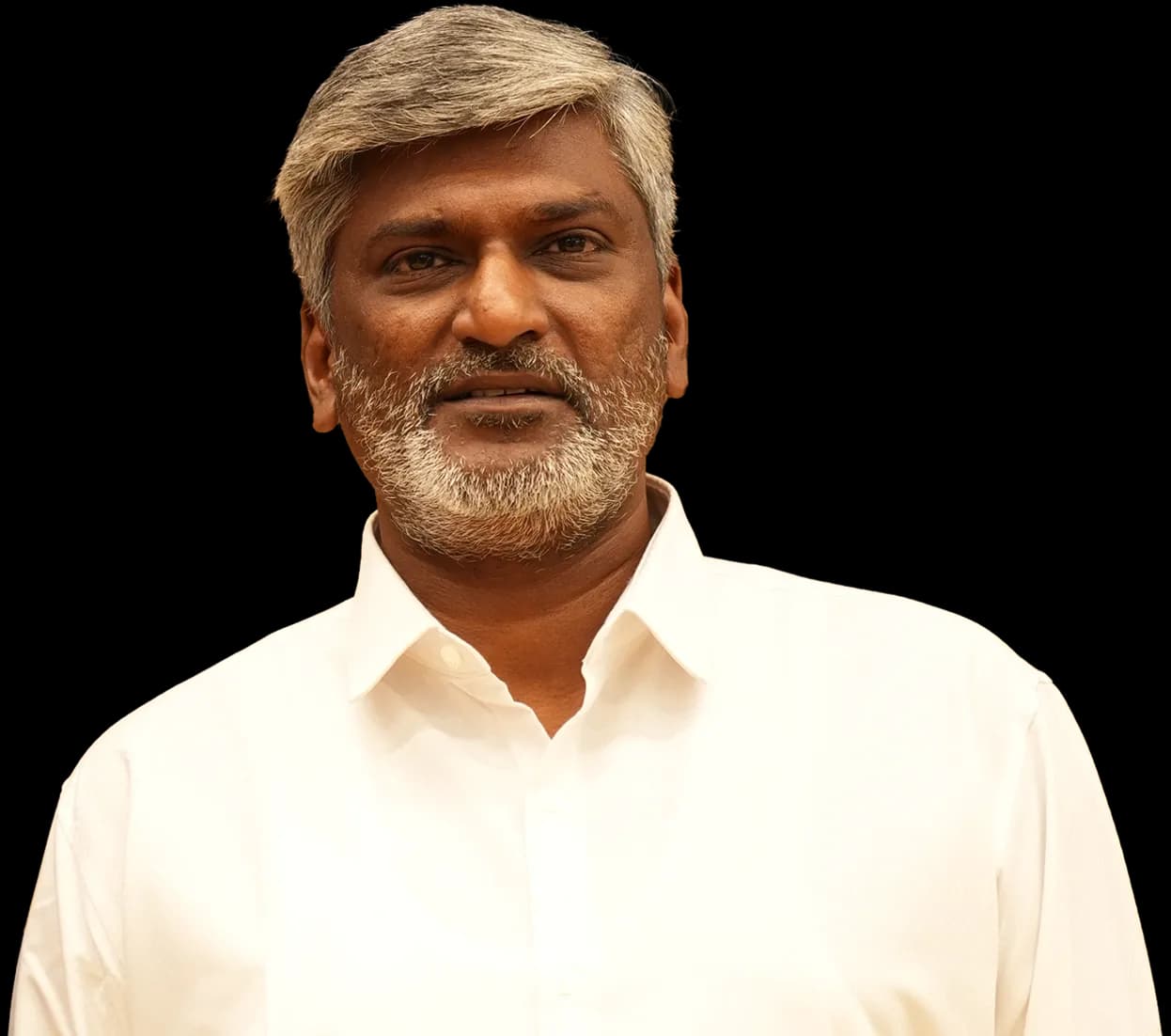



Balachandar Raju
Managing Director, Haribhavanam Hotels
Balachandar Raju is the second-generation owner of Hari Bhavanam, Coimbatore's most established non-vegetarian restaurant brand. Founded in 1971 by his father in a lodging mansion that gave the brand its name, Hari Bhavanam today operates 10 large-format restaurants across Coimbatore, employs over 1,000 people, and does more than 100 crores in annual revenue, entirely without franchising, private equity, or expansion beyond the city limits. Bala has spent 24 years building a direct sourcing infrastructure, transitioning the business to a private limited company, and preparing the foundation for his children, currently studying food science in the US, to take the brand into its third generation.
In this episode, Ashish Tulsian sits down with Balachandar Raju, second-generation owner of Hari Bhavanam, for a rare and deeply honest conversation about what it looks like to build a restaurant business not for numbers, but for trust, and to keep it that way across five decades.
Bala traces the full arc of the Hari Bhavanam story: a 16-year-old boy from outside Coimbatore who took a job as a room boy in a lodging mansion in the 1960s, whose wife lit a stove one evening to feed stranded government employees, and who never switched it off. He walks through his own journey as the MBA son who fought his father for the right to implement billing machines, menu cards, and uniforms, and who then secretly borrowed four lakhs against a Maruti 800 to open his first independent restaurant at the age of 22.
The episode covers the sourcing philosophy that defines Hari Bhavanam today: rice and maida bought directly from mills by the truckload, seafood sourced from Rameswaram and Kochi by their own vehicles, 35 to 40 goats butchered in-house daily, and a hypermarket now being built to bring every input under one roof they control entirely. Bala explains why this isn't about cost, it's about the family who brought their 28-day-old child for their first non-vegetarian meal, and what that trust demands of you.
He is candid about why he has chosen to stay within Coimbatore across 10 restaurants, why he is entirely against franchising, why he has never taken private equity, and what he believes happens to a brand— and to a family —when growth outpaces the founder's line of sight. He also talks about preparing his children, currently studying food science in the US, to eventually take over a business that is only now being formally systematized after more than five decades of running on instinct, relationships, and a standard his father set and never allowed anyone to lower.
And he talks about singing, 3,500 songs recorded and posted at exactly 6 AM every morning to 500 people, from anywhere in the world, without a single day missed.
This is a conversation about what restaurants can be when they are built for something other than scale.