


74 Years, 14 Countries, Zero Outside Funding: The Kailash Parbat Story
In this episode, Ashish Tulsian speaks with Amit Mulchandani about building one of India's oldest and most quietly global restaurant brands; from a 16-year-old cooking in Karachi in 1940, to 85 stores across 14 countries, all bootstrapped, largely company-operated, and running on unit economics that defy everything the industry believes is possible.
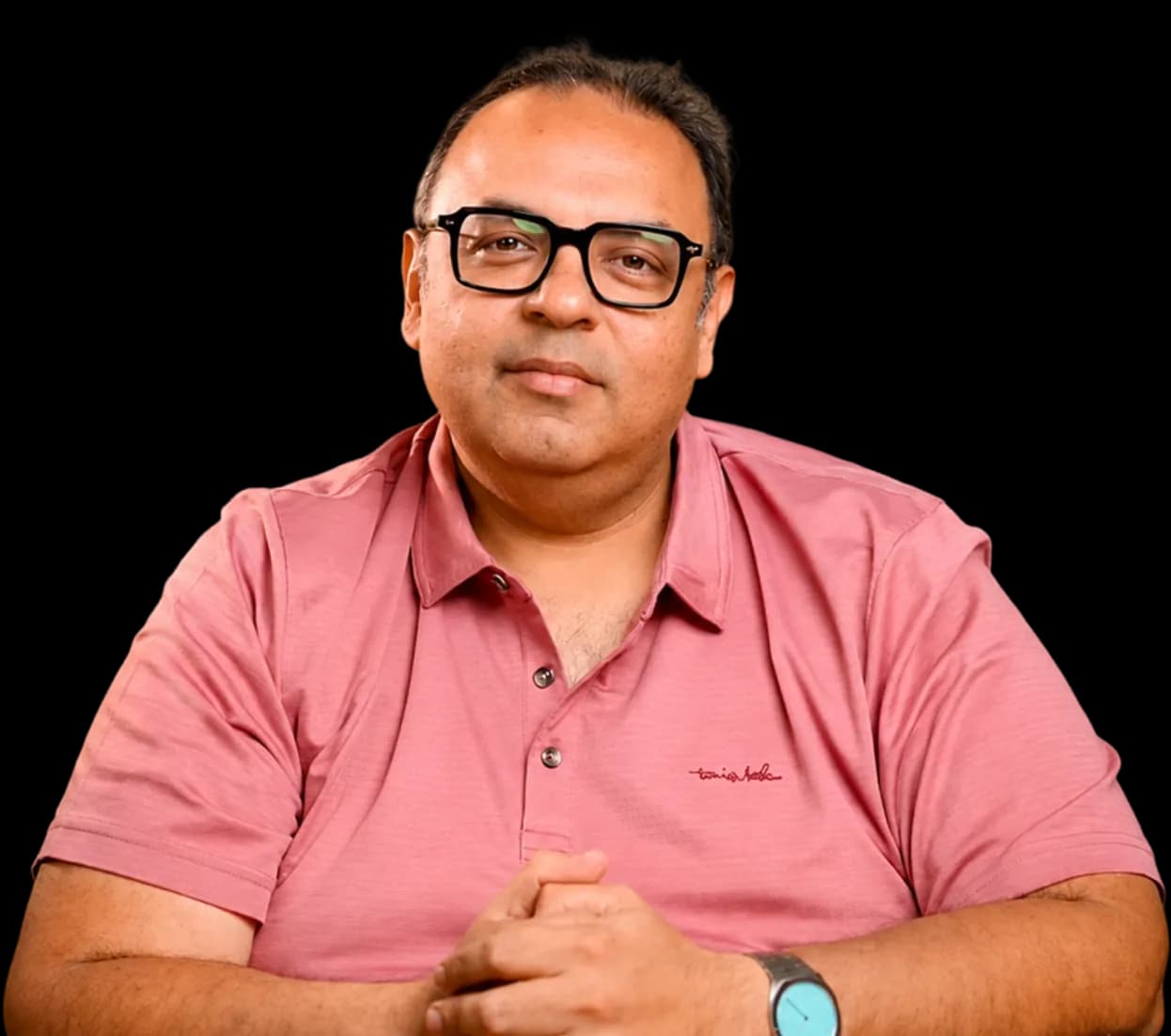



Amit Mulchandani
Managing Director, Kailash Parbat
Amit Mulchandani is the third-generation director of Kailash Parbat, one of India's oldest and most internationally recognized restaurant brands. Founded in 1940 in Karachi by his grandfather, a 16-year-old who wanted to cook and serve people, Kailash Parbat opened its first Indian store in Colaba in 1952, which still operates today. Under Amit and his cousins, the brand has grown to 85 stores across 14 countries, including the US, Canada, Singapore, Hong Kong, Germany, and the Netherlands, entirely without outside funding. Amit oversees menu development, food quality, and business development, and has been working in the business full-time since the age of 16.
In this episode, Ashish Tulsian sits down with Amit Mulchandani, third-generation director of Kailash Parbat, for a rare and detailed conversation about what it takes to keep a restaurant brand alive, relevant, and expanding across seven decades and six continents, without a single rupee of outside capital.
Amit traces the full arc of the Kailash Parbat story: a 16-year-old Sindhi boy cooking in Karachi in 1940, Partition, a humble restart at Azad Maidan, the first store in Colaba in 1952 that still operates today, and a slow, deliberate expansion that now spans the US, Canada, Singapore, Hong Kong, Germany, the Netherlands, and an imminent opening in China. He talks about being left to run a restaurant at age 11 while his father and uncle catered in Japan, being pushed into the business full-time at 16, and spending the next 30 years learning every corner of it.
The episode covers the operational architecture behind a 14-country presence: premixes made in Mumbai and shipped globally, Indian community partners in every market, company-operated stores with their own trained teams, and the hard lessons of the UK and Switzerland exits, where visa failures and labor laws forced retreats from markets that were performing well.
Amit opens up entirely on unit economics, stores doing 1.2 crores a month on rentals of 2.5 lakhs, a portfolio averaging sub-5% rent, food cost at 22 to 24%, manpower at 20% because everything is made from scratch at every store, and dine-in accounting for over 80% of business. He explains why he is against franchising at scale, why Indian food has never produced a McDonald 's-equivalent, and why he believes AI-powered robotic kitchens may be the only real path to 10,000 Indian food stores globally.
He also talks about what he eats when nobody is watching, a 40-year-old vada pav stall outside the office, a specific shop in Banaras he is planning a trip around, and a Goan vegetarian restaurant concept he is quietly developing. And about the 150-watch collection built entirely on story and character, never on brand or price.
This is a conversation about what restaurants look like when they are built to last.