episode #61
Sudhin Siva on the Operating Principles Behind Shamal’s F&B StrategyIn this episode, Ashish Tulsian speaks with Sudhin Siva, Chief Asset Management Officer at Shamal Holding, on how Shamal scales a diversified F&B portfolio including Five Guys, Sushi Samba, Duck & Waffle, Espresso Lab, and Zero Gravity. Sudhin shares lessons from Jumeirah, why fundamentals and culture matter, and how to align owners and operators to grow brands without dilution.



ABOUT THE HOST

Ashish is a serial entrepreneur and serves as the CEO & Co- Founder of Restroworks. He is one of the entrepreneurs who has mastered the art of bootstrapping startups to scale. Ashish is a prolific angel investor and mentors budding entrepreneurs and startups in Silicon Valley and India.
ABOUT THE GUEST
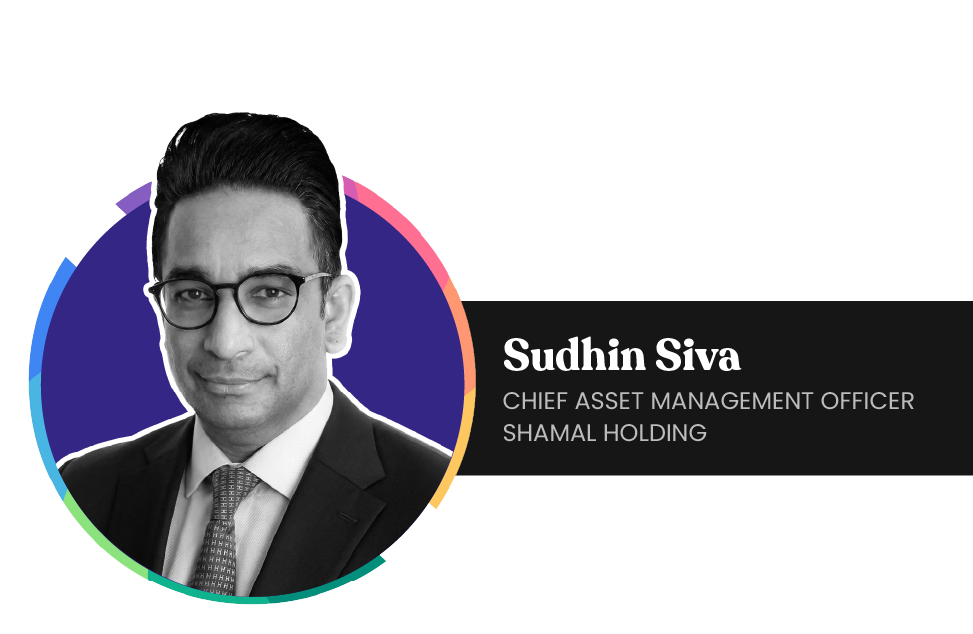
Sudhin Siva is the Chief Asset Management Officer at Shamal Holding, overseeing a diversified portfolio spanning hospitality and F&B, maritime assets, and retail, residential, and commercial leasing. With a background at Jumeirah and deep experience on both the management company and owner side, he focuses on scaling brands responsibly through strong fundamentals, collaboration, and long-term value creation.
Speakers
Episode #61
In this episode, Ashish Tulsian sits down with Sudhin Siva, Chief Asset Management Officer at Shamal Holding, to unpack how Shamal manages a diversified hospitality portfolio and scales F&B brands like Five Guys (UAE franchise), Sushi Samba, Duck & Waffle, Espresso Lab, and Zero Gravity. Sudhin reflects on his start at Jumeirah in quality management, planning, and strategy, and shares the principles he still applies: lead through collaboration, protect the fundamentals, and build a culture that empowers teams to create real guest moments.
He explains the tension between brand equity and unit-level performance when owners and management companies partner, why reinvestment matters, and how to optimize an asset without over-extracting it. The conversation also covers piloting innovation with global brands in airport formats and delivery, scaling without diluting what made a concept special, and his personal shift from perfectionism to delegation and listening.
Find us online:
Ashish Tulsian- LinkedIn
Sudhin Siva- LinkedIn
Ashish Tulsian:
Sudhin, welcome to RESTROCAST.
Sudhin Siva:
Thank you very much. Pleasure being here with you, Ashish.
Ashish Tulsian:
Tell me, I mean, tell us what is it that you do today. We’ll start with the present and then we’ll dig deep.
Sudhin Siva:
OK, it might take a bit of time to explain, but I work as chief asset management officer for Shamal Holding. Shamal Holding is a diversified investment holding company. But my role within the company is to look after, oversee and grow assets that are in hospitality, food and beverage, the maritime businesses, which is Marinas, our leasing portfolio, which includes our retail, residential, commercial leasing, and then plan for our real estate projects, you know, for the future as well. So that in a nutshell is kind of the oversight that I have. Me personally, I come from the hospitality background. We’ll talk probably a bit more about that.
But I genuinely, I think from the onset, hospitality and food and beverage were industries that I really loved and that I think kind of led to my role today. But I think the elements of hospitality are there in every type of business, which is probably why I’m trusted to do this job. So that’s kind of that’s kind of generally the rule in Shamal.
Ashish Tulsian:
You know, as we were speaking before, people don’t land in hospitality or especially F&B business that with a linear path. But tell me about your story. How did you even land in hospitality?
Sudhin Siva:
Yeah, I actually from childhood, but I’ll rewind a little bit so I can give you some context of this. When I was born, my father, who’s an engineer, he moved from manufacturing to hospitality as an engineer. So he was a director of engineering for most of his life. And he looked after a lot of, you know, hotels from an engineering standpoint. This is where we he started in Bahrain and in Oman. So I’ve spent a lot of time in the GCC.
So when after I was born, I was still in India, but then moved to Bahrain. And because he was involved with hotels, the hotel that he started working for still exists. Coincidentally, early this year, we actually all of us as a family went and stayed in that hotel, because he had been there after 24 years or so.
Ashish Tulsian:
Oh, wow.
Sudhin Siva:
Yeah. So it was a it was a trip of nostalgia. We went to Oman as well. But because of him being involved in that industry, we got an opportunity. This is me and my sister. We got an opportunity to, you know, be a part of that. So in the early days, if you wanted to go to a nice restaurant or if you wanted to go just, you know, for a nice experience, you’d go to a hotel. So we as kids, every time we would go to just visit him or he would allow us to come and visit him. You know, you see these beautiful buildings, you’d see these wonderful interiors, you’d see these fancy restaurants and all of that. And that kind of triggered the start of the interest in hospitality. We also spent a lot of time in Oman, in Muscat. So, again, it was another hotel.
We stayed for a bit in the hotel. As part of his job, we had to stay in these hotels. So hospitality and the experience from, you know, food and beverage, in-room dining, restaurants, all of this, you start feeling good that you get a chance to experience this. Right. So it kind of started with that. But truly, when it came to, you know, what field of study I need to go into. My sister was like, my sister, she actually guided that process. She said, you’ve been involved in this. You’ve been exposed to this. I think you like this particular field. Maybe that’s the thing for you. And she started, you know, encouraging me to go in that direction. And I started doing my like hospitality degree in Indian.
Ashish Tulsian:
So you really went on the path.
Sudhin Siva:
So I actually went there and then I did another degree in Australia in hospitality. And it was more a business degree, but focused on hospitality and tourism. So because the way I saw it was I had this exposure throughout my childhood. Then, you know, you did a full bachelor’s degree understanding hospitality. A number of people who were studying with me, they chose to go in different directions because, you know, at the time when you start in the business, you don’t get paid really well. Compared to other sectors, banking is better, you know, investment firms or, you know, other types of sectors are better. So they kind of branched out.
I was very adamant that I’d stick to this because I spent a lot of time studying it and also being exposed to it. So I chose to do a master’s degree because I wanted to expand on the knowledge and see if that will land me a better opportunity. So I did that. I did that overseas. And eventually I wanted to come and like join something that was truly remarkable or something that stands out in the hospitality business. And that’s when I ended up in Dubai. Burj Al Arab was under construction.
Ashish Tulsian:
Burj Al Arab was under construction?
Sudhin Siva:
Yeah. So I was very keen on coming back.
Ashish Tulsian:
This is like early 2000.
Sudhin Siva:
Yeah. So 2005, I came back here and I joined Jumeirah Group. So it was from a long time that hospitality has been somewhere or the other in terms of career, in terms of interest. And I also felt it was easier for me to study because I kind of understood a lot of things just by being exposed to this. And it started there. And since then, I still feel that a good part of what I do revolves around the hospitality and the service business. But obviously the sectors are now broader. But a lot of what I learned, I still apply. And specifically when I was doing hospitality, food and beverage was my specialization. Because at least I thought that’s the sector that I want to go into. So yeah, from the onset, it’s been there.
Ashish Tulsian:
So you joined Jumeirah when you’re saying Burj Al Arab was under construction, right? So Dubai was not this hotspot of luxury or tourism. So why did you land here at that time? I’m assuming Bahrain still was buzzing.
Sudhin Siva:
Yeah, absolutely. So I set out saying I want to be in the hotel business for sure, right? Which kind of encompasses everything. I like food and beverage. But it was a part of hospitality. But then you get a lot of other things as part of that experience. So I was really looking around at the time and seeing where do I go and start this journey. And I had an opportunity thanks to my dad again. He said, why don’t you go have a look at Burj Al Arab? This is the pinnacle of luxury and pinnacle of hospitality. This is now being called a seven-star hotel by a lot of people. This might inspire you in terms of what you want to do with your life, right? In terms of hospitality. So he organized for me to go have a look. And I was like, this is the type of stuff that I want to be involved with. And also, I felt coming back here was like coming back home. Because from the beginning, I was always in the region. So I felt that this feels more comfortable. This feels like home. This feels familiar. And in a place that feels familiar, you also have the world’s most luxurious hotel that’s there. So I was like, this is the perfect thing. So I applied. And thankfully, did get it. I did apply for a couple of other things coincidentally. But when this came up, I was really truly happy. And then, you know, that’s where it started. So about 20 years ago.
Ashish Tulsian:
And what did you start as?
Sudhin Siva:
Actually, I took a corporate role, which was focused on quality management planning strategy. And I took that deliberately because that helped getting exposure to a lot of parts of the hospitality business. Be it restaurants and bars, be it rooms, operations, be it distribution, you know, loyalty programs. Understanding it was very important for me. And at the time, you know, you’re like 23 years old. You have a lot of energy. You want to learn more. You want to absorb as much as you can. So it helped being in a central role, in a corporate role, help get a lot of, acquire a lot of knowledge at the time. And because of that, I was able to understand different pieces. You can study a lot. You can read the theory. You can go through your academics.
But when you’re there, practically, you get an understanding. Right. And I felt that I had internships through my, like through university. I enjoyed the internships. They were hard. They were really hard.
Ashish Tulsian:
Hospitality internships are not, I don’t think they’re fun at all.
Sudhin Siva:
You work in the kitchen. You get an understanding for hard work. You work in the restaurants. You get an understanding for that. Like I was training in Delhi, coincidentally.
Ashish Tulsian:
Which one?
Sudhin Siva:
Hyatt Regency.
Ashish Tulsian:
Oh, wow.
Sudhin Siva:
Because you come a place.
Ashish Tulsian:
Yep.
Sudhin Siva:
So I was studying in La Piazza.
Ashish Tulsian:
Nice.
Sudhin Siva:
And this was in the food and beverage like service side.
Ashish Tulsian:
That’s, by the way, that’s for me and my wife.
Sudhin Siva:
Yeah.
Ashish Tulsian:
That’s our spot.
Sudhin Siva:
Yeah. It’s a fantastic one.
Ashish Tulsian:
It continues to be. Like we used to, we used to date there as well.
Sudhin Siva:
Oh, very nice. Yeah. So it’s. This was the time when Gin’s was there. Yeah. There was La Piazza. There was Angan. Right.
Ashish Tulsian:
Angan. And Angan, they kept on like bringing it back and then shutting it down and then Polo Lounge. Yeah. Yeah. Gin’s I remember. Of course.
Sudhin Siva:
So this and the Polo Lounge as well. A lot of good experiences there. But at the time, as an intern, you’re not allowed inside the restaurant. Like you can’t cross the, the part between the pantry and the restaurant until you have memorized the menu. And until you’ve memorized the menu to the point where you know how it was cooked.
Ashish Tulsian:
Right. Because anybody can just.
Sudhin Siva:
Correct. So if you are in uniform, if you cross that barrier, you need to be ready to answer anything if a guest asks you. Once you go through that process and during that time, you basically keep polishing glasses and you keep polishing cutlery. But once you cross that path, they let you pour water. Right. So it’s a, it’s a good way of making sure you do your homework before you actually get into the restaurant. But that’s so important. To demonstrate importance. Yeah. And customer service. Right. If a guest asks you, so, you know, what would you suggest with this, you know, what type of antipathy do you want? You should be able to answer that. And I think those, those foundations still work. So I, those experiences really made it happen. Yeah. So yeah, that was a good experience. But yeah, we worked 36 hour shifts. Some of us interns, we did break shifts. Yeah. We were interns.
So, you know, you would get a bit bullied by all of the chefs, the food and beverage professionals, but they always, it was good. It was with the intent of teaching you. So for me personally, I learned a lot from that practical experience. So I was, at the time I was thinking, even with all of this, the academics, the theory until you actually, you know, hit the ground, you then get an understanding of industry.
Ashish Tulsian:
And why were you at Hyatt? Like you did your hotel management from?
Sudhin Siva:
Yeah, from Bangalore. So Delhi was a place where I had like family at the time, still continue to have family there. So I wanted to train with a good brand. And at the time it was either Hyatt, but, or Oberoi or Taj.
Ashish Tulsian:
Oh yeah, Taj and Oberoi will take you through their own, another education of OCLD.
Sudhin Siva:
Yes. Correct. And Hyatt was always, generally at the time amongst students in India, there was a bit of unofficial sort of information that that was a good place. It’s a good training ground. You’d learn a lot and you’d get a lot of information and knowledge. So I ended up there and I think there were about 60, 70 trainees. So we all went through this program together. So it was good. It was tough. It was good, but it opens your eyes because, you know, you see it from the consumer side, you see it, you enjoy all the perks of the consumer side, but when you go behind the scenes, you get a real feel for the hard work that goes behind the scenes, right? From all departments, even stewarding, right? People underestimate what happens there, but it’s a lot of hard work.
Ashish Tulsian:
My belief is, and rather it’s my experience personally as well, that fundamentals in life, you know, don’t change. And as you kind of grow in life and career professionally, most of these fundamentals start coming back to you even more stronger. You start, you know, there’s a life starts simple and you complicate it. And then there’s a point after that, you know, you start uncomplicating it in case that’s a word.
Sudhin Siva:
Yeah. You try and simplify it. Correct.
Ashish Tulsian:
So you basically start, you know, rewinding and saying, hey, okay, that was basic. What part of those formative years, things that you learned, you know, in those hard years are still intact in you and you know that you followed that. Yeah. What are those?
Sudhin Siva:
Yeah. I’ll tell you the biggest one that made a change for me. Hospitality industry in general, there’s a bit of a regimental sort of lifestyle, right? You are instructed to do certain things, you have to do it. Many times in the restaurant, you know, your team leader, supervisor, captain, whatever it is, will say, go and do this. You don’t tend to ask why or can I do it differently? Because it’s an order. It’s very regimental. And to a certain point, like even when I was doing that and I was in a supervisory role, I thought that’s the right way to do it because it’s hospitality. But I tried something different. I tried a collaborative approach, which is bring people in, ask them what they think. And that worked better.
Right. So a big part of the learning around collaboration team, right, working together as a team, understanding how we can do this together rather than me telling you or you telling me to do something. I think that has stayed with me throughout my career. Today, I still believe you can get a lot more things done by collaboration and by talking nicely, being nice to a person rather than leverage your position or your title to order people around. We have that culture in our organization as well. And that’s kind of the methodology that works really well. That’s one thing that stayed with me.
The second thing is, you know, we can do a lot of things in the hospitality or restaurant business. You can do a lot of gimmicks in terms of how a restaurant should look or the experiential part of it.
But if you don’t get the basics right, which is your food and how it tastes and how it’s presented, everything else can be nice. But then you failed at the basics, right? And that goes true for hospitality as well. There’s general things like your bed has to be really good in a guest room. You can have fancy stuff, marble, but if your bed is not right, then that’s one of the basics that you’ve got wrong. Your coffee has to be nice, right? Your shower has to be a good shower, so your breakfast has to be good. And those are the basics in terms of products. Of course, the people part of it plays a big role in it as well.
So these things, given it’s an industry that’s based on people and it’s us interacting with people, we can do a lot of innovation like we talked about before. But the human element of it, I think, remains critical. It’s important. It creates the human touch in a lot of things. At the end of the day, some people want to speak to a human being. And I think we have to be always prepared for that. So these things, I think, I’ve always thought remain relevant till today.
Ashish Tulsian:
That’s, I mean, I think you touched upon something really interesting and important. The dichotomy that hospitality in general is a regimented process. You follow orders to the T. You create a lot of repeatable processes. That’s how you build consistency. But on the other side, it’s a people’s business, people interacting with people. And how do you, where do you break that barrier where you allow some sort of, not autonomy, but you know, you create that space for people to also, you know, play with decision making within their boundaries and allow some creativity. And I’ll tell you, you know, some things just blow my mind at times. Oberoi’s in India, as we were talking, right?
More than once, I’ve been surprised with a gesture by somebody at Oberoi’s who did not have to. And I just started thinking that where is this coming from? Why did this guy do that? And who trained him for this? And how do you impart that training? And I’ll also give you another example. Recently, you know, in Emirates, something happened with me, which I don’t know if it’s small or big, but again, like still blows my mind. You know how Emirates treats you? You know, at the top tier, they’ll treat you like, you know, and they spoil you. Yes. Now, I am on, as a platinum, I am, you know, booking last minute flight, Delhi, Dubai. So last minute that business is full. First is stupid, expensive, not needed. And economy, I’m getting a middle seat somewhere random. So I sat down and these guys, you know, how a supervisor will come and greet you, right? So this guy came, said hello, then another one came. And after like five minutes, just before takeoff, this one gentleman comes to me and said, Mr. Tulsian, can you please come with me? Sure. Takes me back. There’s a row, a free row, all three seats. He’s like, I saw that you were, you know, sandwiched in between. You know, this will serve you better. Why don’t you, you know, be here? And I looked at him, I was like, why and how? Like, how did you do that? And he also made sure that somebody else, like he refused two passengers who basically said, hey, this is a free seat. Can I come in?
And he’s like, no, you cannot. And he told me and he like, he binged at me and he said, okay, this is, this row is yours. And I was zapped. I was like, how do you train people for that level of empathy and service? When it is not even asked for? It was not as if I was showing that I’m stopped in between. I was comfortable. I was fine.
Ashish Tulsian:
How do you do that?
Sudhin Siva:
Yeah, I can give you a couple of examples. And it’s some of it is recent, some I’ve seen as well. But I think on a general basis, it’s a combination of, you know, the culture of the organization. It’s some level of empowerment that is given to employees. And it’s also not prescribing everything, right? You can prescribe certain things because, you know, you kind of need to do it to keep consistency in terms of delivering some products and services. But there’s always the extra that you cannot manufacture. It has to come from the heart. And it can only come from the heart when the values of the organization and the people who are behind that organization work really well. Very recently, as you know, we have five guys as a business, right? Now, this is not a process. This is written nowhere. We don’t have it in any of our SOPs. But I have somebody who I know who’s an ex-colleague of mine. His son goes to Five Guys on his birthday every year. Because his thing is, I want to have a Five Guys burger on my birthday. He obviously goes many times during the year.
And they live very close to our Jumeirah Beach Res JBR outlet, right? Now, I know that he goes there every year and quite regularly as well. So I said, okay, let me put a reminder for his birthday, right? Then I tell our head of operations for Five Guys. I said, look, this is a teenager that comes to our outlet every year. It’s his birthday, right? On this date in October. Maybe we can do something special. That’s all I said, right? My team could have been more about, okay, let’s give him a few extras. Maybe give him a goodie bag or whatever it is. No, they went really well. What they did was, they got a cake. They cleared the first floor of the outlet. They waited for him to come. They made sure that they knew when he was coming, right? They organized this whole thing. And along with his friends, they basically celebrated his birthday. They gave them obviously goodie bags. They made sure his order was ready. So they kind of knew his order as well. This, I can’t like this. There’s nothing that we can do to manufacture this, right? But then this becomes a good example.
And now everybody else who sees this will be like, that’s a nice gesture. So it becomes infectious when you encourage that, right? And we as a company, we saw that and we were like, well, that’s nice. And other businesses start thinking, hey, we should also be able to do that. Nobody asked them to do it exactly that way. We only said there’s a possibility of recognition here, right? And I think slowly we want to build upon that. And we would want to make that something that’s regular. Recognize people’s special occasions. Then there’s the downside to that, which is then it becomes robotic, right? So how not to make it robotic, right? So for example, a lot of people capture information.
So many businesses capture information. They can say the usual. They’ll send you an email and say, Mr. Tulsian, we wish you a very happy birthday, x, y, z. And then you probably won’t look at the email. Correct, right?
Ashish Tulsian:
Yeah, you’re blind to that.
Sudhin Siva:
So yeah, you’ll probably have a big volume of guests. That’s a nice gesture. But there’s probably a category of guests where you want to do something a bit more. And I think that bit more comes from care factor. That’s the human element. And I only think values of the organization can bring that about.
If it’s very rigid that it’s a business where we are there just to make money, right? It’s not going to deliver that. But if it’s a business where we are making money, but we also care about what we are selling or what we are providing as a service, and we genuinely think that customer experience matters, then you start thinking about these things, right?
Ashish Tulsian:
And of course, I’m oversimplifying this for the business. But the values that organization is embodying and you’re continuously helping your team experience that is one. But still humans are humans and no two people are same. And also, it’s one thing about giving somebody the agency. But for them to also receive it and use it is still their prerogative. You can’t really force that. You can’t really galvanize people to be similar all the time. How do you, where do you draw that line where you say, Hey, there’s this area to play. And I don’t want to make it robotic.
I mean, I understand that you can probably do something super cool and special for like 100 guests of yours. But I’m saying from a large hospitality outfit, like for example, as you are and you’ve worked in, how do you make sure that the DNA of that entire organization is same across properties across businesses?
Sudhin Siva:
Yeah, and I think the way to do it is also, you know, let people know that there’s nothing wrong in elevating guest experience, right? Sometimes guest experience elevation takes has a cost, right? Might be a minor cost, might be a bit of.
Ashish Tulsian:
And that compounds fast, because if everybody starts doing that.
Sudhin Siva:
Yeah, correct. And it’s not just, you know, if somebody’s complaining, right? It’s also about, you know, how can we make it special? So people should have that freedom to know and judge, right? And I think examples create those opportunities. So when these sort of examples are encouraged, it’s done with some, it’s done with care. It’s done with diligence. It’s not excessive, but it’s special.
Ashish Tulsian:
But is there an incentive as well?
Sudhin Siva:
I don’t know if incentive would be the right approach, to be honest.
Ashish Tulsian:
But have you seen any?
Sudhin Siva:
I have. I mean, you know, you do get, see, the thing is, when you incentivize people for good customer experience, then you have these examples where sometimes, like, you know, we go on holiday and we see, we stay at hotels, right? And the housekeeping person would be like, can you please fill out this and mention me specifically? Now, I do that because, you know, I’m like, okay. You know, it’s, you know, nothing, like, I don’t lose anything, right? That person might get a benefit out of that.
But that’s because they get incentivized based on that, right? I don’t think that’s necessarily encouraging the right behavior because then when you are on a holiday and you want to be kind of left alone, and if a person comes and says, please, can you fill out a review? Or please, can you put a review here? It kind of like sours the experience for that bit. Um, so I don’t know if that’s the right approach, but I do think that, you know, examples showcasing that, it’s, you know, highlighting good, you know, sort of practices that automatically creates the motivation for other people to replicate that because it’s recognized as really wonderful, smart, and genuine behavior. And I think people would want to be known to do that and giving them flexibility to do that, right, in their own way, genuinely as a human being as as an individual. I think it encourages that because if we stop prescribing that or if we start incentivizing that, then that can lead to different outcomes. And I feel it should just be part of the values and values that are, you know, ingrained in people in their organization. I think that helps build this sort of culture. That’s my take on it.
Ashish Tulsian:
Right. So then what after Jumeirah?
Sudhin Siva:
Then I moved to, I was there for 10 years. And then I moved to
Ashish Tulsian:
Oh, 10 years. 2005 tp
Sudhin Siva:
- And then I moved to Meraas, where I was part of the hospitality team. So a hospitality portfolio was being developed. And as part of that, I took on a role on the owner’s side, as opposed to the brand side.
Ashish Tulsian:
What do you mean by that?
Sudhin Siva:
So, you know, in Jumeirah, we were a management company, a brand, we were a management company, and a brand that operates different hotels. The asset in itself could be owned by any other party in the world. So at the time we were working, like I was working for the company that managed the hotels. When I moved to Meraas, I worked for the company that owned those hotels. So I had the opportunity to work with many different international brands across the city, a lot of amazing projects, a lot of really impressive, you know, developments, and that helped sort of shape the thinking of what an owner really requires from a business in hospitality. So that’s something I did for five years. And then as in 2020, I had an opportunity to work with Shamal Holding. And that’s where I am now. So it’s been five years here.
And this was slightly different, because this took me in not like not just for the business of hospitality, but it added a very strong element of food and beverage. And then gradually other sectors as well, which includes now leisure, entertainment, sectors, retail, residential leasing, real estate planning in general. So it’s, it’s quite diverse. But I think as we were speaking before, I feel like every business that I’m involved with has elements of hospitality, obviously, customer experiences. And this is something that we are now trying to implement across all our businesses or enhance actually.
Every business has this, we think we can always do better going back to what we were talking about. I think we want to try and innovate to do more in terms of how we can, how we can ensure the best possible service in that particular sector for our guests, our customers, because the way I see it is, they are paying us but also trusting us to deliver a type of service. And I think we need to make sure that we do that consistently. And we do that perfectly every time, we may not get it 100% right all the time, but I think we can certainly strive for that. So that’s part of what I aim to achieve across all of our sectors.
Ashish Tulsian:
Yeah, what are the what are the food brands, F&B brands that you are running at Shamal?
Sudhin Siva:
So yeah, Shamal Holding today, we have four F&B brands. The one that we started out with originally was Five Guys. So we’re a franchise owner for the UAE. We have Sushi Samba, which we own globally.
Ashish Tulsian:
You own Sushi Samba globally?
Sudhin Siva:
Yes, the Sushi Samba brand we own globally. And we work with a couple of partners with certain jurisdictions where we license the brand to them. And they operate the outlet under the brand, basically. So yeah, very, very, very exciting.
Ashish Tulsian:
That is very cool.
Sudhin Siva:
Yeah.
Ashish Tulsian:
Did you guys buy it?
Sudhin Siva:
Yeah, we own 100% of the brand, the global brand. We also operate our own outlets in the UK. In London, we have two Sushi Samba restaurants. We also have a Duck and Waffle, which is in Heron Tower. I don’t know if you’ve been to that. It’s a very festive, it’s very festive way. It’s like some people call it an institution because a lot of people it’s in East London, it’s in Shoreditch. Beautiful views, but a lot of people end up there after an evening out. So it’s a great place to have some comfort food. And it’s Duck and Waffle. So it’s that.
But Sushi Samba, as well, we have two locations, one in Heron Tower and Covent Garden. And then we also operate in Vegas.
Ashish Tulsian:
Oh, so the Vegas one is…
Sudhin Siva:
In the Venetian, we operate that.
Ashish Tulsian:
Oh, nice.
Sudhin Siva:
And something close to probably your heart, we’re opening in LA next month, actually. Awesome. So yeah, so that again, is a very exciting venture.
Ashish Tulsian:
I was at the Vegas one. I think we hosted a restaurant leaders dinner at Sushi Samba Vegas.
Sudhin Siva:
Oh, very nice. We’re looking at growing that. So Sushi Samba, historically, the sort of the, let’s call it the head office or the main operations were between the UK and the US. We want to grow more in the US because I still think that there’s a lot of opportunity to take Sushi Samba to different locations in the US. But Vegas is a big one for us and LA is going to be another big one. So we’re all very excited to see how that’s when that’s opening, basically.
So it’s a couple of weeks away now. So hopefully, we’ll be ready with that. End of last year, towards the end of last year, we identified a company called the Espresso Lab in the UAE. This is a homegrown premium coffee brand.
Ashish Tulsian:
I know it. Yeah. So if you know it, yeah. So I’ll tell you, when I was when I was reading, you know, about what Shaml Holdings and I mean, what do you guys take care of? I jumped at Espresso Lab. So I’m a, I’m a coffee snob.
Sudhin Siva:
I wish I knew that before.
Ashish Tulsian:
And, and, and I discovered no, I’m like me and my wife, actually, we are, we will collect beans from all over the world. We only do pour overs, we do our own. It has, it has impaired us from like, I mean, we can’t really have coffee outside. That’s why I said snob, because that’s what our friends call us. So earlier, I used to resist it. I used to call myself a connoisseur. And then I realized, okay, maybe I’m a snob. Espresso Lab, I discovered them at D3. Am I right?
Sudhin Siva:
Yes.
Ashish Tulsian:
And I discovered them at D3 quite randomly. Right. I don’t know if it was, it had just opened. It was a couple years back. Right. And loved the coffee. Yeah. And after that, I think at two different times, I sent my colleagues here to D3 to pick beans for me. This is, this is lovely to hear as you can imagine.
Sudhin Siva:
Yeah.
Ashish Tulsian:
So I read Espresso Labs and I was like, oh, wow, this is crazy. It’s, it’s amazing. And by the way, I didn’t know. So I need to know more because, because it looked like a homegrown small setup.
Sudhin Siva:
Yes.
Ashish Tulsian:
I did not research, you know, what is it because I just loved the coffee. And I was like, okay, somebody’s roasting it. Right.
Sudhin Siva:
Yeah.
Ashish Tulsian:
Somebody’s, you know, sourcing it.
Sudhin Siva:
Right.
Ashish Tulsian:
So.
Sudhin Siva:
So, yeah, this was end of last year. We identified this company. So it’s homegrown, the founder, Ibrahim. He is a person who I haven’t come across anybody who knows the coffee as that as well as he does. And it’s not because, you know, he got into the business per se, he’s got, it’s truly his passion. He loves this business in terms of, you know, the coffee beans, the science behind it, the, you know, the best way to roast the coffee beans, the type, the varieties. He also does a lot of research with, you know, how he can enhance flavors, the type of flavors. And there’s a lot that you can learn about.
Ashish Tulsian:
Yeah.
Sudhin Siva:
Coffee is a rabbit hole. And that’s deep. He is truly an exceptional individual when it comes to the coffee business, his business and the espresso lab business. I think the reason why we, you know, we just love this business is because the focus on quality and consistency and ensuring that the coffee that is served or even bought by anybody is at the top of its game. So it is truly premium coffee. And like you said, it’s not just about being a coffee snob, but I think if you truly value that experience with, you know, your morning coffee or coffee at any time of the day, then this is what we cater to. So it’s not just a caffeine fix. Correct. Yeah. So, yeah. So we love this business when we saw it. It’s homegrown, right? So it’s rooted in the UAE and in Dubai.
Sudhin Siva:
So we wanted to take this forward and we wanted to take this brand beyond its locations and give it the opportunity of growth. So with that, now what we’re doing is we’re actually expanding the roastery for this business because the number of opportunities that we see we do need more capacity. And then we’re also looking at growing more of the outlets, the retail outlets.
Ashish Tulsian:
How big is it now?
Sudhin Siva:
Today, we have the outlet in Design District. We have one in Abu Dhabi in Qasr al-Hosan and we recently opened in Nadal Shiba as well in the Nakhil Mall. We have another two locations that are in the pipeline already. One again in Abu Dhabi and another one where in Sharjah. But this brand as well, we are a bit more selective because of the type of food and beverage concept that it is.
Ashish Tulsian:
And also the kind of customers that we want.
Sudhin Siva:
And the customers that we’d want. So that again, we’re looking at growing this in the next couple of years to probably about 12 to 15 outlets in total. We have identified locations for this in UAE. But again, we’ll start with the UAE and then you never know. We will probably go beyond that.
Ashish Tulsian:
So now Espresso Labs is like an acquired brand.
Sudhin Siva:
Yeah, it’s part of Shamal Holding. And I think it worked really well because Ibrahim, he’s the creative mind behind this. And I don’t think as an organization, we want to disrupt that because that is the reason.
Ashish Tulsian:
How do you keep that intact?
Sudhin Siva:
Well, I mean, in my interactions with Ibrahim is, he needs to continue his creative process, his R&D, his ensuring the quality, ensuring the front facing aspects of that business, including the whole, you know, roastery side of the business, right? Where we come along,Shamal Holding is we help incubate that. We help him with all of the back end. So it’s a very good partnership, basically, because we take care of all the things that are your typical back of house operations, things where we already have the sort of, you know, infrastructure to help, you know, support these businesses for growth. So as an investment holding company, yes, I am whilst I’m a hotelier and you know, in the F&B business, but truly, we are an investment holding company.
So what we do is enable these businesses for growth, right? And that is kind of the approach we take with any business. It’s the same with Sushi Samba. I mean, we had the majority in Sushi Samba, today we own it completely. There is a management team, they know how to do this, they have been doing this for a while. So we’re not going to come and make any drastic changes that will dilute that.
Ashish Tulsian: 45:07
But that’s a refreshing approach, because I mean, like, for example, most of the private equity buyouts rarely, you know, make it the right way.
Sudhin Siva:
But you see, our viewers, right, you know, you acquired that business. I’ll tell you about five guys, my view on five guys as well, but you acquired that business. The reason you wanted to is because the founder or the creator or whoever it is that conceptualized that in the first place, created something that attractive, right?
Now, where the, the sort of, let’s say, the small holding side of it comes in, is to help support the growth, facilitate the growth, facilitate ensuring that consistency wherever we grow, and ensuring that we continue to deliver that same thing that brought us together in the first place on a broader scale, right? That’s the essence of it. Five guys is an international brand, there’s already standards, they have a very clear, you know, product, they have the limited menu, it’s very clear. We really like that. It’s very simple. The menu is a simplified clear menu. And I think the focus has always, it’s very clear focus there. It’s, you know, no timers, no microwaves, no freezers. That’s always been the the motto there. And it’s been running for a very long time. There’s 2000 stores globally with five guys. But we in the UAE, where we’ve been their best franchise for the last three years, right? Oh, a lot of reasons. But we were very proud. We also
Ashish Tulsian:
I think that they say that as well. I’ll tell you a story around that. But yeah,
Sudhin Siva:
but that again, we don’t want to tell the brand what to do. The brand has been created for a reason. And it’s been tested. It’s been there, right? So again, that partnerships work, that partnership works really well. If we feel that there is something that we can do differently, we would consult them. And we would jointly agree that that is a good approach for the UAE. I’ll give you an example. We started the outlet in Dubai International Airport. And it was not done very commonly. And we wanted to do it as a licensed outlet. So it is a licensed outlet today. But before we went on that journey, we sat with the five guys.
Ashish Tulsian:
You mean licensing it to somebody else?
Sudhin Siva:
No, licensed as an alcohol, licensed.
Ashish Tulsian:
Oh, you licensed me?
Sudhin Siva:
Yeah. So five guys typically didn’t do that.
Ashish Tulsian:
Correct. Right.
Sudhin Siva:
So we said given it’s an airport location, given it’s in, in Dubai, in terminal three, given the number of international passengers that go through that airport, we said a licensed concept would definitely help in terms of the brand and the positioning in the restaurant as well. And they supported us. And that partnership really works. So it was the first one. Now, I believe they’re doing more of that. But we trial that along with them as a collaborative journey. And it worked really well. Same with deliveries. In 2019. I was not part of the organization at the time, but the team wanted to try deliveries. And it was a collaborative exercise. We did that first. And then they saw that the model works. And that has been replicated in many other locations as well. So we like to try and see what we can do differently in there. But again, with a lot of respect to the brand, and only if this only if they believe it’s a good idea, too. So they have a lot of great ideas as well, they come here. And many times, you know, they see things sometimes differently.
And they bring good examples and benchmarks from other parts of the world, because they see it on a global scale. And we listen to them, because they come with a lot of knowledge as well. So I feel this collaboration approach in all of our, you know, businesses, including food and beverage, this is what really works. And and it so far touchwood. I mean, it has been working really well for us as an investment, but also as a brand that we are brands that we’re very proud of. And we’ll continue to take them forward and grow them.
Ashish Tulsian:
So you know, the funny thing is that I, I’m a five guys fan.
Ashish Tulsian:
I’m a five guys fan. I’m truly a five guys fan. And, and because of that, I have tried five guys in almost every possible country that I visited. And, and somehow, yeah, I used to always wonder, how come, like what’s so my best five guys burger has always been Dubai. Very nice. Okay. And I never understood why.
Sudhin Siva:
Yeah.
Ashish Tulsian:
That means I, you know, I always kept on questioning that, that five guys is such a standard, like they operate stand, you know, through such a standard process that I’m just in disbelief that why is it like that? Right. And, and my worst experience of five guys has been in some of the US cities, which is, you know, irony.
So I was talking to Zarek Pearson, he’s the global CTO at five guys. And I was talking to him and I said,Zarek, that question, I don’t know if you have the answer or you’re the tech guy. But, you know, I’ve always had the best burger in Dubai. And everywhere else, it has been like a couple points down. He looked at me and I thought he’d give me an answer or reason or logic. He looked at me, he said, wow, that makes two of us. I was like, okay, you also think that Dubai burger is better. He said, of course. And I said, what’s the reason? I don’t know, maybe the beef quality or something. But what’s the reason?
Sudhin Siva:
I look, I think we’ve, I think we do the job consistently, every day, every minute, right? I don’t think it is.
Ashish Tulsian:
I mean, it’s a genuine question. Is this is the beef locally sourced?
Sudhin Siva:
No, we source it from the same channels that we are asked to source it from.
Ashish Tulsian:
I would still in disbelief.
Sudhin Siva:
It’s still American beef. Now we moved to Australian beef recently. And that again, was after a lot of testing that the brand did, right. So the brand actually helps us with sourcing as well. But historically as well, it has always been North American beef, and we have always acquired it from the same source that we’ve always been, you know, that’s what I believed, right? What we do, I mean, and we follow it to the T, the process, right? Our stores are built exactly like how they should be as a five guys outlet. We follow the process. Every time we’re very, we are very, very particular about the fact that each burger or each hot dog or every milkshake has to be produced consistently in the same way. Every time for each customer fries, same thing. We’re very particular. And we’d follow that we have no variation to that process. And we follow the same rules. Again, you know, we keep repeating this internally.
So I’m repeating it again, but no timers, no freezers, no microwaves, we don’t do it. And they don’t do it across the brand as well. So that consistency, we just make sure we deliver it every time, whether it’s in Dubai, whether it’s in Abu Dhabi, whether it’s in Ras al Khaimah, or Sharjah, or any other new location, or at the airport, we just follow it. And our team, like it’s and it’s not just about that. I mean, if you ever go to five guys, and you you probably have, but you’d see our colleagues, like, they’re always be smiling, they’re cheerful, they’re full of energy, they’re very happy. And a big part of this, again, I keep saying this is our people.
The the we’re very proud of our people, because they they bring about that very positive energy as well. We in 2020, if you’d go to the outlets, you wouldn’t see any change in energy, right? A the world was generally in a bit of like, concern and caution and so forth. But, you know, I’d walk into a five guys store, and it’s the same energy, there’s positivity, there’s a lot of cheer, the morning briefs happen with the same level of energy. So I think, we just make sure we do it correctly. We do it, you know, with that same attitude, each time, every time.
Ashish Tulsian:
It for sure is landing. Yeah, it for sure is landing.
Sudhin Siva:
No,
Sudhin Siva:
I’m very glad to hear that. Because we, it’s a business that I’m like, it’s the first one that I started, you know, the growth journey for. In 2020, it was, you know, we had about seven outlets in operation today, we have, at the end of the year, we’ll have 17. And we have the 18th one already under development as well. But again, we’ve been very selective in terms of locations. We worked hard for it as a team collectively. And we made sure that we, this brand is loved by a lot of people. And we wanted to make sure that we also get this brand to communities in Dubai, in other Emirates as well. So we’ve taken steps to make sure that we’re listening to our customers.
Many times I would see, you know, people who would say, oh, okay, so you guys have five guys. Why aren’t you not in Sharjah? Like, you know, it’s a great place to be. And I said, we are thinking about Sharjah, we just haven’t found the right location. But you know, these things kind of validate your thought process. And then we did go to Sharjah two years ago, three years ago, and great success. Right? I did. I did think it would be good.
Ashish Tulsian:
I know. Because it’s not a cheap burger. It’s not.
Sudhin Siva:
Yeah. So, yeah, I mean, and there’s people who I know, will go to every store that we open consistently, because they are there every week. And there’s people who will, generally now that know that I have like, you know, I’m part of the company that owns five guys here. They’ll specifically call me or send me a picture on WhatsApp saying like, hey, I’m having a five guys because there’s there’s so much pride about this brand and all of our brands. But yeah, it’s truly it’s been exceptional with that. It’s, it’s very close to all of us. And, you know, me, I think I jumped straight into that business. Just loving it. It’s a fantastic one. The many of our employees in five guys, they’ve been here since the onset. So they’ve been with the company for over 10 years. That’s also something I’m like, really proud of.
Ashish Tulsian:
Wow.
Sudhin Siva:
So we started in 2015 with Dubai mall. Many of them, including the that’s our iconic store.
Ashish Tulsian:
Tell me something. Okay, this is also curiosity. I have I haven’t asked this, you know, to the five guys that people but it does that is is there a bigger store in terms of sales in the world?
Sudhin Siva:
And so, as a single kitchen
Ashish Tulsian:
Does anybody… Yeah.
Sudhin Siva:
This is the highest performing outlet in the world. So
Ashish Tulsian:
Wow. Yeah, as it is, I suspected that actually crazy.
Sudhin Siva:
Yeah, actually, three of our outlets are in the top 10 in the world. So yeah, JBR is another one, by the way, it does really well. And we have, you know, outlets like citywalk, etc. charges pretty close all a big store. I mean, when it comes to big volumes, but Dubai mall, by far is that’s a crazy spot.
Ashish Tulsian:
That’s a crazy location. I think I feel the same for Tim Hortons. Yeah, I think must be I mean, I would like to ask them
Sudhin Siva:
That it is it is but like, it is for sure a flagship. But you know, that Dubai International Airport, which is still, you know, a year old, but again, very big outlet, like in the sense from a five guys global standpoint, these three or four outlets, especially like Dubai mall, Dubai International Airport, and Jumeirah beach residents. These are like big stores in the larger scheme of things. So yeah, and they they continue to demonstrate that you’re on your 10 years now with Dubai mall.
Ashish Tulsian:
So yeah, so five guys sushi, samba, espresso labs,
Sudhin Siva:
and we have zero gravity. So zero gravity is, you know, a beach club that was started next to skydive Dubai, but this was predominantly you know, it was set out as a beach restaurant in you know, but in 2011 2012. Since then it evolved. And to be honest, apart from Barasti at the time, I think we were the only and truly beach club. So it was set out as a beach club, right? It was not an offshoot. It was not like an extension of something that became a beach restaurant or beach club. So it’s been on operation for now, about almost 13 years, right? And it a lot of people refer to it as the the original beach club, the OG, right?
Now, what we’re doing is it’s been so long, you know, we’re now making a change, and we’re relocating the beach club to a new location. And we’re gonna, we’re gonna introduce something a little different in terms of elevating that brand, but it’s truly been successful many, many years of operation. I think one of the earliest concerts that Zero Gravity had was Fatboy Slim in its day. And since then, many different artists have performed there. It’s a favorite among local residents, especially a lot of people who’ve lived here, but also with tourists. So we’re trying to add some new elements and move to a new location next year. And hopefully, we continue to have the sort of patronage or loyalty from some of our customers, because many of them have been coming for years to us. And what we want to do is add a little bit of a family element for the early hours of the day, as well. We do get a lot of that. Now, in the mornings, we do like different things like yoga, you know, wellness programs, etc. as part of the beach club, given its, you know, its location, we want to expand on that.
Ashish Tulsian:
Do, do people?
Sudhin Siva:
Yeah, there’s a lot. There’s a lot. Because it’s a, it’s like a morning routine.
Ashish Tulsian:
It’s quite anti-Dubai,
Sudhin Siva:
but it’s a morning routine. I think a lot of people come in the morning, do the whole wellness piece, have a bit of breakfast on a beautiful beach setting. I mean, it’s got stunning views, nice beach. So historically, as well, we’ve seen that, especially on the weekends as well, like a lot of people want to do that early morning routine. And it’s it sets you up for the day. We want to expand on that. We are thinking about a lot of different things.
We’re working with a partner to try and figure out how best to program this to, you know, our current sort of guest base. So yeah, it’s, it’s, it has a lot of like, I mean, if you see it on, you know, any of the social channels, plus, you know, on TripAdvisor, etc. It’s one of the it’s, I think it’s probably the I believe it is the beach club that has the highest engagement as well. So it holds a lot of equity in terms of its in terms of the brand and what it has delivered to customers over the years. And we want to keep that alive. And we want to, we want to elevate that a little bit. So we’re looking at doing that next year. But yeah, those are the four. We continue to be interested in food beverage. So we can, we always explore, we look at new things, we see if there’s something that might be of interest.
Ashish Tulsian:
Are you picking, are you picking up or planning to pick up more five guys countries?
Sudhin Siva:
Yeah. I mean, we’ve thought about it, to be completely honest. I think the given we’re a UAE and Dubai based company, we feel we know how to do this in Dubai. And we’ve done it well over the last decade or so as an organization. So I think what we want to do is do more of that in the UAE first and see how we can export that afterwards. So, that said, we’re not opposed to it, to be completely honest, but we just want to make sure that if we do go to another country, that we are absolutely prepared to do what we do in the UAE in that country. So, we want to deliver the same thing. So, that’s kind of how we approach it. So, we never say no, to be completely honest, to opportunities, but we do evaluate that and see how it fits with the overall sort of path or journey of the organization. But yeah, food and beverage is a very interesting sector for us.
Ashish Tulsian:
As an operator, so then how much time do you spend on ground versus, and when I say ground means, you know, visiting, staying? Yeah. How much, what’s that ratio?
Sudhin Siva:
So, to be honest, over the last five years, right, that has shifted. I think, when we started, we could, you know, spread ourselves more in businesses. To give you an example, in 2020-21, when I would meet the head of the Five Guys operations team, I would, I told him, let’s meet in every outlet each week, right, as opposed to meeting in the office. That way, we do two things. One, we just have a look at how the outlet operations are growing, we see what we can do better, and we also catch up on the brand in itself, right? Similar for our hotel assets here, similarly for, you know, our marinas business and every other business. So, I would choose to go to different places and get, you know, fully understand how it’s functioning. And I think going to site is very important. Frankly speaking, now I do less of that, simply because I have a larger team that sort of has taken that on, and they do more of that. So, we as an organization have expanded as well quite rapidly. And because of that, now I’m blessed that I have good, you know, sort of team members that have replicated that sort of thought process, and collaborative spirit with each of those businesses, to be able to help them achieve what they need to achieve, right.
And the reason I say that is, we, in effect, are asset managers, right? We do see these businesses as assets, but we don’t police them, right? We take a more collaborative approach, because we want to effectively see how we can do this better over the next couple of months, next year, next five years, etc. So, my team kind of does a lot more of that. It’s the same thing earlier, I used to, I used to meet all the landlords to negotiate rents. I also used to meet all as the landlord side of things, I used to also meet other F&B concepts, right, to give them the space. I tend to do less of that because of other responsibilities. But, you know, every now and then I still do that, because I enjoy it. But what I do now, to to sort of, you know, compensate for that, during the weekends, and my team knows this, during the weekends, I take my daughter out. Sunday is a day that we typically is,
Ashish Tulsian:
How old is she?
Sudhin Siva:
She’s eight. So Sunday is like the daddy daughter day. So what I tend to do is go to a location where I can, I can also see what’s happening with the business, but also just, you know, see how it’s going.
Sudhin Siva:
So is she already suspecting that this is like uhh..
Sudhin Siva:
Not yet, because she loves the grilled cheese sandwich and five guys. So if we do go out, she’s, she says like, can we go get a grilled cheese sandwich, and a strawberry milkshake? So I’m like, absolutely.
Ashish Tulsian:
So you guys don’t know who’s playing who?
Sudhin Siva:
Yeah, exactly. So so I think it works out really well. So she consistently she knows if you’re in the mall.
Ashish Tulsian:
What’s her name?
Sudhin Siva:
Arya. Yeah. And yeah, she she consistently knows that if we go out in the mall, there’s a good chance that you know, she will be able to get that grilled cheese sandwich. So she’s a big fan. And she generally likes engaging with she she loves it as well. But we also do, you know, we go to Kite beach, Kite beach is part of our portfolio. So it’s a nice way to see what the customer sees, and see if there’s anything else that we can do. So I do use the weekend, as a, let’s say, you know, killing two birds with one stone. So I do that, because we are not able to do that as much as we did when we were, you know, earlier in the business, right? So but yeah, being on the ground, absolutely love it. I wish I could do more. Yeah.
Ashish Tulsian:
How have you, you know, in your professional journey, or and personally? Yeah. How have you changed over the last 10 years?
Sudhin Siva:
I think when I started out, I did a lot of things myself, right? Whether it was the let’s say, whether it’s the analytics, the, you know, whether it’s going to site, getting a lot of things. And for a long time, I prefer to do it, you know, in that way, like, I don’t want to call it micromanagement. It was less about that. But I thought, I need to perfect this, right? I need to do the final piece, I always need to look at the last bit. And when you grow in your role, the one thing I learned, I need to do more is delegate and trust.
Ashish Tulsian:
How hard was that learning?
Sudhin Siva:
I think, I think it was about trust, right? So to build trust, you need time. Now, again, same, like, there’s, there’s many of my colleagues who have been working with me here, and even in my previous organizations, some of them I’ve known now for over 15 years. So there’s a there’s a trust element that has been there for many, many years now. It’s easier for me to delegate to, you know, people who have a tremendous amount of trust, and I know that they won’t let me down. And vice versa, they also know that I have their back, right? We all make mistakes, right? Sometimes we do take, you know, calculated risks, knowing that there might be some mistakes, but you know, that that that’s okay. Right? And I, I truly believe that, you know, if you don’t make those mistakes, you won’t learn. So they understand that I see things like that. So it makes it makes it a bit easier for for me to delegate to them.
And I think it has been a it has been a two way sort of relationship in this aspect where I don’t have the answers all the time. I don’t have all the right answers. So I need to listen more as well. And I have been I truly choose to listen. And I think they understand that I do like to listen and can change my mind based on those opinions or views or facts. So it takes time to build that trust. So for me, I think in the early years, it was no, I probably need to do the last check. But in the last couple of years, I must say, working with some really, really like smart people and professional people, it’s become a lot easier to delegate, it’s become easier. I many times I don’t need to, there’s nothing more that I can add, except provide the guidance right at the beginning. And that guidance is not because I know more, it’s just based on experience and what I probably have gathered, they might do better. So it’s facilitating, it’s enabling the teams to do probably things better than what I did. So that’s kind of the approach we take. But yeah, it was difficult to answer your question.
Letting go is because not, not for anything else. I think, you know, you want to always try and get it right, you want to make it perfect. And sometimes, you know, you think you can do that. And you know, you don’t think, you don’t, you don’t have the trust. And I think as you as you grow in your role, you tend to realize that there’s a lot more people who can probably deliver that and probably deliver better. And I think that opens it up.
Ashish Tulsian:
Where you started in hospitality and where you are right now, this is a nonlinear path. Yeah. Right. This is absolutely nonlinear. And I see that, like three areas of compounding, I don’t know, it was, you know, how you planned it. That was genius.
But if you did that, but, you know, 10 years, as you said, on Jumeirah, which is management side, then another five years on the owner side. And now, at Shamal, still on the owner side, but now with a diversified portfolio. How has these three, you know, shaped your business learning or understanding of business? Do you see, do you introspect like, you know, things that each of these contributed, if you can pick?
Sudhin Siva:
Absolutely. In all cases, like the learning has been tremendous. So, and continues to be. And I think, you know, going back to the first one, like, you can learn the theory, you can learn the academics, people will teach you everything there is to know.
Yes, it’s over a course of a three or four year degree, you learn everything there is to know about the hospitality business and operations. But when you hit the ground, you really know what it means, right?
I think that the first part, which is, you know, Jumeirah group that enabled a much more detailed, clearer understanding of how not just a hotel works, but how a hotel management company and large organization works. And that to one that operates, you know, as a multinational organization. So that was a big learning curve for me. And I truly enjoyed it. I absorbed a lot of information.
Also, . So a lot of the leaders that you work with make a big difference. If, if they give you the opportunity to learn more, and also expose you to more and more of the areas that you’re interested in, that helps a lot.
When I finished in Jumeirah, I w as responsible for development of new hotels, in many parts of in many regions. So most of the globe at one stage, also being responsible for worldwide development for the group.
So that was a big part of understanding every aspect of how a management company works in the hospitality business. And at a scale that, you know, is not necessarily something that you get to do very often. As part of the development role, you engage with a lot of people who develop hotels, who are the owners of hotels, and the mindset that they have is very different from what you have as a as a hotel management company. The owner’s objectives are always, you know, generally financial. But in some instances, it’s also about owning a hotel, a luxury hotel. So there’s always objectives that each company or each owner that you deal with has, sometimes it’s a more institutional approach. Sometimes it’s a family office approach. And sometimes it’s a combination of both. And in other aspects, and in other instances, it’s because they want to have this as part of their larger portfolio. It’s a trophy asset.
Ashish Tulsian:
Yeah, it’s the glamour part of it. Exactly.
Sudhin Siva:
And, and many times, you know, you kind of, you know, you have to spend time to understand that.
And through that process, I started understanding more of how the sort of investment side of the owner side things. And when this opportunity came to, to me, I really wanted to work on that side, for two reasons. One, be be exposed to more hotel management companies and brands, right. And I did get that opportunity, pretty much work with all the brands that you have. And as part of that experience, you, you, you know, we set out a different path, I tried to improve on what I knew. Giving you the example of asset managers, right. My opinion is that you tend to, you know, you want to do a collaborative approach. And that always helps. And that always works. So this is something that stuck with me from the onset, even when it comes to hotel operations, or when it comes to F&B operations, I think you can get more done through collaboration than instruct. So we tried to change that till date, I believe that is the approach that we are taking as an organization, which is the spirit of collaboration that works.
So I think between those two experiences, right, I kind of understand now both perspectives, every side of the business has an objective. And if we truly want to make a partnership work, then you need to have a win, win. And you know, people throw win, win, but it’s not very hard to get to a win, win scenario. And I think this kind of helps bridge that, that interface, right. So I think that’s probably the most valuable piece that I’ve been able to, you know, get, but leaders play a big part of it.
Ashish Tulsian:
You said that owner side is the reason is mostly financial apart from, you know, let’s just trophy. What do you mean by that? On the I mean, isn’t management company, you know, thinking about?
Sudhin Siva:
Yes, I mean, both sides do, but there’s a, there’s a brand equity side on, you know, the management company side, because, you know, you are growing a brand that’s growing in value. The other side is a singular asset, or a collection of assets, where, you know, you’re building something for the wider financial growth as well, right? So it’s, it is similar from one aspect, but there’s, you know, an intangible piece, which is also growing as a result of, you know, the, the, the brand being a part of the asset.
Ashish Tulsian:
The management company can still work in negative to build the brand equity while for the owners, this is at a unit level, you cannot go negative.
Sudhin Siva:
Correct, exactly. So there’s an intangible aspect then. And there’s a very tangible aspect here. But again, also a tangible aspect there in the management company side. So I think that that, that bridging that is always the the part that’s never straightforward and easy, right? So it requires a lot of discussion, it requires a lot of trust, it requires a tremendous amount of collaboration to make sure that both sides get that win win scenario. And that happens a lot. I mean, it happens a lot. It’s become you can see that practices in asset management generally have become a lot better, because you don’t want to like, you know, you don’t want to go and tell a hotel management company how to do their job, you want to just enable them to do the job. That’s really what and it’s the same with anything else with any other businesses as well. So it’s, it’s making sure that you know, we are using the asset or the optimizing the asset to its best capability. and that doesn’t mean getting you know, that doesn’t mean, you know, higher average checks or higher volumes or, you know, maximize every seat hour, etc. That just means that business has a has a ceiling, which is its ideal, you know, space, right? That’s finding that optimum spot. It’s not easy,
Ashish Tulsian:
But you don’t want to over plunder.
Sudhin Siva:
Correct. Because it’ll deteriorate as well. So there comes a time where, you know, it’s the same reasons why we do like, you know, restaurant refurbs, right? Now, you can’t just leave it and you know, extract all of it, you know, if you want to maintain that level of consistency, you want to give it the same sort of, you know, experience, you do need to reinvest in the asset, right? Many times people don’t like doing that. But if you want to maintain that, and you want to, you want to keep that, that running for a long time, do. We talked about the bar mall, we just reopened after refurbing the outlet, because, you know, we have to, it’s a high volume outlet. And we wanted to make sure that, you know, people coming back, understand that we want to make sure those experiences remain consistent. So we did. And it’s, it’s come out beautifully. And we continue to do the same thing. But now we have, you know, a refreshed outlet experience.
Ashish Tulsian:
So then what’s your what’s your personal growth ritual? Or how do you keep yourself nourished?
Sudhin Siva:
What do you what do you do? Okay, so I and like, most of my team know this, because I wake up very early. I’m a morning person.
Ashish Tulsian:
You’re the 5am club?
Sudhin Siva:
4.30 actually.
Ashish Tulsian:
So I am. This is this podcast is over. We’re not talking anymore. By the way, I’m also 4.30am. Just that I, I mean, I sleep at 4.30.
Sudhin Siva:
So no, and look, it’s, it’s just, I feel, I’ll be honest, right? I wake up at 4.30. And I try and get a bit of exercise out in the morning, because the evenings are unpredictable. Right. And especially in this business, when you’re dealing with food and beverage, hospitality, you kind of need to have an avenue to burn that. So I try and get that out of the way in the morning. And also, a couple of things that led me to this. So I’ve been doing this for about seven, eight years, not from the onset, but you know, seven, eight years.
Ashish Tulsian:
But in hospitality business, I mean, at what time do you go to bed?
Sudhin Siva:
No, so like now, because of a corporate role, I do try and get to bed at a decent time. And I feel getting up in the morning is just it gets a lot of things out of the way. And by the time you get to 8:30 to 9 o’clock, you’ve you’ve managed to get a lot of things out of the way. And then you can concentrate on, you know, other matters. But I feel that that period between 4.30 and 7.30 is my time. And I do need it. And I think, you know, it helps just, you know, doing your own thing, you know, whether it’s a workout, whether it’s a walk, whether it’s a run or, you know, even if it’s just, you know, sitting down, reading, whatever it is, I use that time, because it’s a peaceful part of the day. There’s no traffic amongst other things. And you end up having a routine that you feel, you know, you have, you know, you had a wind down. Although it’s the first part of the day, because in our business, as you know, right, the evenings are unpredictable, you don’t know, you might come home 5.30, you might come home 10 o’clock, you might come home at midnight. So this early part of the day is consistent. And, you know, you, you won’t have many interruptions with that. So I’ve been doing this for the last seven, eight years. And I like it, it’s good. So automatically now, weekend or weekday, that’s when I wake up.
Ashish Tulsian:
4.30.
Sudhin Siva:
Yeah. And generally, as also, I mean, from a I think, as a family, we generally like the mornings more. For the same reasons, it’s quieter, it’s, it’s easier to get out. You know, sometimes if you want to go on the weekend, if you want to go to the beach, or you want to go and have a nice breakfast, it’s a good time to, you know, go and especially in this weather, it’s beautiful. Like, early like seven, 7:30 in the morning, if you’re out in any part of Dubai, especially around the beach, it’s a very nice experience, you feel happy, you feel really happy. So it’s a very positive, uplifting part for me, you know, that part of the day. So I, I tend to do it more. Now, can I do like, do I do it every day without fail? Sometimes I have a miss absolutely. But more often than not 90% of the time, I’m up at 4.30.
Ashish Tulsian:
And what do you what do you like do? Like you said, you read at times?
Sudhin Siva:
Yeah. So from I leave home at about 5.30 on these days, right. So I go, I, I go and train at the gym, or at least go for a walk. And then I’m, I try to get to the office or wherever I need to be for work by around 8, 8.30. I mean, in Dubai, generally, even us as an organization, we start early. I mean, eight o’clock is a is generally when we all start. And because of that, we tend to get a lot of the early discussions out of the way. So then it’s execution time.
Ashish Tulsian:
Do a lot of organizations here start early?
Sudhin Siva:
Yeah. I mean, I think some government organizations start at 7.30, right? Or 7 o’clock. Yeah, because it’s, it’s actually great because you know, and some of these work late as well, right? So like, you know, when I have to, it’s simple things like when you have to renew registration of your car, you can go at seven in the morning and get it done.
You can go at eight in the evening and get it done. So it’s this, there’s a lot of flexibility as well. But yeah, us as an organization, you know, we’ve always, we’ve always started around eight o’clock, but generally people start between eight and 8.30. But some of us in the, that’s very American and less Middle Eastern. So I didn’t know that. Some of our like leadership, my like, same my, my boss, our CEO, he’s also a very early person. So I mean, in fact, I think he starts working, he’s almost nonstop as well. He starts early as well, which is great, because you get a lot of things out of the way early in the day. Yeah, so it’s, it’s the drive. It’s the spirit.
Ashish Tulsian:
Are you reading anything?
Sudhin Siva:
I am actually I’m reading a book by Arvind Adiga. It’s called in between the assassinations. So I’m about halfway through it seems. It’s going, it’s, it’s, I’m hooked to it. But I do like Indian authors more. Also, like, you know, authors like Chetan Bhagat. I like these, these are like, nice stories. Some of them are dark, but I do, I do particularly, this book seems to be good. It’s not, it’s not always a happy story, but there’s some depth in it. So I do like more Indian authors.
Ashish Tulsian:
But most fiction?
Sudhin Siva:
Yeah, fiction. It’s nice to be in a space which is not real. Even if it’s for a brief period. But yeah, he’s, his books have been really cool. I’ve read those. Just when I was on holiday as well. I read the last Chetan Bhagat book as well. The name keeps slipping my mind.
Ashish Tulsian:
You know, you know, there’s this other guy. There’s another Indian author who actually I think the only guy who got probably Chetan Bhagatpat right, Durjoy Dutta.
Sudhin Siva:
Yeah, yeah.
Ashish Tulsian:
You know, he lives here. Yeah.
Sudhin Siva:
Oh, really?
Ashish Tulsian:
Yeah. He was my batchmate. Okay. Yeah. He lives in Dubai. He moved to Dubai, I think seven, eight years back.
Sudhin Siva:
I also enjoyed reading, you know, the, the whole Shiva series and the Ramayan series and all of that. So I did finish all those books. There were three in the Shiv series. And then there was four in the Ramayan series as well. The Ram, Sita, Ravan. By, yeah, by whom? Um, yeah, I know the, I know, I know the visuals of the book. I keep forgetting the other names, but I read those as well. So I do, I mean, at home, I have a small, let’s say, study where I have the books because I like, sometimes I like buying the physical book. Most of the time I read it on a, on a Kindle or a Kobo. But some of these books are so like, it’s nice, right? I think in these books, especially the Ram and the Shiva series, right? They made the mythology more human, or he’s the author. And it’s interesting, it’s a different perspective. And somebody, I generally was interested in Hindu mythology and generally mythology as well. But the way he’s almost humanized it. It’s amazing. And you see it in a different, in a different way.
Ashish Tulsian:
Have you read Devdutt Patnaik?
Sudhin Siva:
Yes, yes, as well.
Ashish Tulsian:
Please read all his books.
Sudhin Siva:
Okay.
Ashish Tulsian:
Because whatever you’re saying, he exactly did that.
Sudhin Siva:
Correct. Yeah, yeah. So,
Ashish Tulsian:
and nobody, I mean, I have not seen anybody doing that better than Devdutt Patnaik in terms of bringing business wisdom.
Sudhin Siva:
Right.
Ashish Tulsian:
Told through mythological stories.
Sudhin Siva:
Yeah.
Ashish Tulsian:
But he will not only just tell the story as if like, you know, the characters were there to just deliver the message. Yes. He will break down the character for their utility in the play. Right.
Sudhin Siva:
Right.
Ashish Tulsian:
So he will basically start from saying, hey, why is Lakshmi, you know, here? And why is Saraswati here? And then he will basically say, okay, what is Lakshmi? And he will talk about how come, like he will, he will basically talk about what does Lakshmi embody? And why is she in the play? And then only, you know, the message. Yeah. So he’s a master artist.
Sudhin Siva:
That’s, I mean, yeah, this, these books just truly like, it’s really nice to see this because, you know, as children, right? You learn this because, you know, you’re part of the household, grandparents teach you this, your parents teach you this. But, you know, when you start reading it, it’s almost like, you know, it’s part of your culture. But then when you take this perspective, it gives you a very interesting perspective. And I felt like, you know, you get into the story fully, and then it humanizes it, right? We always see it as, you know, immortals. Correct. Gods. Yeah. But I actually found more respect for that mythology, always respectful.
But this was just, you know, another level. So I just, I enjoyed it more. But yeah, I feel like, because we live overseas here, I feel like I, if I, when I read the, the Indian novels, even, you know, R.K. Narayan and all of those books, sometimes I do have the collection, but sometimes I pick it up and the short stories, you read it, it takes you back to India. And it feels like, you know, you’re going back a little bit in time and in place. And then, you know, it connects you back to your heritage and culture. It’s nice. But, you know, we live in a city where every culture is here. You have everything that you can possibly imagine from your country, from any country. And you don’t feel far away, either way. But yeah, and we’re truly lucky. I mean, you’ve got every possible Indian restaurant here. I mean, Dubai is basically just a district of India, outside of India. Yeah. And it’s nice. And you get to interact with people from all over the world, which is a blessing, because you learn more, right? You understand more. You understand tolerance to different cultures, right? And I think this is equally important.
But I don’t think I’ve ever experienced anything like Dubai. So we were talking about it, we are, like, you know, blessed. We sometimes get spoiled, but it’s really nice to be here. And, you know, it’s a nice place to, you know, live in general and experience a lot of things. Even like, you know, what we were talking about, the dining experiences here. It’s just tremendous. It’s amazing. And everybody’s innovating. Somebody’s doing something different or enhancing it, bringing stuff from other parts of the world. We work with a lot of…
Ashish Tulsian:
And bringing the best. I think people in Dubai are just spoiled for the fact that everything that anyone is doing. Yes. Is at least attempting to do it best. Yeah, right So I think I think that’s what that’s where Dubai really spoils people because I think your expectation Yeah in general like the reference line goes really up.
Sudhin Siva:
Correct. Yeah, the the experience is always elevated. I hear that From many people.
Ashish Tulsian:
Yeah across the board.
Sudhin Siva:
Yeah across the world. Yeah, but like we you know as as landlords We also enable food and beverage experiences one of I don’t know if you’ve been there if you get a chance go to it We have something called the square at another super gardens. It’s a it’s an activation that we’ve done in one of our large residential communities, but it basically has all the homegrown food and beverage concepts of The UAE Dubai, right? So it has everything from you know, ramen Home bakery. So there’s slurp this home bakery. There’s Kokoro We haven’t even have a Dolce Cipriani there as well But it’s basically our version of is kishmish also there or no So we have clay coming up. We have maxis burgers. So it’s a It’s a a maxi. Yeah, it’s a small destination, right? But it’s a very powerful destination we have a lot of activation it’s part of the another super gardens neighborhood so we set it up as a as a little bit of a introduction to the community, but the way we did it was We wanted to bring all the homegrown brands of Dubai So it’s a little bit of a homage to some of the amazing experiences dining experiences here if you do get a chance go have a Have a bite. I absolutely would love to I’m not acquainted with that So yeah, it’s nice and it’s like as a as an F&B like a person in this industry You’ll probably just you know, you’ll find some really cool, you know concepts that have come up and it’s a lot of creativity We do that as well we enable, you know other Hospitality companies brands That’s powerful. Yeah very recently in Dubai Harbor You know with one of our partners, they’ve opened a new restaurant called son of a fish It’s a there was a there was an outlet called bar depot in Dubai Harbor a quite popular and Monday they opened their new concept, which is a Greek concept called son of a fish beautiful restaurant on the waterfront in the marina at Dubai Harbor, but When you talk food and beverage, it’s not just us that we talk about or we you know enable our businesses but we also help enable our Like, you know our partners like in this particular restaurant group is with Admind we work with Sunset Hospitality, so a number of these we’re also building an Destination of 10, you know restaurants in Dubai Harbor called the anchor this is to provide dining experiences for the residents and The future residents of Dubai Harbor some exciting brands coming up there as well so F&B is truly like something that I believe in and you know, I enjoy it’s it’s fun.
Ashish Tulsian:
It’s nice But it’s fun, yeah, and I and I and
Ashish Tulsian: 1:31: 48
I truly believe that you know, what’s happening not only in Dubai I think in overall Middle East over next Decade is I mean this all will look like just a starting point I mean at least yeah, you know what but we have seen in Dubai as a business given that we do restaurant tech I think I wish somebody had told me in 2017. This is what it is gonna be. Yeah, right So that’s why I’m telling myself that oh, you know what watch out the next decade
Sudhin Siva:
No, absolutely And and I see like, you know, I watch a lot of like, you know food shows and all of that Just you know out of interest. I see now that there’s more Dubai. That’s you know in these food shows And these programs because what’s happening is a lot of the concepts that are grown here and are going overseas. As opposed to the other way, right like earlier There was a lot of concepts that wanting to come and set up shop in Dubai. But now there’s a there’s it’s the reverse and I see a lot of that happening as well. But it feels nice when you know, you live here you see some of these like beautiful concepts being shown. And and sort of you know people experiencing this in television program. So I see a lot of this I was seeing somebody feed Phil so he does Dubai as one of his One of his episodes, which is pretty cool some really good concepts there
Ashish Tulsian:
No, I mean the way is the ways has established itself as a like benchmark of quality and and and given it’s it’s a true Melting pot like it’s the way rose up to be one of the top cities named, you know amongst London, New York You know, etc, which wasn’t the case 10 years back 10 years back Dubai was not the name when people used to call, you know, global cities out, So I think…
Sudhin Siva:
It is a competitive market for sure I mean in in the food and beverage business
Ashish Tulsian:
But all of them are like London is a competitive market New York is a competitive market and it always was it always will Hong Kong Singapore Tokyo I think none of these. Yeah.
Sudhin Siva:
Yeah, it’s a You have to truly focus on and this is I think even when we were talking earlier The main thing which is the food experience the beverage experience. That’s the that’s the primary and That’s the focus that you know that always needs to be there to make this work. Yes, design experiential dining all..
Ashish Tulsian:
That all comes later. I mean, I mean your design experience your gimmickry Yeah can get you the customer first time repeat never happens. And I think the most unfortunate. Yeah Or rather I would say the shock that I received as a as a restauranteur 15 years back in my own small restaurant. Was that the restaurant actually does extremely well in first quarter, right?
It’s only the second quarter after which the fall starts right because because repeat customer is what runs this business Yes, new customer correct is is not that’s not the only way, you know to do this. And that was you know, and
Sudhin Siva:
and so many things matter in that right? I mean the food the beverage the experience the pricing, you know, whether it’s you know, Whether it’s something that enables people to come back. Is it easy to get to? so many different factors and we we spend a lot of time studying this right before we go into a location and Every time it’s a learning process.
You learn something new you Understand different dynamics you see, you know each market behaves differently and it’s you know micro markets within micro markets that So we spend a lot of time understanding this we you know Assess this and then we go into it like communities where we are not familiar We have to determine how it’s going to pan out So we take those, you know steps and then but I think like, you know touch word It’s a it’s a place where food and beverage, Really works well.
Ashish Tulsian:
Yeah, and so then that make that brings me to my last one. Yeah You know given you I mean you you in your trajectory one you know great journey rich experience and You compounded a decade, half a decade and a half a decade and counting right now if a hospitality professional who Is watching this? Who was inspired by you? You talked about you know relationships in between you talked about, you know The trust that allowed you to delegate that also tells me that I’m sure You were given the same trust by people who probably took you places. Yeah What are a couple of things that you would want to tell a hospitality professional or an aspiring? Yeah, you know professional. To kind of reach where you are.
Sudhin Siva:
See, um, yeah. No, I look I’m still in touch with my food and beverage lecturer from Munich from University. Mm-hmm. He still Sometimes read. Actually we exchanged messages a week ago He was he is somebody I truly respect because he opened me Opened my open the world of food and beverage for me, at that time. I Wish like now reminding Back to that time.
I wish I had spent more time absorbing more information right because as you grow in your career you find less time to learn and You do have that opportunity when you’re in university. I know like, you know, you have to have fun in university I’m not saying let’s not have fun, but when you have that opportunity with uninterrupted access to learning I Think it’s a good thing to do right building knowledge at that time is not something you get afterwards That’s one thing. The second thing is you do have to start You know not at the bottom, but you do have to start from scratch and you have to be patient when you know people want to Move quickly, right?
They tend to change sectors and again pivoting is not a bad thing But pivoting works in the early days most of the time And if you truly want to be in the hospitality business I think people need to understand that it does take time to grow into the career that you really want But that grunt work like when I was at university, I’ve worked in a bar. I’ve cleaned, you know, I’ve cleaned toilets I’ve done the inventory of carried stuff. I’ve done mop the floors did all that and there’s nothing wrong with that Sometimes, you know when you study hospitality, you need to understand the work at all levels including how to run the business But also what the person at the bottom is doing because if you don’t know what they’re doing You really can’t tell them how to do their job, right?
So you need to put in the effort whether it’s through an internship or whether it’s through, you know An early start or an early job or part-time jobs. I think it’s important to understand all levels, right? So patience and Hard work at that beginning really pays off and persistence These are the things that I think, you know, if somebody had told me earlier in the day, you know, I Probably would have done a little more in the earlier days, but you know, it was a bit of fun and education, but I think you know, I’m truly grateful, you know for all the education and especially, you know some of my Teachers and professors who who imparted a lot of knowledge Voluntarily not necessarily, you know, just because I attended class, but they chose to go over and above because they saw something They saw you know that there’s there’s maybe this guy will do something good so You know you you when when that’s given to you. I Think you need to use that opportunity to do well.
So yeah, that’s what I would say You know patience persistence and you know Using that opportunity when you’re in your early days to learn and gather as much education and knowledge as you can. So, yeah
Ashish Tulsian:
Sudhin, it was an absolute pleasure.
Sudhin Siva:
Likewise
Ashish Tulsian:
and you know such a such a great you know story of.. such a great story in making and and and I think The calm that I hear in your voice while you know stating what you’re stating shows a lot of clarity So, you know it was it was it was absolute pleasure for me to listen to the story And I’m sure anybody who’s gonna watch it is going to get benefit.
Sudhin Siva:
No, it was wonderful chatting with you Ashish I felt you know, this was more of a Conversation as we would have like if we had caught up over a coffee felt exactly like that So no, thank you very much. Appreciate the opportunity as well and lovely talking to you. Thank you
WANT THE LATEST SCOOP?
Subscribe to the Restrocast newsletter
Get the updates on the upcoming episodes, insider news, and email content full of value right in your inbox, never pushy, always free.
Home | Episodes | Newsletter

TUNE IN RESTROCAST ON



Podcast powered and distributed by Restrocast Inc.