episode #54
Building Teams, Not Just Brands: Pauline Ibrahim on Leadership in HospitalityIn this episode, Ashish Tulsian talks to CEO Pauline Ibrahim about her journey from finance in Lebanon to leading F&B brands in Dubai. She unpacks real restaurant P&L benchmarks, why pure cloud kitchens struggle, hard truths about opening a restaurant in Dubai, and what it really takes to lead people in hospitality.



ABOUT THE HOST

Ashish is a serial entrepreneur and serves as the CEO & Co- Founder of Restroworks. He is one of the entrepreneurs who has mastered the art of bootstrapping startups to scale. Ashish is a prolific angel investor and mentors budding entrepreneurs and startups in Silicon Valley and India.
ABOUT THE GUEST
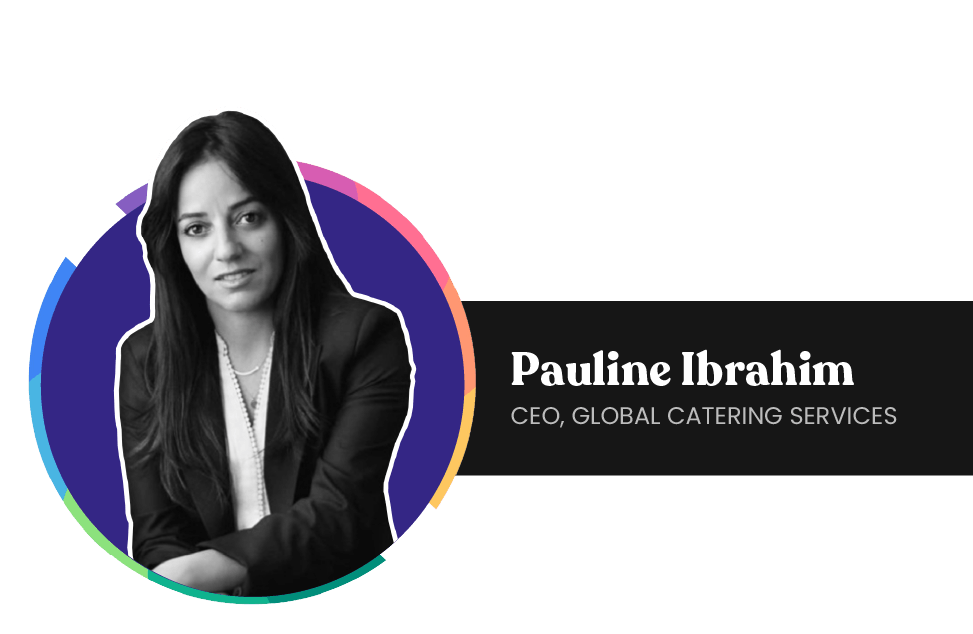
Pauline Ibrahim is a senior F&B executive with 18 years of experience in corporate finance and planning, specialising in brand due diligence, market entry, M&A, and franchising. As former CFO of Blackspoon, she led its acquisition by Jadwa Investment. Now driving strategic and financial growth at Global Catering Services, she focuses on profitability, expansion, and building inclusive, high-accountability teams across leading regional restaurant brands.
Speakers
Episode #54
In this episode, Ashish Tulsian sits down with CEO Pauline Ibrahim to explore her remarkable journey from a finance analyst in Lebanon to leading some of the most respected F&B brands in the Middle East. Pauline shares how moving to Dubai ignited her passion for the restaurant industry, why Azadea became her “F&B school,” and how jumping into the startup world with iKcon became her real-life PhD in growth, risk, and resilience, especially during the COVID-19 pandemic.
She breaks down what a healthy restaurant P&L truly looks like, why cloud kitchens struggle with sustainable profitability, and the real economics behind food cost, rent, labor, and delivery commissions.
From cautionary advice for anyone planning to open a restaurant in Dubai to her views on authenticity and women in leadership, this conversation is packed with hard truths every operator should hear.
Find us online:
Ashish Tulsian- LinkedIn
Pauline Ibrahim- LinkedIn
Ashish Tulsian:
So Pauline, welcome to Restrocast
Pauline Ibrahim:
Thank you.
Ashish Tulsian:
Interesting journey and I, you know, I always tell people that people don’t choose the restaurant industry in their sane mind. They generally slip and fall into it and you have been a finance professional. So I want to know everything about your journey, but we’ll start from the start. You know, give me a little bit on where did you grow up your early years and how did you come about to be a finance professional?
Pauline Ibrahim:
So I was raised and born in Lebanon. I studied banking and finance and that’s how my journey with finance started as a financial analyst in a big group diversified in Lebanon that has retail fashion, F&B. But at that time I started, I was leading the part of their countries within the financial analysis department. And then I spent maybe eight years or nine years in Lebanon. So I worked first with Azadea Group and then with Henkel and then I moved to Dubai. It was in 2015, 10 years ago.
Ashish Tulsian:
So up until 2015, all your life was in Lebanon.
Pauline Ibrahim:
All my life in Lebanon, all my life in finance and still, but it was the only relationship with food was mainly my mom’s food and checking all these restaurants and recipes until I came to Dubai. So my love story for food started in Dubai 10 years ago. So it was aligned with my move here. And this is where I joined again as Azadea Group to lead their finance division for the F&B. And at that time they had maybe 110 restaurants, mainly franchises, not homegrown. And after that, after Azadea, after five years, I joined iKcon, which is a startup.
They do a cloud kitchen and it was during the phase where delivery was making a big hype in the market and in line with the COVID years. And after that, I joined Blackspoon management. They have Allo Beirut, Ibn al-Bahar, and Masti. So I stayed there for three years. So my roles at that time started from financial analyst and then manager and then director and then CFO. So during my tenure at Blackspoon, I worked on the acquisition because the company was acquired by Jadwa Investment. So it was a very nice experience to look at the whole aspect from A to Z of this acquisition exercise. And later, one year and a half ago, I joined Global Catering Services, which is part of United Sucker, a big conglomerate in Abu Dhabi. They have Abu Dhabi Motors, real estate, heavy equipment, and their F&B pillar is called Global Catering Services.
Ashish Tulsian:
Awesome. And you have taken over as the CEO of Global Catering but you joined as CFO. Tell me, tell me about that.
Pauline Ibrahim:
So usually as a CFO, you get to see the business from all its aspects, from the A to Z, and you get involved in operation and commercial aspect. I tell you, part of my passion to F&B made me be present everywhere. Whenever I join a company, I support each department. I get to learn. I go to the ground. I see the kitchen I visited. I get involved in everything that happens. And this made me, of course, grow and add value to any CEO or any board that I’m supporting, because they really need to have a strong CFO with them. It’s not only about numbers.
It’s about also guiding them through their decisions, looking at the market, staying connected, growing. So it was a mix of growing my F&B knowledge as well as supported by the finance aspect. And that’s when in June, when the company they needed to hire a CEO, they looked at Pauline and they thought, then Pauline can make it based on the background and based on the fact that I was close to the team, able to lead in many aspects. So this is how it started. And the adventure has started, I can say.
Ashish Tulsian:
I’ll take you back to your earliest days in Lebanon at Azadea. That was your first assignment in the food space, right? In the restaurant space.
Pauline Ibrahim:
It was not food. So it is a diverse company. At that time, I was mainly focusing on the fashion and we were, let’s say, assigned a certain country. So let’s say I had Jordan, Romania, and then you start to grow. They give you UAE, which is a bigger scope, and then Lebanon. So they add divisions to your portfolio as an analyst. So it was very interesting, to be honest. When I look at Azadea, for me, it’s school.
Ashish Tulsian:
You were not doing restaurant at that time?
Pauline Ibrahim:
No, not until 2015.
Ashish Tulsian:
So your restaurant, Azadea, started when you came?
Pauline Ibrahim:
Yes, when I joined Dubai.
Ashish Tulsian:
I would love to talk about that then, because that’s the part of Azadea that I want to touch upon. Azadea is a great company. They’ve done great concepts and they continue to be very, very successful. Was that your early school into restaurant business?
Pauline Ibrahim:
Yes. I would say, when I told you like 2015, I moved to Dubai. So my objective was to move to Dubai. I was not looking at the industry. I wanted to do finance and Dubai, mainly because it was the land of opportunities. And at that time, I was maybe 30 years old, and I was saying it’s now or never. If I stay in my comfort zone, I will never make it. So it’s time now for me to leave Lebanon. And that’s how I came to Dubai. The opportunity with Azadea opened to me the doors to the F&B world. And this is where my passion started. And I would tell you, I was lucky.
I need to speak here about luck. And I was blessed to work with a very passionate team and a passionate leader who made me really see the real aspects of restaurants and F&B. So he used to push me to read about F&B, to attend workshops, to go to all these events.
So I went out of my finance box where you only sit and look at the numbers and work on feasibilities or due diligence or evaluate a new brand. Now it’s time for you to go and meet the world of F&B, try food, look at competition, attend those events, look at panelists, chat with them, see what’s really behind this industry. So that’s how it started.
And it is a school because when you look at the brands, the portfolio of brands and the countries and the complexities, you get to learn a lot from finance as well from operation. I learned a lot in terms of standards, in terms of growth, in terms of people, different cultures, different aspects of this industry. So that’s why I see it as a school. And whenever you are surrounded by the right people, this really would help you to grow further in your life.
Ashish Tulsian:
I mean, that’s great. Who’s the leader that you’re talking about?
Pauline Ibrahim:
Mert Askin. You’re familiar with Mert. He was the F&B president for Azadea with finance background. So we had a lot of similarities in terms of thinking, in terms of logic, in terms of pickiness when we prepare for any presentation or any board. But at the same time, it is about the character, like someone who’s very down to earth, who wants their team to grow. This is what helped me specifically to really love this F&B and to grow.
Ashish Tulsian:
And then you said iKcon. Why did you move from Azadea? And why iKcon? And what was that journey like?
Pauline Ibrahim:
So I was approached by the CEO of iKcon. And it was very simple on LinkedIn. When you meet a let’s say, bullish entrepreneur who dreams big and who is building the company and talking about delivery. And at that time, during my Azadea days, I was leading on the topic of delivery. So I was interested in delivery in particular, the packaging, the commissions, how you can turn the P&L positive for the delivery division, of course. It wasn’t that popular like 2017-18.
So when you say my restaurant delivery contribution is 2%, 3%, 5%, it was already something. Nobody expected that it will turn into 15% and 20% and you would still make money. So it was an interesting thing for me, because it involves technology, of course, the growth, it involves, let’s say, the future, because you need to look at the market trends.
And if you look at outside GCC at that time, delivery was really something. It was the days of Uber and the delivery started at that time. So when I was approached by the CEO of iKcon, he said, I’m building this company and I need someone strong in finance as well as an F&B.
Let’s have a chat, let’s have a coffee. When I got this opportunity, and I discussed it with Mert, I had to discuss it with him. He said, I cannot tell you to stay, you have to go because it’s really something interesting and sexy for someone who works in finance as well as an F&B. So if you don’t take it, I cannot tell you, I cannot really retain you, you have to take it. As a good manager today, I need to give you the right advice. So it was a tough decision.
But of course, again, if you don’t get out of your comfort zone, you will not learn, you will not grow. And that’s how, at that time, maybe it was, after leaving Lebanon, it was like the toughest decision because it’s a startup. So here you need to think, am I going to get my salary? Is it going to be sustainable? Is it real? Are these, let’s say, plans and promises to the investors real?
Is it going to happen or not? So I took, again, this challenge. And I’m happy that I took it because I learned a lot as well during my tenure with iKcon, especially that I had to set up the department to work on the ERP, to work on the Series A, Series B, to take part of the roadshows with the investors. So every aspect in iKcon was a learning. And this is like, when I look, you feel like Azadea was the base, your school, and then the PhD was at iKcon because it is that difficult. And it happened during the time of Corona later, of COVID.
So it was a time where we had to focus on the cash flow, managing the crisis, also accepting all the, I would say, if you remember, most of operators, they started to look for delivery. So we had a lot of operators approaching us. We need to find locations. We need to grow the team to be able to support that. At the same time, it is time of crisis. So how would you manage the cash flow? So it was a tough time. Of course, I learned a lot. I don’t regret it at all.
Ashish Tulsian:
Which year did you join them?
Pauline Ibrahim:
- Yeah.
Ashish Tulsian:
So this was like the starting of the storm.
Pauline Ibrahim:
Before this.
Ashish Tulsian:
So 2019, entire 2019 and mid 2020 up until COVID, it was like a fast growing talk of the town.
Pauline Ibrahim:
Especially also with Skitopia and all the big players. So it was mainly the main news about F&B was delivery. So and who’s doing what and who’s moving faster and all. So yes, now when we talk about it, it feels like 10 years ago, but we’re just still in 2025.
Ashish Tulsian:
You know, not a lot of professionals will actually take and successful professionals that do in a city like Dubai. Well, you know, after establishing a career, and seems like the life is going, you know, well, we’ll take a jump to a startup. So I think that courage and that, that feeling, I totally get but why like, coming out of iKcon, why did you not go to another startup was it?
Was that one of the things that you felt or were you like, okay, I’m very good at venture. Thank you. Never again.
Pauline Ibrahim:
Not really. Because if still when I get to see people and they get my advice, like we were approached by a startup, shall we take it or not, I would always tell you take it, you have to do it in your life. It’s gain more than failure gain more than loss.
So you have to take it no matter what, even if financially, it’s not as good as you might expect, because you can be also you can get those ESOP or shares like a different type of benefits. So it’s not, you should not only look at the package. But overall, as an experience, it’s really good, it will give you a lot.
So going back to iKcon, when I left iKcon, again, I was approached by Blackspoon, it was through a recruiter at that time. And he said they have, so it’s a company that wants to be become well established. So they are in a phase, he said, it is a startup, not a startup, really. So well established brands. But when you look at the infrastructure, it looks like a startup, and they need someone to come again, and to fix the division and to fix the team and to recruit more finance people, get big audit companies on board a good ERP system in place. And the usual turnaround that you need to do for any organization to grow value, so that later, as you can see, with Blackspoon, it got acquired by a big VC from Saudi.
So again, it’s the story continues. So I cannot tell you, I did not really go into a startup again. But what I learned what what I would tell you, I’m not, when you say thank you, not again. So what is thank you not again, for me at that time, for a finance person, I used to, let’s say, look at the profitability of a restaurant or a company, I used to focus on EBITDA, I used to look at ROI, I used to look at the MPV and all. When you are in a startup, you have to shift your mindset. So it’s mainly top line growing your sales and you make money.
So for me, it took me time, like it’s like a cultural change in my mindset, how to look at a startup. So this part of startup life, as a finance person, yeah, I would tell you no, thank you, I would go back to my traditional way of doing things of really looking at feasibility and having a clear strategy because in startups you have to be very dynamic. So, and you can see it, like initially they started as, I’m talking about all operators, not iKcon, they started to say it’s delivery and it’s the new world and then later they wanted again brick and mortar, they wanted hotels. So, you see that it’s not really the strong base of the F&B, there’s no story.
So, when I joined Blackspoon, what I was missing again was the story behind the brands, the passion, the owners, the entrepreneurs who really built a brand from a simple activity, let’s say, from a simple, let’s say the owner, one of the owners, he goes for fishing and that’s how he came up with, let’s say, Ibn al-Bahar. So, it’s a story of a fisherman. So, I miss those where between startup and going back to a company that has really a certain background. Yes, definitely it’s something that you would miss.
Ashish Tulsian:
Both are beautiful points and I think I agree with your first one even more because, you know, we come from that side, right? I mean, I’m in a, I operate in the world of tech which is surrounded by VCs in California and we continue to bootstrap and, you know, retain a profitable show. So, I hear you.
Pauline Ibrahim:
Yes, that’s why I was smiling because I feel like I’m…
Ashish Tulsian:
Yeah, that’s, you know, that really speaks to me and I think for a finance professional, if you’re not attuned to like a cash burning, money guzzling engine who has a hope that someday somebody will acquire us and bail us out, you know, sounds like a almost like a gambling strategy than a business strategy.
Pauline Ibrahim:
But it is beautiful because it tells you that the sky is the limit in such startups. So, you dream big, you really make it. So, you need to shift your mindset and you’re there.
Ashish Tulsian:
That is true. What do you do to enrich yourself? How do you, not only in the current phase but in general and I see that, you know, that you’ve been really, you’re a thinker, you know, and you introspect. I can clearly see that. What allows, what makes you become better every day? What are the practices? Do you read? Do you listen to podcasts? Is there something else that you do to keep yourself, you know, sharp, agile and thinking?
Pauline Ibrahim:
So, I would tell you it’s a very like normal, strict, normal recipe. I’m not going to come and tell you I’m reading 10 books per month or doing this and that. I wish I have the time, especially when I was doing my CFO job because it’s really very demanding.
What I would do normally, stay surrounded by people who really give you something in life. You learn from them. So, the more you surround yourself by a good team, by people who really speak the right language with you, you learn from them, you will grow. I attend a lot of events as much as I can. I wouldn’t say event, not like, I’m not going to events. We’re not going to make any advertisement, but I would say where you can learn about new market trends, what operators are doing, the best practices, just to see how things are going when it comes to F&B, of course.
I read a bit. I go through articles as much as I can through reports, special business cases as well to learn more because this is where you get the finance, the strategy, as well as something relatable to the industry that you are in. Whenever I travel, I get a lot of things that I learn a lot when I travel. So, and what I do before traveling, I prepare my list of restaurants that I want to see to try or coffees or sunsets or anywhere. I read a lot about these places. I look at the reviews and go, I check and see what is trending.
I’ve been doing this for the past 10 years since I started this, since I went into the F&B passion. So, it’s not related to finance, you see. So, even when I’m traveling, I can see an idea, I can take a photo, I would send it to the brand manager, to the operation manager. Why don’t we do this? Why don’t we do that? So, I’m always interested or like, I like to think always out of the box.
And this is how you, whenever you see, the more you see, the more you get ideas to implement or to apply, of course, if it’s relevant to your brand or not.
Ashish Tulsian:
But that, I mean, interesting, you know, you’re still talking about F&B, you know, as an industry, which is great. But is there something that you do for self-help? I understand that you don’t read a lot of books, which is fair.
But is there, you know, what keeps you, you know, introspecting always? Where do you learn from what to do better? Not only professionally, but personally first, and that ends up reflecting professionally.
Pauline Ibrahim:
Yeah, definitely. Personally, it’s mainly I have strong faith. I pray, I meditate. This is the main, I would say, shield that protects me from everything, every day. And it helps me to grow, and it helps me to take good decisions. So, whenever, even when I’m praying, I say, please help me to take the right decision, because especially when your decision can impact the life of people.
So, I stay connected and close to God whatever I do, whatever I’m doing, wherever I’m going. So, it’s the main shield that protects me and help me in my day-to-day life. Being surrounded by a great family, a great husband, a lot of friends, it also helps you to really stay strong in morale, in whatever you need in life.
You are supported also by a strong backbone, sports, the usual, pilates, walking. So, I was telling you nothing major, because this is what most of people are doing. It’s mainly you have to always try your best of luck to stay, your best to stay positive, to stay pragmatic, because whenever you are pragmatic, you know that when you are dealing with a problem or a situation, you know how to get out of it. So, it’s more about training yourself to really be ready for everything.
Ashish Tulsian:
What frustrates you about people? I mean, every business is business of people, especially nowadays. I mean, traditional manufacturing aside, every knowledge-based business is people. Hospitality and restaurant is completely people. What just makes you pull your hair?
Pauline Ibrahim:
If they are superficial and also when they are not genuine. So, when they are trying to say something that they are not, and you know it, and you see it, this is the worst thing that you can face when you are sitting with people.
Ashish Tulsian:
And you find a lot of those in boardrooms at times.
Pauline Ibrahim:
Definitely, yes.
Ashish Tulsian:
What do you do then? How do you handle that?
Pauline Ibrahim:
That’s when you say no in the room. Like the example I gave you initially. You know, you need to accept the fact that you are in a diversified environment. Not all your fingers are the same. This is a saying. You need to accept that there are many cultures, many backgrounds, many agendas in a room. And you need to stay true to yourself, true to your organization. And whenever you feel that you don’t fit in this room anymore, you should leave it. As simple as that.
Ashish Tulsian:
You know, my wife is my co-founder in the business. And I call her the full-stack entrepreneur because in her journey, her name is Sakshi. And in her journey, I saw her from being a tech person to a project manager to a finance person to actually orchestrating sales and then managing revenue.
So I’ve seen almost all phases of her. And each phase when she took up, it was compulsion. It was almost not a choice. Or rather, it was a choice on her end, but it was almost the compulsion of the situation that, oh, okay, somebody needs to take it up. And she said, go, I’ll take care of it. And each time we discovered that, oh, wow, like, you know, what did you do here?
And so I, and I’m telling you this because I want to qualify my position on this. I hate to ask this question, but I have to. How has it been a woman leadership that grew literally from the bottom, you know, the starting point, you know, to where you are? How much has that been a battle or not? Or, you know, what’s your, what’s been your experience or view?
Pauline Ibrahim:
To be fair, throughout my experience, even when I was in discrimination, or I was not hired at any place because they wanted to fill a KPI, a gender KPI, and which I wouldn’t have accepted because at least I want them to see my skills, what I can add as a value to the table equally like any man. So the battle is mainly to prove yourself, mainly. It’s not about, so nobody forced this battle on you.
You can choose an easy path, or you can decide to be like motivated, ambitious. You want to grow, you want to do more. So it’s more of a personal battle. I cannot say that it was forced on me. I have four sisters. So we are five girls in the house. I am the youngest. And we come from a, also from an environment where usually the parents, they expect to have boys, not girls, or at least you need to have a boy for continuity of the family. In our case, my dad used to say, I wouldn’t replace any of my girls with 10 boys. Like they are equally, you know, not equal. They are, each one is better than 10 boys. And this came from him. And definitely it stayed in my head. It stayed in my heart. And every day battle, I take it and I keep it in my heart.
And it reminds me that it doesn’t matter if you’re a girl or a boy. What matters is that you need to really stay true to yourself, fight for you, for people around you, do what is right and what is fair. And that’s it, without really looking at genders or religion or even nationalities.
Ashish Tulsian:
That’s beautiful. And that’s one of the most wholesome, you know, answers. I feel that answer. But as I said, I had to ask that. Because I do wonder about it at times, you know, because world is, you know, a certain way, which is fair. I mean, but anybody who’s fighting, they get their chance. That also is true.
Pauline Ibrahim:
We are in a, like a nice, in a very, we’re lucky to be in this environment, in this country, in this area of the world. And at least for women, you can see that lately, most of entrepreneurs or even when we look at the F&B industry, there are a lot of strong women doing great job, bringing beautiful concepts to the market. So everyone is shining. So it’s good to see it.
Ashish Tulsian:
Tell me about your family.
Pauline Ibrahim:
So we are five, five sisters. I’m the youngest. I got married two weeks ago. So this is the latest highlight in my personal life.
Ashish Tulsian:
Congratulations
Pauline Ibrahim:
Thank you. So I live with my husband and I call him husband and best friend because he has been also by my side in the past nine years. He took part of my growth, motivated me a lot. Really, I’m lucky to have him by my side. We both live, of course, in Dubai.
Whenever I had any important decision or a career shift, I used to get his opinion on that. He does more analysis, like he takes his time. I’m someone who might jump on an opportunity. So when I was, let’s say, taking the iKcon opportunity, he was like, are you sure startup? It’s not stable. I said, I need to try. So and then later he always talk about it and he says, you know, I was bold. I was brave to take it. And he’s happy about it. So different characters, but we get along so much.
Ashish Tulsian:
That is beautiful. You know, you talked about your, you know, you being lucky to be with great managers, great bosses who nurtured you, helped you learn. How are you giving that back? And especially now, I mean, you’ve been in the position, you’ve been in the C-level position before. So I’m sure you have had, you know, people you’ve nurtured all throughout. But as a CEO now, this is also a big part of your, you know, KRA, if not KPI. How do you do that? How are you nurturing people around you?
Pauline Ibrahim:
Of course, when you say, I know I was lucky to work with great managers, it tells you that at the end of the day, you would learn something from each person. And sometimes when you don’t learn, it’s also a learning because you might say, I’m not going to do this with my team. I’m going to avoid this.
And I wish I can be like A or B or C. So, and it starts to build up. Today, I’ll tell you, I’m in the, I started the journey and I’ve been leading my finance team before finance / IT / inventory. So different departments within the company. So you need to, the main thing that you should do as like the best thing I would tell you on the recipe is to listen to people. So first you need to listen, you need to give them the time, you need to understand what are, what they are afraid of, what are their struggles? What, what is their objective? Why are they in this company? How they want to grow and all.
So first part is you listen, you understand their needs and you see how you can support their needs. Second is learning and teaching. So even when I was during the last one year and a half, let’s say I, I like people around me to all be educated, even if it’s someone from operation or marketing educated about finance, of course, everyone is educated, but to understand more finance, to understand why we are picky sometimes, why we focus on those KPIs, why it is important, how it can impact the business.
So you need to educate people around you so that everybody can speak the same language. And this is how you support them to grow. And when they feel that you are helping them to grow, it’s not like you’re not worried that they might take your chair one day, they might take your role. They will feel more comfortable to work with you. They will understand that your intention is mainly the good of the business and their good, their own good. It’s not like your hidden agenda.
You have to be transparent as well. So even in, when there are difficult times, you have to be transparent and to tell them we’re restructuring, let’s say, and it’s not, we don’t know when it’s going to end or you’re safe, you’re not safe. So they need to hear from you those things because they need to hear it from their managers, not from the gossips or from someone else. So the more you are transparent, the more they feel also safe wherever they are.
Ashish Tulsian:
You’re on a crazy market. This is, Dubai is a land of opportunities.
Pauline Ibrahim:
Yes.
Ashish Tulsian:
But at the same time, entire world is seeking opportunities here. So that just makes it crazy. And you have seen multiple flavors of F&B business, you know, from well established Azadea to, you know, thriving iKcon to Blackspoon, you know, which also runs iconic brands. Across all these, when you see last 10 years, what do you what have you understood, or you still struggle with, you know, when you want to predict the F&B in Dubai?
Pauline Ibrahim:
So first, it’s a very dynamic world. So you understand a lot every year. And the struggle can change every time. Because when I started, it was when I came like 10 years ago, it was mainly the franchises, the big international brands that are doing well. And then now you see that it’s more of the homegrown that are becoming international, international that are really expanding outside UAE. So it’s a different formula.
The chefs are more popular today, they are essential to be part of your brand of your depending, of course, on the cuisine, depending on the story. But a lot of changes are happening in the market. What is the struggle is to really understand that for each brand, you have to be really relevant and true to the brand. So if it works here, it doesn’t mean it will work. And this and the other brand, you cannot repeat the same story, the same success story. If it worked, let’s say in Dubai, it might not work in Saudi. So the struggle here is to really understand each market and the guests that are coming to your restaurants, what they want, why they like you.
Ashish Tulsian:
But practically, you know, I understand what you’re saying, right? But practically, how does that happen on ground? I mean, it’s easier said than done. Because, you know, I’ve seen brands not work in two different sides of Dubai. Dubai and Saudi is still quite a transition, right? How do you understand that?
And my question is not only about the creative or understanding aspect. My question is also from financial aspect, new malls springing up every day. Dubai spends, you know, new settlements and new regions like, you know, it’s a child’s play every time. I mean, I’ve been coming to Dubai for the last 10 years. And I have never been able to keep up with the city or growth of the city quarter on quarter. How do you, what have you understood about this market that you would want to tell?
Or rather, let me rephrase the question. If a new person comes to you today, who wants to set up F&B business here? And if they are veterans in their own country, they can be from some other country. They are F&B players, they know food, they know the restaurant smell, but they are setting up in this market. What will you tell them? What would be your advice?
Pauline Ibrahim:
I tell them don’t do it. It’s too late. You’re a bit late. The market is already saturated.
Coming back to the serious aspect, as a finance person and working on a lot of concepts so far, definitely, you need to do your study, your market study, your feasibility study, you need to see, look at all scenarios, what can work, what cannot work. So take a very conservative approach whenever you’re building the feasibility as well your restaurant.
Today, with experience, I would tell you it’s better to go for a small sized restaurant, because this is where you limit your investment, your capex, even the employee structure, because it’s the most expensive part of your P&L. So if you want to, if you’re coming now new to the market, I would tell you, don’t go big, go small. Start with a small concept with a coffee, maybe, or fast food, or a very, like, optimized brand that you can really, that can work well. This is one thing. Depending on the brand identity, you need to see where you should open. Don’t believe that you, even if you open in Dubai Mall, you might not do well.
So it depends on which part of Dubai Mall, which location, the visibility that you are getting. Is your brand appealing to tourists or to locals? So there are a lot of questions to look at whenever you are really going into opening a new concept or maintaining the performance of your existing portfolio. But two things I would say are very important. First, you have, your brand should be always relevant. So you, it should evolve. It should really keep improving, because you need to attract your loyal customer, as well as the new customer or the young generation. So you need to really keep improving the brand. You cannot stick to the menu that you had maybe five years ago. You need to improve it. Does it include healthy options? Does it include gluten-free? Does it include the sharing portions, small portions? Because people are changing, especially after COVID. So you need to always improve what you have.
The second point is rebranding is not always the right solution. So it’s a very sensitive topic. Sometimes you might say, we should do rebranding. We need to change the logo. We need to change the colors. This brand is old, but do you think it will really make it something that is not existing?
Ashish Tulsian:
You’re talking about the brands which are bring there?
Pauline Ibrahim:
Something that’s existing. Yeah. Any brand in your portfolio, do you really want to do rebranding or make a drastic change? Maybe not, because you need to also understand your existing customer, how they built a relationship with that brand, how it might impact them.
So as you said, it’s not like one formula that could work everywhere. It’s not like one theory, success story that you can apply everywhere. You need to go case by case, location by location, and then it’s tough. And that’s why I love F&B, because it’s tough. It’s complex. It’s not a straightforward business. People think it’s easy. Not at all. It’s too complex.
And sometimes like people who might come from abroad who open maybe a street food store somewhere and it’s made well, they think it will do well here. They don’t know that there are a lot of permits. There are a lot of SOPs that should be in place, a lot of criteria to be able to build this restaurant. So it’s not really easy.
Ashish Tulsian:
What’s the, you talked about that manpower being like a pretty large expense center today, and hence people should kind of start small so that, what’s the percentage of revenue allocation or other expense that is manpower today?
Pauline Ibrahim:
If I want to look at the health CP&L, if you manage to keep it at 18-19%, you would be doing very well. Below 24%, you’re okay. Anything above that, it’s not really good.
Ashish Tulsian:
Only for manpower costs?
Pauline Ibrahim:
Yes.
Ashish Tulsian:
That’s high.
Pauline Ibrahim:
Yeah. It is high and it depends also on the brand.
Ashish Tulsian:
Can you give me a pie chart of your expense percentages, so manpower 18 to 24 percent?
Pauline Ibrahim:
Yes, so I will give you like a typical or ideal, without referring to any example.
Ashish Tulsian:
Yes, yes.
Pauline Ibrahim:
Okay, so initially you start from your top line, your revenues, so your food cost, if you can maintain it at 22 percent to 24 maximum, it would be also great. Depending on your cuisine, if you’re serving, let’s say steak, meat, so it becomes more expensive. It depends case by case. And then the second big cost would be the labor costs, which we just mentioned, including all the benefits, the insurance, the travel expenses of the employees. The visa, this is an aspect also related to UAE and GCC in general. The second…
Ashish Tulsian:
So 18 to 24 percent of manpower.
Pauline Ibrahim:
Of manpower.
Ashish Tulsian:
Inclusive of everything.
Pauline Ibrahim:
Yes, the total cost. The second big cost is your rent. So here also, if you manage to negotiate or it depends where you are, if you are in a mall or a street location, definitely in a mall, it comes with a lot of extras, common area charges, chilled water and all these. So the rent today, if you’re lucky, it is 8 percent. If you go with the latest rates, it’s 15 percent.
Ashish Tulsian:
And I hear that malls here also charge some percentage of your delivery business as well.
Pauline Ibrahim:
Yes.
Ashish Tulsian:
In case you’re delivering from that store.
Pauline Ibrahim:
Yeah, it’s based on the revenue.
Yes. I would say, yeah, 8 to 15. The most common today in big malls, it’s definitely 12 to 15 percent. So it’s not affordable anymore like before. And then the marketing, 2 percent. Your maintenance, electricity, cleaning, it could be up to 3 percent. So a healthy EBITDA today is around 18 to 24 percent.
Ashish Tulsian:
And practically, so this is the ideal one.
Pauline Ibrahim:
Yes.
Ashish Tulsian:
Practically, what do you think is the EBITDA which people are kind of earning or trying to earn today?
Pauline Ibrahim:
They are trying to be at 12 to 15 percent.
Ashish Tulsian:
Really? They’re still in double digit?
Pauline Ibrahim:
Yes, a lot. Otherwise, they will be out of the business because after the EBITDA, you still have your depreciation, your finance costs, a lot of things to handle.
Ashish Tulsian:
No, yeah, that’s why I’m capping it at EBITDA.
Pauline Ibrahim:
Yes, yes. If you really want to sustain your business, if you are on the 12 to 15 percent, then you are in good shape. Anywhere below the double digit, when your EBITDA becomes one digit, it becomes very difficult.
Ashish Tulsian:
You do not factor marketplaces, aggregators?
Pauline Ibrahim:
The commissions and yes, if you have high dependency on delivery. So, the delivery costs, if you are highly dependent on delivery, it would be 15 percent or 16 percent from your sales. So, if your delivery is 50 percent.
Ashish Tulsian:
So, that’s another seven and a half percent gone from your EBITDA.
Pauline Ibrahim:
That’s why if you look at organizations, it’s better to have a diversified portfolio of brands because you might have a brand that is highly dependent on delivery and a brand that only generates 10 percent from delivery and where they can keep the commission percentage at a low rate.
Ashish Tulsian:
Do you think that basis that pure cloud kitchens can ever make money?
Pauline Ibrahim:
No. And that’s how they started to go into brick and mortar, into hotels, into like expanding their portfolio, diversifying their channels because they need to make money at the end of the day. And even the investors, they started to become more picky or aggressive because they wanted to start to see a light at the end of the tunnel. That’s why they had to shift their strategy from delivery only and cloud kitchen to, as well, dine-in experience.
Ashish Tulsian:
You talked about your coach in between. You mentioned that, you know, do you take professional coach? Do you have a professional coach?
Pauline Ibrahim:
I had a professional coach. It was in 2021, I think, or end of 2020. And I would say each, there are a lot of mentors in my life, people that I learned from, including my husband. So any conversation, any experience that you get in life, it helps you to really add, it adds value to you, to your thinking, to your growth as well.
Ashish Tulsian:
But what made you get, you know, go for a coach in 2021?
Pauline Ibrahim:
So it was in the phase where I was shifting from iKcon to Blackspoon. It was where I was deciding, shall I stay in F&B? What’s next for me in finance? So I wanted to discuss it with someone to see more about the potential.
Ashish Tulsian:
And how did it go?
Pauline Ibrahim:
He was the one who said, you’re going to be a CEO next, based on our conversations and our deep dive sessions that we had, yes.
Ashish Tulsian:
And, you know.
Pauline Ibrahim:
And I highly, I highly recommend this because you always need to talk to professionals in your career. You should not look at it only from your perspective, not from the same room. Even when you are looking, talking to your boss, he might not really always give you what’s best for you as an advice. So you need to hear it from an external person, usually.
Ashish Tulsian:
So, you know, how long did that coaching?
Pauline Ibrahim:
It was only five months.
Ashish Tulsian:
Five months. But was it like a weekly, fortnightly?
Pauline Ibrahim:
No, I would say maybe twice per month. I can’t remember. Twice per month. Yes. Not weekly. We didn’t have the time as well for that.
Ashish Tulsian:
And have you ever thought about?
Pauline Ibrahim:
Like two hour coffee where you sit and discuss updates from work, from life. What’s happening? What’s next? It was at that time where I started to be approached by some recruiters, you know. So sometimes I was updating him about how it went.
Ashish Tulsian:
Was he a career coach?
Pauline Ibrahim:
A career coach.
Ashish Tulsian:
Career coach. And have you thought about, you know, having a professional CEO coach again?
Pauline Ibrahim:
I might do it. Why not? It’s good.
It would always help you to really look at things from a different perspective. And if you want to grow more, if you want to see if you are on the right track, what can be done better, what should you adjust? Especially now, when I am having a shift in my career.
Not everything can work for a CEO that used to work for a CFO. So you need to adapt. You need to do some changes to your leadership style, to your day-to-day activity, to your routine, to everything. Yeah.
Ashish Tulsian:
Pauline, this is a phenomenal story that the world needs to know more about, but I’m glad that the story is still in making. I wish you all the best, and thank you for allowing us to have this conversation. It was fabulous.
Pauline Ibrahim:
Thank you for your time. It was a fun session.
WANT THE LATEST SCOOP?
Subscribe to the Restrocast newsletter
Get the updates on the upcoming episodes, insider news, and email content full of value right in your inbox, never pushy, always free.
Home | Episodes | Newsletter

TUNE IN RESTROCAST ON



Podcast powered and distributed by Restrocast Inc.