episode #53
Saudi Arabia’s Next Iconic Brand? Maqloba’s Global Ambition with Abdulrhman AlmobarakIn this episode, Ashish Tulsian talks to Abdulrhman Almobarak, founder and chairman of Maqloba, a Saudi QSR rice brand. Abdulrhman shares how he left a stable IT role to build Maqloba, why he refuses to rush into franchising, how the brand cracked basmati at scale, adapts to Gen Z, and its role in shaping Saudi Arabia’s Vision 2030 food future.



ABOUT THE HOST

Ashish is a serial entrepreneur and serves as the CEO & Co- Founder of Restroworks. He is one of the entrepreneurs who has mastered the art of bootstrapping startups to scale. Ashish is a prolific angel investor and mentors budding entrepreneurs and startups in Silicon Valley and India.
ABOUT THE GUEST
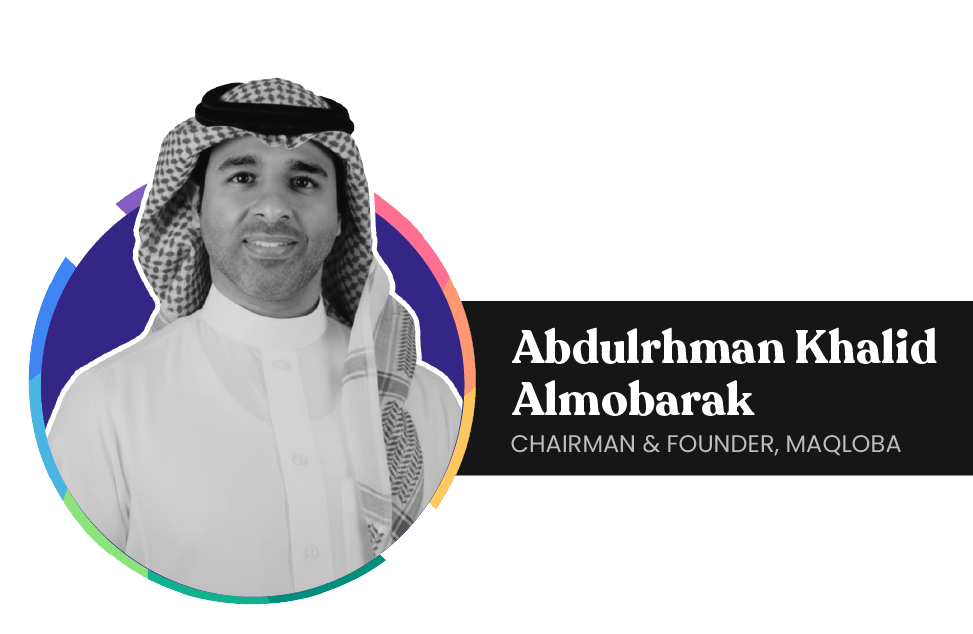
Abdulrhman Khalid Almobarak is the CEO and Founder of Maqloba, a Saudi QSR rice brand redefining fast-casual dining. An electrical engineer with a Master’s in Engineering and Technology Management, he previously led communications at King Faisal Specialist Hospital and now also serves as an active angel investor and member of the Riyadh Chamber’s F&B Committee.
Speakers
Episode #53
In this episode, Ashish Tulsian sits down with Abdulrhman Almobarak, founder and chairman of Maqloba, the Saudi brand reinventing rice for the QSR world.
Abdulrhman shares how an engineer working in a top hospital saw a simple gap: rice is the main dish in Saudi Arabia and across the Gulf, yet there was no global rice brand, and even locally, it wasn’t convenient to eat at work. That insight led to Maqloba’s signature “flip” box, turning a traditional rice dish into a modern, desk-friendly experience.
He talks about taking a bank loan, testing Maqloba while still employed, the queues outside his first store, and the moment he decided to quit and go all-in. Abdulrhman also explains why, despite having 12 successful company-owned outlets, he refuses to rush into franchising, given how difficult it is to standardize basmati rice.
The conversation delves into his leadership philosophy, sharing insights with early team members, adapting to Gen Z’s trend-driven behavior, managing phone addiction, and Maqloba’s role in Saudi Arabia’s evolving food scene under Vision 2030.
Find us online:
Ashish Tulsian- LinkedIn
Abdulrhman Khalid Almobarak- LinkedIn
Ashish Tulsian:
We will, you know, go back a little. How did you get into the restaurant space?
Abdulrhman Almobarak:
In order for a business to succeed, it has to solve a problem. And this is what drives Abdulrhman as an entrepreneur. Back then, you cannot see a rice brand that has been expanded all over the world.
Ashish Tulsian:
Take me through your early years, you know, tell me where you were born and raised and how were the early years.
Abdulrhman Almobarak:
I was born in US and I moved to Saudi Arabia when I was young. Then I’ve done all my studies in here. After I graduated from high school, I went to US. I did my engineering degrees. Then I came here and I started my first job in hospital. Then I did seven years of work and started Maqloba. I said, you know, thank you very much. I have to start my own business and take care of the business, which I’ve done in 2018-19. When you were like in your 20s, you don’t think about the risks as much as when you reach late 30s, early 40s.
The more you grow, the more you will be risk first. And I took a loan from the bank. I started the business, maintaining my job. And I said, you know, let’s start.
Ashish Tulsian:
Remained an employee for seven years and then you transitioned to be an entrepreneur. What changed in you in that transition?
Abdulrhman Almobarak:
When you are an employee, you have certain tasks that you have to do and you have to say yes. But when you are an entrepreneur, you have to be the boss. You have to be a leader. You have to create the manuals, the psychology.
Ashish Tulsian:
Gen Z, Gen Alpha, I mean, they don’t care. So given Maqloba is a new brand, what are you doing to build that relationship with them?
Abdulrhman Almobarak:
Continuous menu enhancement is the key for the future.
Ashish Tulsian:
Hi, welcome to RESTROCAST. Today, my guest is a young restaurateur from Saudi Arabia, Abdulrhman Almobarak. He’s the founder and chairman of Maqloba. Maqloba is a modern spin on Arabic and Gulf based rice dishes, which is now being served in a fast, casual, modern format. Abdulrhman’s story is one of inspiration that every young restaurant owner should watch or an aspiring restaurant owner should know because he’s an IT and communications engineer, worked in healthcare and turned to be a restaurateur seven and a half years back. The story is inspirational because Abdulrhman packs in himself, not only the ambition, but the calmness to execute very, very well. What I learned in this one is that he’s somebody who is at the forefront of what local, new age Saudi entrepreneurs are doing, not only for the local market, but while they are disrupting the local, they are thinking global.
There’s a fun one, do watch. Welcome to RESTROCAST. Abdulrhman, welcome to RESTROCAST. Thank you.
Abdulrhman Almobarak:
Pleasure to have you here in Saudi Arabia.
Ashish Tulsian:
Thank you. Thank you. And thank you for agreeing to do this. I want to know all about Maqloba and what you’re doing today, but we will go back a little. How did you get into the restaurant space?
Abdulrhman Almobarak:
This is always a question that for people to start a business, generally speaking, it has to have a reason. In order for a business to succeed, it has to solve a problem. And this is what drives Abdul Rehman as an entrepreneur to start such a business, and specifically in rice restaurants, where rice is a commonly dish that, I would say, most of the people around the world is eating.
Yet, back then, you cannot see a brand, rice brand, that has been expanded all over the world. As well known a brand similar to the burgers, pizzas, subs, and so forth. So when we see like, for example, in your country, in India, the rice is the main thing.
And Saudi Arabia, Gulf countries, the same thing. But why there’s no distinguished rice brand that was reached international and global.
Ashish Tulsian:
But was that the original problem that you were trying to solve?
Abdulrhman Almobarak:
This is number one. Number two, you know, when you have something, it’s a question mark. It says like, why this is not happening? Number two, the rice here in Saudi Arabia and the Gulf, back then was not presented the way that should be. It was like, when you order rice from any classic restaurants, you receive it in a normal way, in aluminum foil, and you struggle to eat it. It’s not easy and handy to eat it in a work environment, for example.
So there is a missing. And this is the main dish that we eat in Saudi Arabia, rice. So you say like, people in work environment, they cannot eat rice. It’s very difficult for them. How do we solve this issue? So we created a model and a way. And that’s why we called it Maqloba at the beginning. Because Maqloba, it means flip upside down. So we said Maqloba, which is the original dish that came from Palestine. That all the dishes that we have, we serve it in a box and in a pot, aluminum pot, and a tray that comes with it. Then a person just simply flip it and eat it on their table, on the box. So they don’t have a messy way and messy place. And that has a breakdown in Saudi market back then. And this is the main reason that we solved an issue that’s happening in here. And hopefully in the future that we expand this brand. And this is our intention to have it all over the world.
Ashish Tulsian:
But was this the, this is beautiful. I mean, I understand that you’re talking about something which is very local. But at the same time, you know, the problem, if solved well, can go global. But was this the number one reason why you started? Like, was this the day one thought?
Abdulrhman Almobarak:
This is part of it. But number one, because, you know, I’m an engineer. So engineers normally, they’re creative. They’re looking to solve. Their mind is programmed to solve solutions. And the second thing that I’m a fan of cooking and especially cooking rice.
Ashish Tulsian:
Oh, you cook?
Abdulrhman Almobarak:
Yeah. So I’ll cook for you all. And during my stay when I was in the US as a student, you know, this is what you were doing in your free time. You’re just cooking and trying to present a good food with your friends and family. So when I came back from the US, I noticed like the rice was not taken to the second level. It was like the same way that I left Saudi when I was, you know, 18 years old. Then I came back when I was 28, 29 years old. And during this period, or less, even 27. So the rice was the same.
The way it presented was the same. The taste profile was the same. The taste profile which you’ve been eating in Saudi market or Saudi restaurants is not the same taste as what you eat in the home. And this is normally the case in most of the countries. The unique dish in India, for example, when you eat in the restaurants, it might be not similar to the one in home. So how can I bring my mother and grandmother’s food to the restaurants and to other people who can have the same flavor and spices mix in a restaurant, which is very difficult.
It’s not easy, especially in rice. So that was an obstacle that also we tried to solve and successfully we have solved.
Ashish Tulsian:
When did you start Maqloba?
Abdulrhman Almobarak:
2018 was the launching day, March 2018. And I mean, now we are at 2025 and we have 12 restaurants here in Riyadh. And many restaurants is coming up during this coming years.
Ashish Tulsian:
Brilliant. And how was that jump? Like, you know, you had a career and if you were working seven years, you’re in IT and, you know, communication, you’re working for a prestigious one. What, what were the hurdles? What made you jump and what were the hurdles? How did the family take it?
Abdulrhman Almobarak:
Well, actually, you know, my father is conservative when it comes to business because he’s been employee all this time. And, you know, when you were young and I’m still young, by the way, but when you were like in your 20s, you don’t think about the risks as much as when you reach late 30s, early 40s. And the more you grow, the more you will be risk-
Ashish Tulsian:
Averse.
Abdulrhman Almobarak:
Averse. And this is what happened. I was a risky guy. I took a loan from the bank and I started the business maintaining my job. Then I said, you know, let’s start it and see if there is any glitch. If it’s not working, then at least I have my job. So I took six months unpaid leave and then the business started. And I, I was not planning for this, honestly speaking. You know, I was like, wow, the lines is just all over the place.
Like you see the lines outside the store and the people, they’re complaining. And some people, they’re just saying that they do this intentionally to, you know, pull a crowd to the place. And I was like, okay, I have to sit back and see what’s the reason why the people are coming.
Is it because of the packaging or is it because of the food? So I started thinking about this, talking to people, and I found, no, the market needs this. And there is a huge opportunity, but still I’d not give up my job. So I was talking to one of my friends who was the leader in this. And he’s like, Abdulrahman, you have a successful product. You have opened a door and a segment in rice restaurants.
Nobody has tapped on before, which is a QSR rice. And this is not a classic way of presenting rice in Saudi Arabia, at least. And I suggest you to quit your job in order for you to focus. When you focus on your job, when you know that there is no backup plan, then you will be more focused. If you have any small bump, then you will not quit. So I listened to him. I went to my manager and I told him, you know what? After this six months, I need to quit. So I quit my job. I have loans from the bank. I started the first branch within less than one year. In 2019, I opened the second branch. I was about to open the third branch. Then Corona hit. I was like, shit, this is like a problem for me. You know, you have a cash flow. Everything’s perfect. I don’t have any loans anymore. I paid off during the first year. I paid off the loan. I opened the second branch from the revenue and the net profit of the first branch. I opened the third branch from the second and first branch. So everything was perfect. Corona came.
You don’t know when it’s going to be finishing. It was like, you know, chaos for me. I was like under pressure of when is this going to end? But finally, thanks God, Alhamdulillah, the first year of opening, it took me a long time to open. But successfully, this branch was the best performing branch. The ROI was, I still remember, it was two years, which is not easy in restaurants.
So that gives me, again, another power to go for the fourth branch, fifth branch, sixth branch. And then, gladly now, we have a twelfth branch. And not just that, we opened the first rice restaurants in airports. We never in Saudi Arabia have rice restaurants in airports. And we’ve been selected to be presented there because they know that it’s a brand and could be easy for the travelers to have rice while they’re in go. And while they’re traveling, because again, rice is not easy to be eaten. And that gives us an edge over all other competitors in the market. And another branches will be opening in other airports in Saudi Arabia.
Ashish Tulsian:
And all these are 12 of your own?
Abdulrhman Almobarak:
Yes, 100%. We don’t have franchise yet. The idea is there. We have done our studies. We have built the systems for franchising. But until now, we did not start. And I have a belief on this. Don’t throw your problems to franchisee until you know the downsides. And put yourself in their shoes. This is, you know, many people, they approach us from inside the kingdom, outside the kingdom. We have a long waiting list, but we have enough. We don’t want to do it until we make sure that they are profitable. If they’re not profitable, they can reflect on our reputation. And also, we’re going to feel the heat that they feel.
Ashish Tulsian:
Absolutely. I think we’ve had a lot of discussion about franchising, you know, you know, with a lot of people here on this podcast. And I think that’s exactly what a franchisor’s, a successful franchisor ideally always cares about the fact that a franchisee is an entrepreneur investing their hard-earned money and aspirations in your brand.
And if you don’t, if you don’t have the means and the ways and the systems to help them succeed, not only, you know, they will get bruised, your brand will get bruised as well, because, you know, outside world doesn’t care about who owns this branch. They only know that your branch failed. Yes. Even if it failed internally.
Abdulrhman Almobarak:
And they don’t know if it’s our branch or other people.
Ashish Tulsian:
Yeah, they don’t care.
Abdulrhman Almobarak:
This is, and that’s why, you know, and by the way, the rice is the most difficult thing to be franchised. And this is maybe the reason you don’t find a rice restaurant that has been dominating the market because it’s not easy to deal with, for example, the basmati rice.
Ashish Tulsian:
Yes.
Abdulrhman Almobarak:
Very delicate.
Ashish Tulsian:
Correct.
Abdulrhman Almobarak:
And this is what we use. So in order to cook this basmati rice to be presented the same way as you eat it in your home, then you have to make sure that all the systems and the ovens and everything helps you to have this dish the same way that you eat it. And I think we have succeeded in this part hugely.
Ashish Tulsian:
Keeping it moist. Keeping it nice.
Abdulrhman Almobarak:
Keeping it long and so forth. And this is one of the most difficult things that I think rice restaurant, they did not do the franchising yet. We have a good branch. Well known.
Ashish Tulsian:
But do you compete with like local mud food or mandi restaurants or?
Abdulrhman Almobarak:
We, again, everybody is competitors for you. But we. But…
Ashish Tulsian:
Who do you consider your direct competition?
Abdulrhman Almobarak:
We claim that we are QSR. Okay. In rice. And I think the competitors in here, it’s Mamba’s and Baba’s small job. A small, small branches or small restaurants and brands. We compete with the big players in the market, of course. You know, the market share is between us and them. Big brands like respected legends in this market, like Aromasia, like Anovage, like Limu, like many other brands. But those people, they are still like, you know, the leaders and they’re there.
Ashish Tulsian:
Yeah, Aromasia is not a QSR. It’s a proper family sit-down mandi restaurant.
Abdulrhman Almobarak:
A classic.
Ashish Tulsian:
Correct. But in your case, you’re saying that you’re bringing the same food or better food or equal food to a different setting?
Abdulrhman Almobarak:
Yes. You know, that’s why we make it like a drive-thru, for example. We make it in a packaging that you could just take it to go, eat it in your table. And this is the edge that we have. In addition, for example, in addition to the creative part of menu, the menu that we have, it’s not a classic menu that you have it in a normal rice restaurant. So, for example, like a Saudi restaurant, they don’t have a butter chicken. We started the butter chicken. OK, it’s Indian food. It’s your country.
And Saudi market, they don’t have a certain kind of shrimp, for example, with the rice. So we started this. So we try our best to select what the people really eat. And if you ask me the question that how you succeed in this, I claim again that it’s a skill, you say it’s from God, that you understand what the people need. Sometimes it’s something that feeling that the people, they need these kind of dishes. So you created this. So again, and we also do something that a way of presentation that also, like, for example, the butter chicken, we don’t just serve it just a butter chicken. We have a partition in the middle that we pull and mix. And this kind of thing that nobody has done. And we have a patent on these kind of things.
Ashish Tulsian:
Oh, did you register this patent?
Abdulrhman Almobarak:
So just to make sure that we are creating a model that helps the people to eat better and easily.
Ashish Tulsian:
Brilliant. Abdulrhman, personally, you remained an employee for seven years, and then you transitioned to be an entrepreneur. What changed in you in that transition? What are the things that you had to adapt to and understand that, wow, this is different than what I was in?
Abdulrhman Almobarak:
This is the million dollar question. When you are an employee, you have a certain tasks that you have to do. You have to follow certain rules. And you have to say yes. But when you are an entrepreneur, you have to be the boss. You have to be the leader. You have to create the manuals. You have to be the psychology sometimes. And you have to be the HR and the finance. Because when you start a business, you don’t have the luxury of having employee from everywhere. So you play the role of everyone. And that was the beginning of any entrepreneurship.
The second part is you have to give the extra efforts. The problem that when you are an entrepreneur, you have your mobile with you. So you monitor your work while you are in your home. And this is a problem. And this is the main difference. While you’re an employee, you go home, you shut down your phone. That’s it. End of day. You just go sleep. Enjoy your time. You cannot do this, especially when you’re an entrepreneur, the first 7 to 10 years. Until the business become mature, you have all the problems.
Ashish Tulsian:
I don’t think it changes after 10.
Abdulrhman Almobarak:
I hope so.
Ashish Tulsian:
This is my hope.
Abdulrhman Almobarak:
But since I moved from a CEO level to chairman, I could see that I’m letting go many things. And I feel more comfortable. That helps me to focus on strategy more than the daily routine work. But let’s be optimistic. So hopefully within the coming two years, I will be hands off on the operation thing. Especially when you have the feeling. I would say it’s like this is your daughter. This is your son. The business is not. It’s your reputation sometimes. And this is unfortunately a bad thing to have.
Ashish Tulsian:
So I think there’s a balancing act there. I don’t think there is a silver bullet.
Abdulrhman Almobarak:
You know, it’s part of the scalability, I would say.
Ashish Tulsian:
It’s also like, what subject do you let lose? And what subject do you care for? And I think at different points of time in business, there will be different subjects that you can let go to somebody else. And subjects that you want to focus on. And I’ve seen that in a very circular way. Personally, I’ve seen that there are things that I let go, and somebody else actually did better than me.
You know, and there came a time of a certain time and scale and need where I had to pick certain pieces, which I thought that they are done. Like, you know, I’ve already, you know, settled them. And I realized, no, OK, for this stage, this piece requires my attention. I think it’s a balancing act.
Abdulrhman Almobarak:
It is. But if you think about the future and sustainable solutions, if you want to build your system to be scalable, then you have to draw this in your strategy that at a certain time, there should not be dependency on you as a founder. If you do this, then you keep working as employee, or not employee, as a founder all the way until you die. And this will not help the business in the future when you die.
Ashish Tulsian:
That is more than that. That is the bigger issue. You know, you’re right. I think I will just nuance what I just said. I think for the growth of the business, you will be required as a founder in different places, because you can think a little more strategically because you feel differently about it. It has nothing to do with IQ alone.
Abdulrhman Almobarak:
When you say I work as a team, then you have to admire what you say and you treat them as a team and as a founders. And gladly, and I have to say that, and I thank everybody in Maqluba since we have this podcast. We give shares. And I don’t think most of the restaurants, they give shares. Give shares to those in restaurants who started from day one with us.
The chef, the purchasing guy, the designer, the marketing, the CFO, the COO, everybody who has an honesty and he treat this business as his, they deserve. It’s not something that, you know, I don’t want them to feel that it’s just generosity from us. No, they deserve to be treated as an owner. And I think this plays a big role in the success of Maqluba in the future. And this has a point of sustainability that I said before, because when you treat them at this, they grow with Maqluba. Gladly, now we have people that their son, they’re working with us.
Some of us, their brothers and their brother’s son, they’re working with us. So we try to have it as a real ownership from them to the company. And we’ve succeeded in this.
Ashish Tulsian:
That speaks volumes. When people bring their family to work with you, that’s a big deal. But I’ll still go back to my same question. Because you have, you know, worked in another outfit, which is more structured and you, as you pointed out, that, you know, you can switch off after 6pm or you can switch off notionally once you come back. As a person, what are the changes that you felt in your behavior or your outlook of the world, of your perception of the world when you started as an entrepreneur? You know, world can be, world can look very different.
We’re an employee. A lot of things are taken care of, you know, for you, which at times you are aware, at times you’re not. Because your job anyway is hard. Like there’s no free lunch in the world. Everybody is working at any job. They’re working through the day.
They’re working hard. But as an entrepreneur, you know, suddenly your eyes open up for the first time and you realize both the things. One, how much, you know, you were taken care of and now you’re not. And two, how much you had in you, you know, to perform. And you were not the same guy who will get tired by 6pm. Now you can work 24 hours and almost not get tired. What changed? What did you see or what you got present to when you started on your own? This journey is brutal.
Abdulrhman Almobarak:
It is, it is, and that’s why if my daughter, who’s happened to be here, you know, she asked me, should I open a restaurant? I would tell her no. Yeah, we will start with that.
Ashish Tulsian:
Yeah, exactly.
Abdulrhman Almobarak:
I mean, I mean, you know, I would say it’s equivalent to the health care. It’s, you know, I have investments in many fields. I have in facility management, I have in applications and IT, but restaurants is different. You know, you deal with health, you deal with hygiene, you deal with people, employees who are mostly here in Saudi Arabia, they left their country, they’re coming from overseas to work. You would deal with the supply chain. Yeah.
So you deal with the, you know, some governmental sectors and regulations, which is changing. And so politics, the politics, you know, these days is even like under fire. So, and you will be the person who will take the decision for all of these things, because your decision will affect those people that they’re working with you. So, again, it’s totally different when you are an employee. And when you are an entrepreneur, you have to adapt to any changes. You have to be agile in the market. And this is the funny thing now in the restaurants market. You have to monitor the changes that’s going on, the Gen Z and Gen Alpha. They’re just going crazy.
I mean, everybody is affected by this. You know, the fast technologies and the fast social media changing and the behavior changing, the globalization. And this created, I would not say a panic to businesses, but, you know, you have to be always adapted and adaptable to whatever change that happens.
Even McDonald’s nowadays, when you see McDonald’s now, they’re just keep changing. Last time I went to McDonald’s, there’s no cashier. I went inside and there’s kiosk. They have, and you know, when you go to their parking, you find the number 1, 2, 3, 4, just to collect your food. You just stand there order from your mobile. So when you go back 20 years ago, these things is not even close to what, so you have to be adapted. You have to be, you don’t depend on your employees, even when you have all position filled. You have to be always nosy. And one of the strategies that we build for Maglouba, they said, I told them, you know, when we build this strategy, the book of Maglouba, we said, if in the future, Abdul Rahman is retired, who’s going to replace him?
He has to have these characters and he has to, they need to focus on this and this and this and this. Because this guy, he will not be employee. This guy, his main job is to just look over the business and the improvement. So again, the businesses changes, the businesses has totally different as entrepreneur than being employee.
Ashish Tulsian:
On a Gen Z and Gen Alpha, you know, conundrum, or as you said, it’s going crazy. I see these two phenomenas and I think Maqloba is on the positive side of both the phenomenas, but I would love to know from you how it looks.
One is that all these iconic brands, you know, all your McDonald’s and the Domino’s and the KFC, Pizza Hut, etc. All the American or global iconic brands, Gen Z and Gen Alpha have no relationship with them. Millennials had a nostalgic relationship. We grew up watching them, eating them, you know, having them. They were one of the first early introduction to this kind of cuisine, no matter where you were in the world. Boomers have that relationship with them. Gen Z, Gen Alpha, I mean, they don’t care. And they don’t need to care because they don’t have a relationship. So given Maqloba is a new brand, it’s a young brand in this world.
What are you doing to build that relationship, you know, with them? And there’s a follow-up question to that. You can answer it whichever way. There’s also a lot of local versus global that is going on. Political situation is just one part of it. Political position is also fueling it.
But in general, you know, new age local brands are thriving in not only Saudi Arabia. I can tell you from my vantage point, this phenomenon is happening in all major countries in the world, political or non-political. Gen Z, Gen Alpha are preferring or giving, you know, they’re trying local new brands, you know, much more than the global robotic brands, right? So where are you? How are you looking at it? What are you doing?
Abdulrhman Almobarak:
Let’s answer the first question first. When you say McDonald’s, for example, and the legend brand that has been in the market and actually they are the schoolmaster of QSRs.
Ashish Tulsian:
Absolutely.
Abdulrhman Almobarak:
And this tells you that even McDonald’s, they feel this. They feel there is a changes and they feel there is a, they have to do something in order to co-op with the changes in societies. What we have done in Maqloba, also Maqloba is a younger brand. We are almost seven and a half years old, but we found out from the research, small research that we have done, that the Gen Z, Gen Alpha there, there’s even no loyalty to a brand. There’s no loyalty to single brand. They are loyal of new concept, trendy concept.
When you have their social, when they have their social media in their hand, they’re just going from TikTok from video to another. They’re seeing that different brands is coming up and you can tell that any new brand that comes up, they follow it. So from this, you have to come up with a solution for this problem in order to sustain your business. And I think part of it is the menu engineering and the menu enhancements. Continuous menu enhancement is the key for the future QSR business. This, I mean, it doesn’t matter if you have a fixed item, but you have always to be, not just a menu, not just a taste. The unique taste also is one thing, creative taste, the creative presentation, because they’re all, it’s all, it’s all about now taking a videos and pictures and sharing it with their friends and say, Oh, this is a new brand. Oh, where is this brand? And we need to try it. So this is what’s happening.
Ashish Tulsian:
But if that is true, if you believe that, or if you’re experiencing that Gen Z does not have a lot of loyalty or Gen Alpha does not have a lot of loyalty, they’re looking for the trends and the new, how will the business be sustainable if we go by that thesis?
Abdulrhman Almobarak:
Yeah, that’s why I’m saying you have to be creative, again. But creativity is also not sustainable, I mean, especially in the restaurant. Continuous, you know, that’s why I’m telling you McDonald’s, they have to look, follow, you have to change in your decoration, you have to change in your technology, you have to change on your way of ordering. This is part of the changes. You have to be agile and very close to the customers. The customers now is very demanding, and they need their meals in ASAP. So this, you have to adapt to this, you know, instead of just sitting and complaining, and you know, business is not going very well, and the economy is blah, blah, blah, you have to adapt, you have to see what is the customer needs. You know, some items in the menu, you have to be creative on it. So now even McDonald’s, they’re creating new items every quarter. So I’ve seen and monitored some restaurants, and they’re successfully, they’re doing it like Shawarma, for example, and locally. And globally, there are many concepts that they have to, before, maybe in one year, they have LTOs, limited time offers, once a year, or twice a year. Now you don’t have this luxury, you have to be always bringing something to the table. And I think this is part of the scalability in the future. And this is part of sustainability in the future. And if you want to sustain your job, you have to consider this, not just in restaurants and many other, because the life is changing, because people are demanding, because the speed of service is very important. So you have to take points and all these things in order. So that’s why I’m saying it’s not easy to do restaurants anymore. It’s like, you know, the demand is high, the competition, it’s a great ocean right now. It used to be a blue ocean.
Ashish Tulsian:
Now, that was, that was very recent, right?
Abdulrhman Almobarak:
That’s very recent. I would say, The competition is huge. And we can see that people, they are just, you know, because of this competition and they are not agile enough, they have to leave the market. And unfortunately, big brands that has been left the market recently because of this. And, you know, we have, again, to keep up with the market. We have to be agile. We have to always, because the economy is going up and down. But in order for you to sustain, you have to be patient until things will be there.
Ashish Tulsian:
You talked about, you know, in the last seven and a half years, great success with Maqloba. I think you’re, you know, at 12 restaurants and you’re growing, you’re on a growth path. And you’re talking about taking the seat of a chairman and, you know, bringing in a professional CEO to run the show. How did that transition happen?
Because that honestly, you know, most of the, you know, new age entrepreneurs and restauranteurs both will dream of that because they would, you know, you get so engrossed in, you know, bogged down by daily struggles of all types and kinds that are thrown at you. That at times you believe that, oh man, if somebody else could take this, you know, the daily struggle from me, I can probably think about better things and I can help the company and the brand grow, which is what you said. How did that happen? How did that happen in such a short span of time? I think it’s a short span of time. So congratulations on success.
Abdulrhman Almobarak:
You know, again, as you said, like the ego sometimes tells you, no, don’t, don’t do it. You know better than everyone, especially like in this exact, it’s not a burger. It’s not a pizza who’s been done. And some people, they perform the best in the world. It’s a rise. Nobody has done it in the QSR way. And it’s very difficult when you bring them in. This is what I was telling myself always. Then I sit between myself and it’s like, okay, my mind during the seven years was all fixing, fixing, fixing problems. And my mind was focusing on issues and negative more than positive. Then I had my feeling and sympathy and empathy on the work. As I told you, it’s like, you know, Maqloba became like a daughter or son for me. And this is an alert. When you manage a company with heart and feelings, then it will be biased. You’re not managing with logic.
And I could just give many examples of this, like portions, for example, when you give a portions have to be generous because I came from a generous family that, you know, when you present anything to anyone, it has to be enough. But in restaurants, you get what you pay for. So when you have these kind of things back and forth between you and the GM and operation, then you feel that, oh, see, I’m managing with feeling and I have to step back.
So I decided when I bring a guy that I know very well, a CEO who is clever, has been in the market since 1995. He has a very successful track. He’s a friend of mine before he could become a partner with me in the company.
And he stayed with me two years in the company as a GM and managing director just to monitor what I’m doing and correct me if I’m wrong, because he’s my mentor at that time. Then I told him two years is enough. Now you have to take the load and you have to manage this company with a logic, with experience, not with a feeling. And successfully, since they join him and the CEO, our numbers start growing. Our profits start growing. Our wastage has been controlled. Our manpower has been less. This gave me a luxury of time to be strategic, to think about future more than putting my head in operation, no matter what they say. If you are a CEO, I would say you are a CEO or you are a chief operation officer, even if you are a CEO, because you will be endorsed to many problems that keep you away from the future expansion and the future vision. And that helped the company and myself also to focus.
Ashish Tulsian:
That is beautiful. And I think that’s a big takeaway that you did not just fly somebody in at the top. You slid them in slowly. They had the time to understand and learn. You had the time to understand and learn. And I think they’re not alien to the business. They’re not new to the business. I think that’s very, very important, because I see a lot of senior leaders fail, not because they are bad, but because too many surprises and too many battles took up all at once.
Abdulrhman Almobarak:
Absolutely. And they don’t understand the vision. Where are the companies going? So when you build this business, you have to have a successor.
And this is very important. And this successor has, he doesn’t have to be like you in management. No, actually, this is a big failure, because when you’re scaling this guy who’s coming, they have to have an edge and experience that is not similar to you.
Ashish Tulsian:
Abdulrhman, how do you keep yourself enriched? Do you read books, listen to podcasts, coaching? What are your tools? What is your system of continuous learning?
Abdulrhman Almobarak:
I’m a social listener. I prefer listening more than reading. I used to read a lot when I was an employee. And this is the negative part when you become an entrepreneur. You don’t have the luxury of sitting without thinking. And this is a problem. So nowadays, when I became a chairman, it used to be a power.
But, you know, nowadays, when I became a chairman, I have a time to read more than I listen. And I love, you know, listening to audiobooks, especially in the fields of economy and politics, of course. And that’s how I keep myself, you know, always engaged.
Ashish Tulsian:
What are the brands? I mean, you named a few in between, but what are the brands in the current Saudi market that you admire and globally that you admire?
Abdulrhman Almobarak:
I would have the three big brands in Saudi Arabia that is started from scratch. And, you know, we give a big, you know, support to them and we are proud of them. Starting with maybe your customer Albaik, who happened to have your technology.
Ashish Tulsian:
But they are a great brand, I think. I think it is the reverse. We are, you know, fortunate to have them as a customer. And I’m saying this, you know, with a lot of pride and a lot of appreciation.
Abdulrhman Almobarak:
The big number one, we have Shawarmer. Big respects for them. They’ve converted and upscaled the Shawarmer, which is not a Saudi food, it’s a Turkish or Shami or Syrian food to become the leader worldwide market, opening more than around 200 something plus branches and big factory. So a creative way of marketing. This is like they have a unique marketing, by the way. Shawarma is the leader in this and the creative part of menu items also. Then we have the third one, which is Maestro Pizza in Saudi Arabia, which is the funny thing that when you interview any Gen Z, Gen Alpha and you ask them about what’s the best pizza that has been in the market for a long time, they will name Maestro, not Domino’s. Because they are, you know, dominating the market.
Ashish Tulsian:
And Maestro is a relatively new brand, right? It’s a new brand.
Abdulrhman Almobarak:
But, you know, again, that’s why I’m saying Gen Z, Gen Alpha, they’re seeing what they are seeing. So that’s why the big brands, which we respect, has to be always close to the Gen Z and Gen Alpha. So these are the brands that it has a future, it has a leg. They’re opening outside Saudi Arabia and they will be globally well-known brands. And Maqloba is following them in this direction.
Ashish Tulsian:
That is brilliant. Tell me about your family. The fact that, you know, as we are speaking, your daughter is also here. Who all are there?
Abdulrhman Almobarak:
Oh, actually, I have my beautiful daughter, Jenna. She’s the oldest. She’s my friend, actually. And she’s 16 years old. When I was studying in the US, she was born there. So that’s why I’m saying she’s my friend in this sense. We have Hadeel. Hadeel also, she is 13 years old. She is a horseback riding person and she has a great personality, smart and, you know, elegant. And she’s thinking about herself, taking care of herself. And we have the young guy who is a superman, three years old, or two and a half years old, Khalid. And this is the small family. that I have and I’m proud of them. I consult them even in Maqloba when I launch any dish, it has to go through them, they have to test it, especially Jenna and Haeel because they’re young.
Ashish Tulsian:
Of course, they’re the true beacons of what GenZ is standing for.
Abdulrhman Almobarak:
So it’s a free consultation for me.
Ashish Tulsian:
Do they agree that they’re not loyal customers?
Abdulrhman Almobarak:
I could see that even if they don’t agree, I mean they’re jumping from place to place.
Ashish Tulsian:
Do they agree? That’s the question.
Abdulrhman Almobarak:
I haven’t asked them because I don’t want to open doors of this, but I would say that they are the pre-approval for me in Maqloba before we launch a dish. There is a dish that we’re going to launch in a few months and it’s been under trial and finally it gets the approval from them last week. So that’s the consultants that we have in-house.
Ashish Tulsian:
That is awesome. And I’ll go back to the fact that you told your daughter that you should not get into the restaurant business. How do you defend yourself?
Abdulrhman Almobarak:
She sees this. They’ve been complaining until yesterday that, Daddy, when you come home, you have to stop your mobile. And I was explaining to them, trying to defend myself that this is a business. They said, business is for business. When you come to us, then you have to stop using your phone and spend the time with us. So finally, they just give up because they’ve seen that sometimes it’s not, it’s the dopamine that is in your mind that lets you connect your mobile and answer questions, although you are not an operator and you are not a CEO anymore, but the love of the thing, the emotion is still there.
It’s much better than before. I used to, and thanks for my family, my daughter, my wife, who’ve been patient on this because it’s not good that you are sitting with the family and your phone with you and you keep just answering questions or involving in work environment, but they’ve been so patient. So I give them a credit for this. And hopefully with being with a new position that helps to get over it and have less involvement with the mobile.
Ashish Tulsian:
I think I always feel, and because I became a restauranteur for two years in life, I experienced it firsthand as well, that the fact, and most of the world does not understand it from outside, that the fact that the business of restaurants is interesting and brutal because you’re running a place where other people come for socializing at the time of the day, when it is good to be social, at all the holidays in the year. So as a restauranteur, you will become anti-social in the process because all the days when you can be social with people are your work days or are your work times. And you start being free or available in absolutely different time zones as normal people. Did that happen over the last seven, seven and a half years?
Abdulrhman Almobarak:
Yes and no. Yes, of course. Like when you do the social life, when you go in restaurants or whatever, you can monitor that. You can see the people that while they are sitting in the restaurants, they cannot stay for two minutes, three minutes without pulling the phones. That tells you the social life has been changed worldwide. And it’s not just here, sorry. Even if you see it in the U.S. or…
Ashish Tulsian:
Everywhere, I’m saying the restauranteurs.
Abdulrhman Almobarak:
Exactly. But what should help is starting with yourself first and trying to engage the people in front of you with a good conversation that they like, especially when you sit in the restaurants. Trying to keep your phone away, not on the table. This is a technique that’s been recently adapting, having it in your pocket, putting it in silent, and just start a peaceful conversation. And gladly, my friends and I, we normally go to camping and deserts at the winter time. And this is the best time for us because there is no reception. There’s no signals. And this is the best quality time that you have. When you come back, you feel that, wow, it’s like you’re taking a holiday for one year.
Because your mind is fully with you. You just go back to the normal life of conversation, remembering things from the old days and talking. You know, we miss this, honestly. Like, whenever that we sit, even if you give up your mobile, the other person starts, you know, sometimes they find excuses. We would talk about, I have to search this thing to make sure it’s accurate. And they just go back to their mobile and start searching. So it tells you that now all life is about mobiles. And Jenna yesterday, for the first time that she goes outside to the horseback riding sessions that she had without a mobile. And every time that I go back, I was like, can you search me this? It’s like, hi, father. You know, I’ve told you I don’t have my mobile. I could not believe it.
So because she’s attached to the mobile, so she feels that she has to be away. And she’s a young lady. And she feels that, you know, this is even affect her while she’s 16 years old. And that affect everyone because it’s addiction. No matter what you say, this is part of the things that you say. And the neuroscience system now has to adapt to it. And this has a negative thing in every part in your life, business-wise, family, social, everything. Sometimes you think that you are accomplishing more by engaging with the business. This keeps your mind busy, but the result is not as you want.
And you get agitated. And there is no space for your mind to think. And I feel that when I start having my mobile in the morning time away from me, I never check my mobile when I wake up. I have to go drink coffee, go to the gym. Then I start answering messages. And I could see the difference in this.
Ashish Tulsian:
My final question, as an entrepreneur or as a person, what is one thing that you are trying to change in yourself that you are aware of this year?
Abdulrhman Almobarak:
This year, I have a target already. With the business, you have to be very fast. And this fast and keeping up with all the news and all the things, it lets you run away from being patient. So I decided this year to be so relaxed and patient. And don’t push yourself to the extreme to know things or to do things. Things will take its time. And this is a lesson learned. As an entrepreneur, you want always the way that you want it. And you have in your mind that you have to push, push, push, push to get the things done. This, yes, it’s happening. And it’s very important at the beginning of the entrepreneurship years. But this will not help yourself because it will affect yourself, brain-wise and also results-wise.
Because sometimes when you’re pushing, you’re not taking the things take its time. You know, sometimes things, you know, it’s a nine months baby has to be nine months. You cannot just deliver a baby in six months. You have to give it its time to be mature, to take the mistakes. Even if there is a mistake, it has to be done. And I think this habit, I need to give it up. And I believe that I have accomplished a lot during the past two quarters. And I hope the coming two quarters by the end of this year, I’ll be more patient and more relaxed, which has helped me first. And it helps the business after.
Ashish Tulsian:
That is beautiful. I hope more and more entrepreneurs take that advice and inspiration. Abdulrhman, it was an absolute pleasure to have you over and have this conversation. Congratulations on all the success that Maqloba has already achieved. And I know I can feel that there’s a lot, lot more to come. All the best for that.
Abdulrhman Almobarak:
Thank you, Ashish. It was a pleasure meeting you here in Saudi Arabia. And I would guarantee that you will see Saudi in 2030. It’s, you know, with the huge vision that we have in Saudi Arabia and the market and restaurants, especially. And I would say that Saudi market, you would never find a diversity and tasty food like what we have in Saudi Arabia. And we are part of this change as a young generation. And thanks again for this great opportunity to have Abdulrhman and Maqloba as a host in your show.
Ashish Tulsian:
Thank you. And for the Saudi market, I’m really banging on it. I think I believe in the vision 2030 and 2034. I’m absolutely looking forward to, you know, be a part of that success.
Ashish Tulsian:
Thank you.
Abdulrhman Almobarak:
Thank you.
WANT THE LATEST SCOOP?
Subscribe to the Restrocast newsletter
Get the updates on the upcoming episodes, insider news, and email content full of value right in your inbox, never pushy, always free.
Home | Episodes | Newsletter

TUNE IN RESTROCAST ON



Podcast powered and distributed by Restrocast Inc.