episode #47
Omar Shihab on Building BOCA: A Michelin Green Star Journey in SustainabilityIn this episode, Omar Shihab, founder of BOCA Dubai, shares his journey from early shocks in the restaurant world to building a Michelin Green Star restaurant rooted in integrity, sustainability, and people-first leadership. He reflects on managing teams, rethinking operations, sourcing locally, and why BOCA chose depth over rapid expansion.



ABOUT THE HOST

Ashish is a serial entrepreneur and serves as the CEO & Co- Founder of Restroworks. He is one of the entrepreneurs who has mastered the art of bootstrapping startups to scale. Ashish is a prolific angel investor and mentors budding entrepreneurs and startups in Silicon Valley and India.
ABOUT THE GUEST
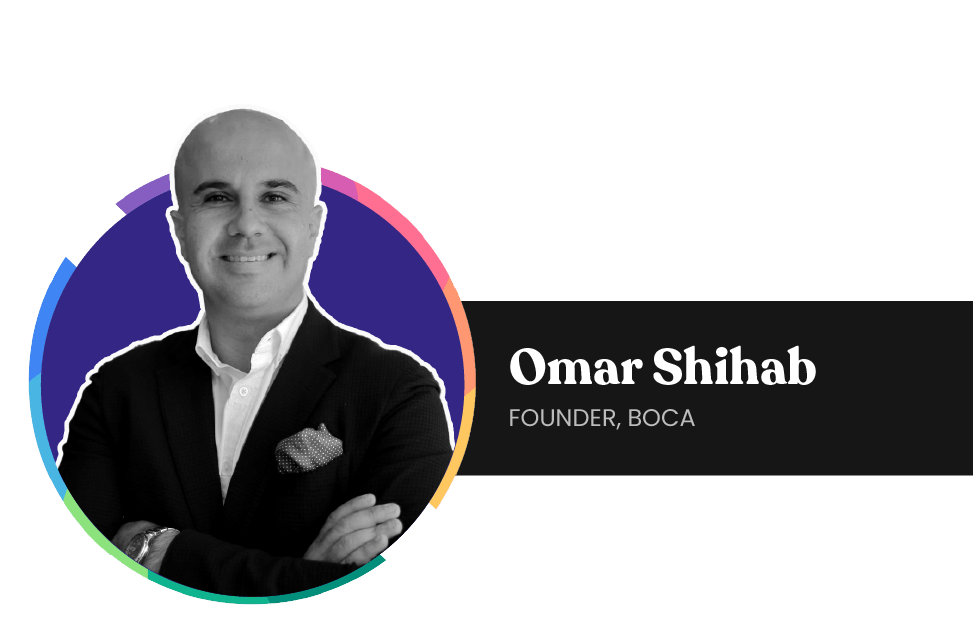
Omar Shihab started BOCA Dubai and has been promoting eco-friendly practices in restaurants for over 10 years. His restaurant leads in using local ingredients, cutting waste, and tracking carbon emissions. He has won top awards like Gulf Sustainability Gold Award Winner 2021, Gault&Millau UAE Sustainable Kitchen of the Year, Gault&Millau UAE Sustainability Hero of the Year, and many more.. As an advisor to the UAE Restaurant Group, Omar helps other restaurants succeed while also caring for people and the planet.
Speakers
Episode #47
In this episode, Omar Shihab, founder of BOCA Dubai, takes us inside his journey of rethinking what a restaurant can stand for in a city known for rapid growth and high consumption. He shares the early shocks of entering the industry, from franchise struggles to the daily unpredictability of operations, and how those lessons shaped his people-first leadership style. Omar explains why integrity, transparency, and sustainability became BOCA’s guiding principles, leading to recognition with a Michelin Green Star.
Omar focuses on using local ingredients in Dubai, treating staff well, and building a strong, self-reliant restaurant. He avoids fast trends and proves that sustainability is possible. BOCA is now a leading example of responsible homegrown hospitality in the UAE.
Find us online:
Ashish Tulsian- LinkedIn
Omar Shihab- LinkedIn
Omar Shihab:
I always felt that there was a template that was being forced on the city. If it works in New York or London or Paris, we’re going to take that template and we’re going to apply it here and we’re going to see success. The vision of Dubai was build bridges, an airport and an airline and roads, real infrastructure before anything else. This is real forward thinking.
Ashish Tulsian:
What were the early shocks? The restaurant world, first of all, requires certain depth of knowledge into many things. You’re dealing with contractors, you’re dealing with mechanics, you’re dealing with technicians, you’re dealing with chefs, you’re dealing with the media, you’re dealing with IT, you’re dealing with guests. What shocked you in operation?
Omar Shihab:
I’m a people’s person. I’m a person that likes to make collective decisions. I’m the one who likes to get feedback from the ground. My mindset is we don’t have to follow things simply because we were told that this is the only way to run restaurants. I wanted to challenge every classic notion.
Ashish Tulsian:
But how do you hold on to that? My one restaurant is making more profit than somebody’s 10 restaurants. No, to be honest, it’s…
Hi, welcome to Restrocast. Today, I have on the pod Omar Shihab, the man behind BOCA in Dubai. Omar’s journey is one of, if I have to encapsulate it, if I have to put it in one word, is care. Caring for the smallest things, the minutest details in your life. And when they compound over a decade, they make you a star. They help you be somebody whose creation cannot be ignored. With BOCA and in this conversation, you will see the value of not only just being green or sustainable or conscious, but the roots of it. Where does it come from? Why is BOCA going in that direction? Why did they make it there? It’s a tale of caring for environment, caring for people, caring for customers, caring for food, caring for the brand, caring to tell their story in the right most way. And staying put without getting distracted by all the worldly distractions of, you know, expansion or lack of it. It was a really inspirational conversation. I’m sure you’ll enjoy it. Welcome to Restrocast. Omar, welcome to Restrocast.
Omar Shihab:
Thank you.
Ashish Tulsian:
I, you know, have been reading so much about BOCA and the practices that have, you know, led to that. I want to know all about, you know, how are you doing it? You’re talking about zero waste cocktails and you’re talking about, I mean, you’re talking about marine life conservation and you’re really doing your bit, not only at the restaurant, but at the root. But before we dive into all of that, I want to know how it all started, because I don’t think that people enter restaurant industry by choice. It’s always an accident, generally, what happened and how did you land it?
Omar Shihab:
Yeah, you’re absolutely right. Wow, where do we begin? The origin stories of the restaurant.
Ashish Tulsian:
How did you, like, just get me to, how did you end up as a restauranteur?
Omar Shihab:
So this is the year 2011. I had just resigned from my first job straight out of university. I was a research director for a company that was based here in Dubai. And we were covering quite a large region in terms of covering the economics and research part of that organization. Our clients were the large IT firms of the world, the IBMs, the Microsofts of the world. And I decided that I needed a break to experiment with other projects, pursue a full-time MBA program. So that particular year, I was dabbling with a few projects. It was kind of my gap year, if you like. And one of them was a family business. The extension of my family, my in-laws had invested in a restaurant franchise, actually, out of Italy. That was not their core business. That’s not the main business of the family.
They were in distribution of luxury brands, perfumes, cosmetics. And they saw this as a natural extension of what they do, a kind of a vanity project, if you like, if you wish. And I offered to take it on and assist in the relaunch that they wanted to have in that particular space. So I started working with the original franchise owners from Italy. We started re-igniting and re-energizing that brand. The brand was called Cafe Florian.
And it’s one of those historical cafes from San Marco Piazza in Venice. So they had just brought in new investors and they wanted to roll out the brand as a luxury concept all over the world, from Tokyo to Dubai and Abu Dhabi. So yeah, so that’s, those are, this is the origin story.
Later on, I found myself, at the time when that contract was up for renewal, I put in my advice saying if the family wants to stay in this business and willing to put down investment moving forward, I believe that there could be a lot of benefit and obviously return on investment in something that is homegrown. It was, I believe the right moment. I mean, in hindsight, right now, looking back at that particular time in the timeline of restaurants in the city, it was just about to tip from a city depending on mostly imported brands and celebrity chefs. See, if you look at it from a broader perspective, you know, in the 80s and the 90s, dining out was predominantly street food.
Franchise QSRs, right? The Americano group of, you know, KFC and Pizza Hut. You had hotel restaurants. And then towards the end of the 90s, you started seeing the Gordon Ramsay type of concepts. You started hearing of celebrity names setting up flagship restaurants. And then obviously you’d had a big rollout in the early 2000s. And that particular time between 2010, 2011 to 2015 and up until now, you started really seeing people, guests, and generally the public kind of craving something that is a little bit homegrown. Something that is built by people living and working in Dubai, in the UAE, place that we call, we all call home. Something built from the ground up. And those were the real motives and the initial motivation and ideas behind what would become BOCA.
Ashish Tulsian:
Awesome. A lot of, I mean, what do you mean by people craving for something that is homegrown that is here? How do patrons care? And in what way do they even recognize that?
Omar Shihab:
First of all, from my perspective, I always felt that there was a template that was being forced on the city from a dining concept. If it works in New York or London or Paris, then it must be sensational, exceptional. We’re going to take that template and we’re going to apply it here. And we’re going to see, we’re going to see success. I mean, this is what a lot of these concepts and franchises, a lot of the operators and owners here believed in. That, why do you want to recreate the wheel? Why do you want to create a name when it’s already built for you and it’s set up?
Ashish Tulsian:
Somebody has done it, proven it.
Omar Shihab:
Exactly. But it doesn’t necessarily represent or link or connect to either this land or the community or the culture or the people. It’s applied on us. And I am from that school of thought that, you know, especially, and maybe it has to do with my upbringing and my background. I was born brought up in the city, in the UAE. My parents have lived here since the early 80s.
We are originally from Jordan, but this is where we call home. And I truly believe that we have enough capable, creative people to, first of all, be able to create something that is world-class, that is also representative of the culture, the land, whatever is being grown here or created or conceptualized and imported to the rest of the world.
Why do we need to rely on someone else’s vision? We can create our own vision on global standards. This is really the mindset. And I think there is a certain sort of pull in that. There is such a compelling argument for guests or diners or the people who are going out and obviously trying to connect with restaurants, with concepts, with chefs. At the end of the day, it’s a people’s business. And we’re really, I mean, later on, we’ll probably get to this, really see ourselves as platforms for a lot of discussions that happen within the community, within the culture. We’re not disconnected from this land or its people.
Ashish Tulsian:
Omar, I haven’t met a lot of people who could actually tell me, or at least it’s just me, that they grew up in UAE, they were born and raised here. I’m curious, what’s, I mean, I’m sure you meet most of the people in life who are, you know, immigrants, but later, much later in their life, in their adult life. What’s your relationship with Dubai? Or I should say UAE or Dubai?
Omar Shihab:
I was born in Dubai, lived in Sharjah most of my early life, and then moved to Dubai.
Ashish Tulsian:
So what’s your relationship? And how is it different? What nuances you see are different in your relationship with the city and with the country versus somebody who, let’s say, migrated here 10 years back?
Omar Shihab:
Obviously, the first thing that comes to mind is seeing the entire journey of development, you know, the rise of the city. It’s always been forward-thinking. And obviously, kudos to the leadership of Dubai and the UAE and the vision that they’ve always had ever since the creation of this nation. So, and that has always been distilled, and that’s always been inspiring, you know, for me and for my family, who moved here for obviously better opportunities. We were made to feel that this is home. Although the general mindset of even I think my parents, when they initially moved here, that this is all temporary. And we’re gonna go back at some point. But for me and my two sisters, we were all born here. To us, this was home. This is where we go to school. This is where we have our friends. We, you know, most all of my extended family are still in Jordan, and we would still enjoy summer breaks in Jordan.
But that would be it. And I think growing up here gives you a certain perspective on life, in the sense that you’re exposed to a wider culture base, you know, you have people from all over the world, you’re interacting with a whole, you know, a lot of people from different speaking different languages, and your ability to communicate and to connect, whether it’s to, you know, whether it’s, you know, during school or to do business or any transaction, I think it gives you a wider perspective. And that’s been always my my dad and my mom’s friends base, they were from different parts of the world. I think I really enjoyed that.
And that’s something that we grew up with. And obviously hearing of all the stories of the, again, the the leadership and the forward thinking, and the vision that until today, there are a lot of neighboring countries that are playing catch up. This has always been the direction to build real infrastructure.
Before anything else, the vision of Dubai was, you know, from the from the early days of the late Sheikh Rashid was to build bridges, and tolls, that’s something that he created back in the days to help fund the bridges, the Garhoud and Al Maktoum bridge, and then creating, obviously, an airport and an airline and dry docks, and a free zone, and roads, real infrastructure before anything else. So this is real forward thinking. And obviously, you know, moving into the late 90s, in the early 2000s, when the big boom started to happen, and the insane infrastructure and everything that you see.
Ashish Tulsian:
What was that like, you know, from your eyes, and I’ll give you some perspective, right?
My first visit to Dubai was 2012. Right. And when I look back, rather, I would say, you know, and I’ve been kind of doing business here for last seven years, give and take one year. And, and between 2012 and 17. Also, I kind of kept on visiting, you know, various reasons. When I look back, I feel that I’ve seen this getting developed. Yeah.
And when I look at Dubai, I’m like, yeah, yeah. I mean, I sound like you know, how my parents sound that, you know what, when I used to come to nothing, nothing of this sort was there. I can literally count areas that were not even existent. How did that how, you know, the boom of 2000 looked like to you?
Omar Shihab:
No, I mean, I still remember how it felt growing up before any part of the city was was built. And, you know, you’ve heard the stories of the people who also grew up here. And they will tell you how there was there was really literally nothing in the city really spiraled, you know, across this very long coastline.
And I remember going to, you know, we used to on the weekend, obviously, in great weather, you know, attend a lot of events at what is the Mina Siyahi back then what is still called Mina Siyahi up in the where the West End and the W Hotel are right now. It was obviously the there was a much slower pace to life. There weren’t as many people there weren’t as many places. So it was really great to grow up during that era. distances were shorter, because there was not a lot of traffic, obviously, to deal with. And what was great is, you know, for almost five to six months out of the year, my dad was was, you know, loved road trips, we all grew up loving road trips.
So we would visit, we visited all of the Emirates and spend, you know, a bit of time in all of them doing various things from, you know, clam fishing in Um Al Qawain, where, you know, there are big developers right now to, you know, all the way on the east coast and Fujairah and Al Ain. And so it was it was it was incredible to see the entire country during that time, and see the huge contrast with what it is today. So yeah, you know, obviously, all the stories that you’ve heard and, and I think you kind of have this appreciation for the old part, which obviously, a lot of it is still there, especially here in the city, down in the creek area.
Yeah, you know, growing up in around the Corniche, that was really almost our playground. That’s where we spent my my childhood. You have that appreciation for not just the place, but also the people that call this place home, that have invested their entire lifetime, all of their work and their effort and and now their children and their children’s children into contribute to this, to this, to this wonderful place.
Ashish Tulsian:
The culture, you know, at times I wonder, you know, culture generally is the oversimplified of version of what a culture is, is generally in homogeneity in one kind of race and one kind of religion and one kind of people and, you know, coming from the same experiences compounded over decades and centuries and, and, you know, where it becomes the way of that country or way of that city. And that’s generally confused as culture. I feel that culture is definitely much deeper, and it’s more layered than that.
But in UAE, given that there are you literally have people from all over the world flocking in here. And I also believe that there is a, you know, the other side of it is that they’re also feel, most of them feel that they’re temporary in their head, they may not be practically, practically, they’ve been living, you know, forever. I’m not not talking about your parents time.
I’m talking about, let’s say, last 10, 15, 20 years. Does that in your view has what’s that cultural element when you see it is, is your own, you know, your own view of UAE culture is your own bubble, where you feel that, hey, this is these are, these are my people are my friends and my childhood friends, is that culture? Or how does it take it from this, you know, continuous transient, you know, people who ideally will come here transactionally. And I’m saying this not in a good or bad light.
Omar Shihab:
Sure.
Ashish Tulsian:
They’re here on work. Yeah, you know, the focus they have their target five years, I’ll get out whether they’re able to get out or not separate problem, right? How does that what what takes from that culture? How do you how do you balance it out in your permanence while the world around you is continuously transient?
Omar Shihab:
That’s definitely a kind of a not really an existential thing that I that I think about all the time. There are obviously a few of us who grew up here. And we have this similar connection and certain nostalgia to a certain time here in the country in the city, certain connection to places and again, timelines. So we share that I meet a lot of people who also grew up here. And there’s a there are a lot of commonalities that we share. We also share connection with native Emiratis, who we’ve visited their homes, we’ve celebrated together different occasions, I went to school, I went to a public school here in the UAE.
So I understand that way of life. And there has to be a certain obviously understanding of true Emirati culture, and the people that have created this nation. And there are nuances where there are differences between, you know, people from Abu Dhabi versus the people from Ras Al Khaimah, people on the East Coast and people in Al Ain.
And the history is also beautiful of the different tribes that created this this nation. And then you have, because this has always been a transient part of the world, a center for trade, a place where a lot of movement from the East to Africa and to the West and to the rest of the, you know, Asia and Europe has always been a place where different people from different parts of the world have met. And that is just, I think, just evolved into what it is today. So to truly appreciate, I think, living in the UAE, you’ll have to have appreciation for a lot of these groups that call this place home. And get used to the fact that there are certain friendships, and I feel this a lot, that you will forge, and you will hold dearly. But then at some point, like you said, these people see it really as a transient place and move on. But I see it as friendships that I now have gained somewhere else in the world. So in a way, the relationships that you forge here and the interactions don’t just stay here, but they actually they go global. So it’s really, really unique. I feel there is a way of life, there is a certain lifestyle and a certain way that you go about your day-to-day or your entire year as a person living here in the UAE. But again, there are certain groups and certain interactions that are, again, really, really unique.
Ashish Tulsian:
Tell me about your early shock and awe when you entered, when you took over the decision to look at the family business or this franchisee brand that they had. What was the first reaction? What were the early shocks and confusion and opportunity? What happened? How did it start? So many.
Omar Shihab:
And this continues until this day. I think the restaurant world running this type of establishment or this type of industry, first of all, requires certain depth of knowledge into many things. It is on a daily basis as a restauranteur, as someone who’s operating concepts, you’re dealing with contractors, you’re dealing with mechanics, you’re dealing with technicians, you’re dealing with chefs, you’re dealing with the media, you’re dealing with IT, you’re dealing with guests. There are so many. There’s a whole bunch of skill set that it’s hard to come with.
Ashish Tulsian:
And all of them at high intensity.
Omar Shihab:
All of them are high intensity and all of them at high urgency as well. Because as we’re talking, the restaurant is operational. There’s a transaction taking place. The restaurant is open seven days a week for 16 hours a day. So everything that could go wrong will always go wrong at the wrong time. This is a fact.
Ashish Tulsian:
Murphy’s law is your friend.
Omar Shihab:
This is a fact. So all you could do is make sure you’ve done your homework. There are certain non-negotiables. There are certain basics that have to be in place, whether it’s safety from a guest perspective, from obviously our employees, our staff, from a food perspective. There are certain non-negotiables, of course, that have to happen, yes or yes.
But then everything else, you just open the doors and hope that you’ve done all of the remaining homework from making sure that the AC is working to the staff knowing what they’re serving that day. Everything could go wrong. Looking at specifics, the early days, I think a few shocks that I have faced was dealing with partners and franchise owners and conflicting visions.
Ashish Tulsian:
Give us an anecdote. Give me a…
Omar Shihab:
So, you know, the owners of that particular franchise had just jumped into a global expansion and they wanted to execute their vision down to the T. Rightfully so. They’re the owners of that particular brand. But because there were many parts of that project were skipped in the past and certain compromises made up until the stage when the restaurant was created, there were many, perhaps, things between owners that were not clarified or skipped. So, in order to go back and to make sure that everyone agrees that if the franchise owners wanted the table plated in gold, that’s what needs to happen.
And to a certain extent, to a large degree, that happened. But obviously, moving forward operationally, understanding the intricacies of this particular market, Dubai market, for example, and the evolving way that it has been happening in that particular market at that particular time and the change of concepts and that particular industry has called for different kind of operational execution. For example, in the original concept, they do not have hot food. It’s all, you know, sandwiches and snacks. And that’s exactly how they wanted it to be. For the size and the location, it didn’t make sense at all. So, what we offered is to develop for them a localized version of what a full-fledged restaurant could look like. With taking all the brand guidelines, everything that they’ve asked to do and apply to present it to them. But that didn’t, that was not sufficient.
So, there was a lot of back and forth. And obviously, when you have such a deep discussion, about fundamental things, then you’ve got a serious problem, a serious problem. So there was a lot of back and forth, there was a lot of energy and obviously a lot of resources were spent and not in the right way and that was the time when it only made sense to break from that contract. So those were…
Ashish Tulsian:
Operations, what shocked you in operations or working with people inside the restaurant?
Omar Shihab:
How to, you know, I’m a people’s person, I’m a person that likes to make collective decisions. I’m the one who likes to get feedback from the ground up to try to rethink perhaps what is taken for granted as a systematic way of running a restaurant and I think this has always been my mindset is we don’t have to follow things simply because we were told that this is the only way to run restaurants. I wanted to challenge that, I wanted to challenge every classic notion or every classic idea that certain things have to be done a certain way.
Because I believe that we are, you know, first of all coming from that background that we are a young nation that’s developing at the moment and we live in a timeline where, you know, classic rules sometimes don’t really matter. So what do people want, you know, people’s way of life is evolving and changing and we need to adapt as restaurants because restaurants are places where people gather. We interact, we are not robots.
I’ve always wanted to get the real feedback into what guests are looking for, what kind of experience, how do they want to be treated, how do they want to be addressed, how do they want to be served. We’re also people serving people, so how do staff like to be treated? While executing that vision of course correctly, while respecting that this is their main source of livelihoods. So I’ve always wanted to address it from that perspective and it doesn’t always translate. It’s not always appreciated or that vision is not always shared even by staff or people working. So there are certain people who are used to working in certain ways.
So it really takes a level of maturity that perhaps is not so common in our industry, given the limited obviously access to resources and obviously all the financial burdens that a restaurant comes with. So in a way I think that was always my challenge because I was adamant of running things from a human perspective versus balancing all of this with making sure that we’re running a profitable restaurant that is taking care of itself financially.
Ashish Tulsian:
What was your first professional assignment like? So your early years, what did you do education in? And what was your first job? Talk to me about your career before restaurant.
Omar Shihab:
So I studied at the American University of Sharjah. I graduated with a business degree with a specialization into systems, into IT systems. And straight out of university I joined a business headquarters of a global company that was seeing a lot of growth, a lot of obviously potential here in the region. So that was the year 2002. So I helped, I assisted create the Middle East and Africa base for that company. And it was an exciting time in my life. I was given a lot of freedom, a lot of responsibility to assist in opening bases across the Middle East, across the African continent. So this role was a business role, an analyst? I was a researcher, I was an analyst. That’s how I started. And then I grew into a managerial position, into a director position. I was part of the conference team as well. So we would go on roadshows across different countries. I would lead entire programs. I would MC an entire program.
It was a really exciting time. I was recruiting colleagues across the African continent in different bases. I was spending a lot of time on the road. Like I said, it was an exciting time. And then we gained government projects here in the Gulf. And I was stationed on site as a project manager as well. And that’s where I started planning my move out of that. I didn’t want to jump immediately to the next thing. And that’s when I decided to take that gap year.
Ashish Tulsian:
But why did you want to move?
Omar Shihab:
I just thought it was the right time for me. I mean, at that stage, I’d spent eight years. That was my first and only job straight out of university. So I felt that I’ve crossed a certain career path and progression within that organization. And I wanted to have not a hard reset. But I wanted to go back and understand where I stand and help me leap into the next stage.
Ashish Tulsian:
What was the potential career path when you were going on the sabbatical or a gap year? What was the potential career that you were thinking about?
Omar Shihab:
A few things. Moving to a client side because we were kind of an agency. Moving to one of the larger companies that were our clients. Moving into consultancy role. Moving into perhaps a startup. And at that stage, there was a lot of energy in the world to create new disruptive. 2010, 2011. Exactly. So that was the moment. And perhaps the network that the school would have provided would have definitely enabled. So those were definitely the paths that I was on.
Ashish Tulsian:
You know, your early years, your early jobs. I mean, the condition you. Because that is also the time when you are discovering your own superpowers or lack of it. And you start kind of just leaning towards. You make your own space in the area where you are very good. And you start compounding that. And given in your case, it was only one job straight eight years. I’m one percent sure that was true. What parts of your career shaped you that today help you run the show as you do? What are those traits? What are the things that you picked up and made a muscle out of it?
Omar Shihab:
I think early on we were thrown into a room, into a boardroom filled with very anxious senior executives. I will never forget this. It was still my first year. And we had just published our first report. And I was thrown in the room along with obviously my colleagues to defend these numbers. To a board of executives who we just told that this is where the market, how the market has grown versus your growth.
So their bonuses were not going to be paid because their bosses and the way they were measured against were the numbers that we’ve actually put together. So I think from that time it was extremely important to have high integrity in my work. In understanding where these numbers come from, how we crunch these numbers and how we present them.
We had to defend them down to the decimal point. And if you see where I am today and what I’m trying to do with the restaurant, especially from the sustainability claims that we are putting out. I have to be able to defend all these numbers down to the team.
So integrity and honesty and transparency is extremely crucial and fundamental to me. I am unable to make any claims even as me in my daily life. I would rather take a moment and pause or be quiet and not answer if I am not sure of what I’m about to say and the source of what I want to say. So this was an exercise that I learned early on. And we had to carry through because everything from that moment onwards we had so many interactions that are similar to that. And remember that during that first job, that first part of my career, we had the huge financial crisis of 2008. So anxiety was like tenfolds of that among all of our clients. People’s jobs were on the line. So we had to double down on integrity.
We had to double down on transparency. We had government projects where that is obviously non-negotiable. You’d have to be fully transparent in everything that you do and the source. And there are certain policies that we helped shape. So the work was extremely important, extremely important. Another part that was fantastic to me and really excites me a lot was recruiting and finding new colleagues and new people and new places that I’ve never been to.
So understanding the local psyche, understanding the local culture in places in East Africa, in Nairobi, in Lagos, in Nigeria, in Casablanca, Morocco, in South Africa, in Turkey and in Central Europe was so critical to what I did. Because again, we depended on people that had to have a similar mindset who were going to present everything that we were doing and actually get the groundwork. And managing these people again remotely was an important exercise. So there’s a certain level of trust that I had to build with the team that I would lead for the next five years. So that was another exciting part. And one part that also I found really extremely important for my confidence was leading these roadshows.
So we were the experts on certain topics and subjects that was at the leading edge of technology at that point. We just started talking about cloud computing, for example. So we had to be the experts for the providers, for the likes of Microsoft and Dell and IBM and lead roadshows to present this thought leadership and then moderate an entire day of expert opinions and panel discussions. So I did that in my mid-twenties across different countries here in the region and broadly speaking in Europe as well. So that part also gave me a lot of confidence.
Ashish Tulsian:
How did it translate into what you’re doing today? So how did that muscle manifest in your current work?
Omar Shihab:
So a number of things. Obviously, having integrity, I think is the base for… For me, I believe every business should have this because if you don’t have this, then you’re really relying on a day-to-day kind of hustle.
Ashish Tulsian:
Correct.
Omar Shihab:
And it has to be there, but you have to have a base of integrity. You have to have a base of principles that you stand behind. The way that you treat people, the way you treat the value chain, your suppliers, the way that you see yourself within the community. I think that is non-negotiable for me, the way you treat and you deal with everyone that you have to go through to get your job done on a daily basis. I think that is non-negotiable from a people’s…
Being in a people’s business, gaining trust, trust of the people that work with you, that work for you, the people that you’re working for, whether it’s the owners of the business or the people who are actually spending money in restaurants or guests. There is a certain level of trust that people have in a restaurant. You know, you’re walking, you decide to hire a nanny at home so that you and your wife and your partner could go out, brave through Dubai’s traffic and go to a restaurant to spend your hard-earned money and dining out is not cheap in Dubai. That is a huge trust that is given to a restaurant, I believe. So you better be able to provide and deliver at that level of trust.
Ashish Tulsian:
So my question is, how does it, like for example, you talk about gaining the trust of people when you’re recruiting them, when you’re hiring them, when you are signing them up for your mission or vision. How did it manifest in your current business? Were you able to retain more people? Are you able to hire better talent? What does it look like, you know, for your people skill?
Omar Shihab:
No, I believe that it’s definitely, this is a business that is so turnover. You’ve heard it from the incredible people that you’ve had on the show. You know how that’s one of the biggest challenges.
Ashish Tulsian:
And that’s why this question, that’s what I’m asking. I mean, because attrition is there, turnover is huge, it’s crazy almost. So how does this leadership skill, the people skill manifest in your current business?
Omar Shihab:
It’s another tool in that toolbox that you want to have when you’re approaching this particular issue. Like I said, we are people serving other people. So if you don’t have the right, not just the skill set, because you can teach certain skills, but the mindset and the attitude, that’s what we recruit for in the beginning.
Of course, there are certain experiences that you have to have, certain things that you must have done. But at the end of the day, the make or break or the main factor for deciding, at least on a very senior level, and it obviously trickles down to everyone else, is the attitude and that willingness to learn, that loyalty, that ability to go through. So you don’t expect everyone to be with you throughout the entire journey.
That’s unrealistic for sure. So let’s be true, especially in a market like Dubai, where it’s not just transient, but it’s constantly evolving and things are not cheap and people want to move certain places. And obviously in the last few years, the number of restaurant openings and competition, it’s competitive from a restaurant trying to seek resources and mainly human resources.
So you need to have a lot more in your toolbox than just good compensation. So you want to be able to compensate them fairly, you want to be able to treat them fairly, you want to be able to provide the correct hours, the flexibility, the understanding, looking for what they really want. And a lot of times it’s about having a sense of belonging, having a sense of attachment, being that things happen all the time in the restaurant world from a staff perspective.
People get into certain troubles, people get sucked into certain areas, people get sick, people have extended families living in different parts of the world. So how are you going to show up when these things happen? I think there’s a certain message that you can send across and that loyalty is always, always valued. And in our case, obviously providing that additional education and awareness about everything that the restaurant stands for from a sustainability perspective, offering that training and the opportunity to evolve and grow, that adds another layer of compelling argument to stay with the organization. I think that goes a long way. One thing that I’ve heard recently as well from this incredible chef from Australia was just listening.
Sometimes people just want to be listened to. Sometimes it really means the entire world if you dedicate time to listen from different parts of the organization, of the restaurant, to what people are really going through, their perspectives, their challenges, that really goes a long way. And it will help you shift certain mindsets.
Ashish Tulsian:
I can’t agree more, 100%, I think. And I think a lot of people just want to be heard. It’s surprising.
I think I also discovered this through my journey where I realized that it’s not only that, I mean, most of the times people don’t even want any recourse or a solution. If you listen to their problem, 90% of the impact evaporates and 10% can be helped.
Omar Shihab:
So true.
Ashish Tulsian:
What’s happening at BOCA? And I haven’t had the good fortune to dine there so far. So this is a fresh listener in me. I am really, really curious. What’s happening? What are you doing? Tell me everything. What’s your cuisine? And how are you doing this sustainably? Because the numbers that I read and now that we know, those numbers are real to the decimal points in case you’re claiming. How are you doing this and what are you doing?
Omar Shihab:
Oh, you’ve got to come and see it. What you will see is an evolution of 10 years. I think we have definitely crossed many milestones and many paths. And our thinking has changed and evolved as we realize and discovered so many things. As the city changes and evolves as well and grows. And I’m very proud of what we stand for today.
I’m very proud of what the brand represents and what people connect us with. When it first started, like I started saying, that it was born out of a belief that we have enough creative, capable, knowledgeable people that call this place home, that work and live here. That we can come up with a concept that fits the right zone or area or encapturement market that we have. And deliver on a global standard, on a high level. And that was really the idea from the get-go. Believing that our neighbors are doing such an exceptional job at the height of dining. That we can offer something that contributes to that. That we would add value to that entire area. Yes, of course, we’re another restaurant in that zone. But we’re a restaurant offering a different experience. Something that is missing from that particular area. And I think these bases still resonate today.
That there are different levels of dining. And there are different kind of needs for guests. Depending on the occasion, on the time, on the day, on the kind of company that you have. So, we’ve always been the kind of restaurant that is targeting people living and working in the financial center. And the neighboring neighborhoods. So, the Shake Side Road, downtown. So, the restaurant was created for that type. It was created for an experience that is not the high-end fine dining experience. Where it’s a little bit more stiff and it’s very kind of controlled in that way.
We were meant to be a place that was slightly more accessible. Slightly more casual. A place for, if you’re entertaining certain business guests in the neighboring restaurants. Ours would be the place where you come with your own colleagues and your own friends and family. And let go a little bit. You will still have delicious food. Great service. Fantastic menu offerings. But you will have it without all the unnecessary fluff. And a little bit more value. Or a little bit more accessible price points. If you like.
So, those were the origin. This is the origin of BoCA. And because we were homegrown, we wanted to always refer back to the place that BOCA was born from. From Dubai, from the UAE.
Ashish Tulsian:
What does that look like?
Omar Shihab:
There are a lot of nuances, a lot of small things that you can pay tribute to. Regardless of the cuisine that you’re cooking. You can always use a locally sourced fish to execute it on a level that you want. With the flavor profile, with the execution, with the presentation that you want. So, this is the origin story. This is how we started.
Ashish Tulsian:
And how did you get into this sustainability? The green, the truly green side of it. Where is that coming from? And of course, I have deeper questions on what does it look like in terms of economics? I’m sure it’s not easy at any level. But where does that green side of things come from? When did they step in?
Omar Shihab:
That was the moment in the gastronomy industry of Dubai. The culinary world where a lot of chefs that worked under the likes of Gordon Ramsay and the likes. Started living in a city of their own. That’s when we started hearing of homegrown restaurants rivaling imports. There was a beginning of a movement that exceptional people in the industry, the real influencers, the real food writers. And obviously, an important name comes to mind is Samantha Wood. She was quite instrumental in highlighting early on back in the day. The true heroes of gastronomy that are homegrown. And we were among a group of incredible people that were always highlighted.
And I wanted to amplify that. I always wanted to double down on that and show what does an internationally recognized, what does a restaurant from Dubai look like? Regardless of the cuisine or experience that you’re presenting. What is a real identity of a Dubai restaurant? So we started doubling down on ingredients that are from the UAE. Obviously, they have to be of a certain quality and a certain level. That is compelling enough to present to our guests. And with the help of Chef, we started researching what grows here. What can we truly bring to the table? Literally, we started visiting the fish market in different times of the year. Trying to dig into research into variety of fish and names. Understand how the market works and how the fish arrives from the boat to the stall. So not just taking things at a face value. And I learned that early on from my research days. And it took a lot of time.
It took talking to a lot of people from the Ministry of Fisheries at the time to the Ministry of Climate Change to champions within the seafood and fish industry here. And it was also the right moment in this history of food security in the UAE. So this was the time when we understood that it’s such a valuable exercise. Looking at this particular aspect. We started hearing of initiatives to encourage locally grown produce. Encouraging conventional organic farms, hydroponics, aquaponics.
The whole agri-tech sector from seafood and fisheries as well. We started seeing dibebe oysters come to markets. Pure Harvest Smart Farm tomatoes. Mushrooms that are locally grown. So we kept really close tabs on a lot of these growers. To understand, not just to test their product, but to understand the journey. And amplify the stories. Because where we are today, we are really a platform for telling these stories. We are storytellers of the journey of a lot of these founders.
Of the story of a lot of that product. So this is also part of the restaurant world. A classic example is your cliche idea of a maître d’ in the restaurant. Talking about how they have this particular person that they source this particular fish from. In a way, what we are trying to do here is tell the stories from our part of the world. In a genuine way, in a way that is modern, that is true to the character and the timeline of the nation. We are a young country. And the matter of the fact, it is 98% non-Arab land. It’s desert.
But we have the commitment of the leadership. The willingness. And I think if anything that anyone can learn from the leadership of Dubai and the UAE. Is the can-do attitude. Let’s make it happen. We have a blank canvas. We have desert. And just like we said earlier on. From early days, the leadership was adamant as creating infrastructure.
What do you create out of nothing? You have the resources. So you are investing in infrastructure. And this is what’s happening today. And what we wanted to do is saying. This classic idea of a restaurant being farm to table. It only exists in certain places in the world. With urbanization. With cities spiraling. With restaurants being more and more in modern cities. What does a truly sustainable restaurant look like? sustainable restaurant look like in this entire setup? We’re not going to lie and say, Oh, I have a garden in the back. That’s where I’m sourcing everything from.
No, that’s not true. It’s also not true that I will that I will ever be able to source 100% of my product locally. That doesn’t exist because the food system is not designed that way. The global food system is not designed that way either. And that’s not where real impact comes from. And we can get into more details of what responsible sourcing looks like. But going back to the main topic, those were the initial motivation was..
Ashish Tulsian:
You know, and I’m sorry, if you I mean, I’m not trying to oversimplify that. But was it? Initially, was it also an economically motivated decision that you want your supply chain to be more, you want it to be more predictable, more control over your suppliers and not just, you know, be at the mercy of importers and the middlemen? What were the economic or the or the more functional reasons to do that?
Omar Shihab:
Oh, you said it? Absolutely. I mean, the moment that we are able to get closer to the source of our product, having a unique product that no one else is using, because when we were exploring local fish variety, for example, we knew immediately that certain things like how more and Sultan Ibrahim are overfished, according to the Ministry of Fisheries at the time, and the Ministry of Climate Change Environment that have more populations, yeah, have more population, which is a type of grouper, the most popular type of fish, and actually really, really delicious, because it’s, it’s meaty, it’s chunky, it’s great to work with. But it’s just simply overfished.
Because beyond this to these two types, people are unaware of what else grows here. And there’s a lot that grows here. And at the time, the there was a national campaign to try to get people to to consume other variety that has a lot bigger population. And that’s what we we started hitting. And we started experimenting with. See, one of the things that chefs and restaurants perhaps don’t have a lot of resources of his time, time to go out there, speak to people, research, do a bit of R&D in the kitchen, and experiment because, you know, we’re in the city where, you know, time obviously equals money, and you need to open the restaurant, I need to go, go, go.
And why would you go out there to to the market yourself, we don’t have a lot of chef owner operator, you know, most, you know, let’s face it, most chefs in the city are employed by an owing company. And there’s a purchasing department, and there is finance that’s responsible. And they want to see a supplier come to you, offer you credit terms, giving you a proper invoice, and they have a catalog of ingredients, and they want to maximize their own profit. So they’re bringing in the most high value items that you can maximize, obviously the margins on. And that’s all they’re going to tell you. And of course, it’s in their advantage to tell you that anything that is local is is inferior.
Don’t go for that. And it’s up to you, I think, and it was the responsibility that I took on my shoulders with the assistance of obviously, the culinary team and the chef was to really bring the best out of local produce, and follow whatever seasonality that we can. So having access direct access to the source as close as possible, because we found out later on that it’s almost impossible to have access to the where the actually boat is fishing from. So there are still a few middlemen involved, but you have access to a unique product at a great price. I mean, this is it, right? So you’ve got better margins, you’ve got something that no one else has and and and an incredible real story to tell as well.
Ashish Tulsian:
You said that we can go into the depths of what responsible sourcing looks like what give me a few nuances of to what extent do you guys go in your diligence.
Omar Shihab:
So there are there are many things to look at here. There is the obviously we always start from what is local. We need to understand I think, and this is applicable to any restaurant or any, any organization that is sourcing any type of material, understand what is the local landscape look like. And in our case, we have to dig a little bit deeper, because it’s very easy to say, Come on, this is the desert, what grows here, nothing. So understand and really map that out.
And this was exactly what we did, we started with 1400 kilometers of coastline that we have access to. I mean, that’s overlooking two bodies of water. There is surely types of seafood and fish that, you know, also, again, trying to understand what grows here as well. And in these waters is really important. And that’s what we did. And that’s that’s the case with the fish and seafood.
Agri fisheries, if sorry, new, new fisheries that we’re starting new, new aquaculture and aqua farms. So the likes of the baby oysters are incredible stories to amplify. And we back that story from day one, even before it went to market, because what’s the story. So we so there’s an incredible gentleman who’s who’s now moved on from the oysters created that created the first edible oyster farm here in the way on the east coast. So they are Pacific variety oysters that is are brought in in baby form. And they grow in the open waters in in nets, they call lanterns, and they feed off of the planktons that exist in the waters.
And they grow into these beautiful oysters that produce a truly balanced piece of meat that’s not too sweet, not too salty is the right perfect amount. And they grow here in the waters. And the benefits are beyond just offering a new food variety and the new produce, but the biodiversity around that area, because oysters are great water purifiers.
And you’d see a lot of biodiversity coming in around these, these shells when they grow, it goes beyond that. And we work closely with them to collect a lot of the shells after consumption, clean them, and bring them back to the farm. Because along with specialty divers, and the government of Fujairah, they’re building a new coral reef on the bottom of the ocean.
You see in close shores, there’s not a lot of stuff. There’s not a lot of stuff that grows. So it’s actually an extension of the desert. But they’re building these new bases that will start that will propagate corals on top of them. And the best base are the shells of the oysters, especially the ones that were growing in that area. So you don’t risk any if you’re collecting shells from different parts of the world, and you you can risk introducing new parasites, but it’s the perfect base.
And I think the target was a one kilometer long base for to propagate corals, and they’re around 20-25% through with that project. So an incredible project that we that we were behind, not just to introduce a delicious product to our guests, but also it goes beyond that.
Ashish Tulsian:
Yeah, I’m sure for tourism will be a great diving site.
Omar Shihab:
Oh, absolutely. It’s a great place to go diving the east coast for sure. So it’s in fish and seafood. That’s what it looks like beyond that, beyond what we can source locally, we are open to sourcing from other parts of the world, as long as we understand the methods of fishing and there are so many established practice, established practices that are not advantageous for for the environment. So trolling, you know, where nets are just mowing down the entire bottom of the ocean and just grabbing everything with them. And obviously a lot of by fish product is discarded.
So there are so many practices that we try to avoid. We try to at least understand the name of that source as much as possible. We don’t, you know, it’s very hard to be kind of what is the word to be all or nothing to say I we only fish, you know, from, you know, we try as much as possible, right? So as long as we we have an understanding of where that comes from. We’ve avoided having salmon on our menus for a long time.
Ashish Tulsian:
Reason?
Omar Shihab:
Salmon is being overfished and the fishing the the growing practices of a lot of farms are proven to be completely destructive, not just from a nutritional perspective, but also an environmental perspective. So we try to avoid that as much as possible. Whenever we serve it, we make sure that it’s certified of a certain of, of being wild at least. And there are enough margins to help us cover that. So we’re really not looking at the one or two dirham differences in produce. And then the same goes for all other variety of product that goes into our menus, you know, from vegetable and, and, and fruits. So again, we start with local.
And yes, we live in the desert, but there are certain conventional and organic farms that exist here. In certain times of the year, we’re able to source local
Ashish Tulsian:
I, by the way, I did not know that their local fruits, vegetables,
Omar Shihab:
So, so, mostly on the vegetable side. So you’re able to source certain,
Ashish Tulsian:
But these are like green vegetables. So these are like…
Omar Shihab:
So it’s a mix. So there are conventional farms, there are a few organic farms. And then there are the agri tech producers or people growing greenhouses, whether it’s low tech or high tech. So we have use a variety of them. And there are success stories, especially on the agri tech side. So now we are able to source delicious, almost four variety of tomatoes from growers in a line called pure have smart farms.
And these are one of the the more successful ones that were able to have the right economies of scale have the right production cycles, the right operation logistics as well. And it was long in the making. And obviously, at the end of the day, the produce is absolutely delicious, nutritious, and at the right price to us. And you can see them now across retail as well. We’re able to source mushrooms from certain producers as well. So whenever we can, we we want to make sure that we’re in the know, and we’re able to reach to these guys, it doesn’t always work.
Because for logistics reasons, you know, we cannot have our chefs team on the road every day, where the one restaurant, we don’t have that big scale to afford our own logistics team. So but we give it we give it a try. And we even if we’re able to source it, for example, once we will use it for a certain event, again, to tell the story to amplify these these messages.
And whenever we cannot do it locally, again, we go for regional or global sources, where we at least know the name of the farm, where we can at least tribute that product to a certain region, a location, or preferably, obviously, a farmer or a person.
Ashish Tulsian:
I’m sure these stories might have also motivated a lot of entrepreneurs who are growing or producing locally, to, you know, just come to you as the first one, the approach, and I’m sure you’re sourcing might have, you know, at least discovery, you know, might be easier as compared to somebody else.
Omar Shihab:
No, you’re right. I think, you know, the evolution and the recognition, and our messaging has been clear and compelling for a lot of people who are trialing and introducing new product to come. I would love to take them all. But obviously, it doesn’t always make sense.
So we’ll have to weigh in what makes sense for us at that time. But we’ve always experimented and welcomed a lot of new growers and new, new producers, and especially ones that have a true story and a belief in actually creating a better food system. And I’m very wary here of sometimes people who are not who are coming from a different perspective. And with all respect to everyone, I think people from the tech industry are always trying to find areas to disrupt.
Ashish Tulsian:
Correct.
Omar Shihab:
And we’ve seen a lot of trickle into food systems. But the motivations are not there. The motivations are only to disrupt, and to come in the middle
Ashish Tulsian:
and disrupt in a very, very bad way. And I come from tech. So I,
Omar Shihab:
I call the benefit of the shareholders. And that’s it.
Ashish Tulsian:
Correct.
Omar Shihab:
So yes, of course, we are all here to, you know, at the end of the day, businesses are there to make money, and to increase the, you know, profitability. But there is a way of doing it, while still being an integral part of the food system. So I truly believe in that, of course, there are always better ways to deliver certain, you know, products from A to B, and there are certain things, but it doesn’t have to be at the expense of, yeah, integral people in the industry.
Ashish Tulsian:
I hear you. I hear you. Absolutely. I think all tech is not bad. But, but I think tech industry, unfortunately, and it’s not only in the food, I think everywhere in the world, and especially whenever tech startups, they look at traditional businesses across their value chain. I don’t know, the operating assumption is that everybody’s stupid, and we are going to fix it.
And you’ll be surprised how many times I have, I have this debate with fellow entrepreneurs, and including aspiring ones who are pitching and I, you know, do small startup investments, but I’m quite proactive about it for the last 10 years. How many times I’ll have this conversation with someone saying, hey, you know what, let’s not start by saying that this, you know, middlemen in this value chain are stupid. Let’s not start by that. Prove it. Tell me how. Tell me why does not, are you telling me that the point A does not know about the point B? Then why are they still paying A1, A2, A3, A4? There has to be a logic to this. There has to be a reason to this.
And maybe you’re able to do it at a small scale. When you go large scale, you will also end up doing exactly the same thing because they exist for a reason. And instead of disrupting, tell me who’s getting that value.
Don’t tell me that you are the smart guy who’s going to crush margins of these four people take it and A and B will, you know, remain as is doesn’t make sense. Tell me how’s A benefited? How’s B benefited? And how both of them will help you get benefited in the process. In fact, tell me a better story. Tell me how will you, you know, help become A1, A2, A3 more efficient, or maybe have better margins or have a better life. And trust me, you will have the entire valuation working for you rather than against you.
Omar Shihab:
Yeah, absolutely spot on. And I’d love to unpack that a little bit more because you’re absolutely right. What value are you bringing? Is it just disrupting for the sake of disrupting and only increasing the value of your own setup and your organization, the number of times during a particular, I think it was might have been immediately after pandemic or just before, when the whole world of agri tech was just starting to get that boom. And you obviously had government funding that was coming in to subsidize a lot of these investments.
I would have proposals from people who have no connection to the food industry whatsoever. They’re pure tech people coming to me with proposals to build an hydroponic farm. For the sake of what, yeah, or, or organizations coming to sell me hydroponic setup to install in my restaurant so I can grow my own lettuce. With no understanding whatsoever on scale or value or what does that have to do with me or absolutely, absolutely absurd. I couldn’t believe it. And I questioned myself, what am I missing here?
What is the am I missing something? I really need to think about this. And we’ve seen a lot of people crash and burn. We’ve seen huge investments. We’re talking about extremely senior people and discussions that were happening on an absolute senior level on a government level that have just completely disappeared.
Ashish Tulsian:
I’ll tell you a scary story. And this I mean, I was laughing at hydroponic, you know, those kind of I also got those proposals where, you know, without any understanding of, you know, what the difference between a good lettuce and a bad one and the cycles of production and even how to sell and how to preserve and how to just
Omar Shihab:
How much lettuce can we really use in a day, right?
Ashish Tulsian:
So without that, you know, people came with proposals of, you know, hundreds of thousands of square feet of any, you know, I’ll tell you, you know, where it all goes wrong, a friend of mine, who raised a couple billions in hospitality, in hotel industry, one day, you know, just, I think, just pre pandemic. So bad timing. He started randomly investing in warehousing, co living, cloud kitchens, and some random stuff very, very fast. I mean, when you want to blow up $500 million. Yes, life is easy. You know, so, so I asked him, I said, Wow, what’s up? The guy said something which was super scary. He said, Ashish, I’ve realized that we are not in the hotel industry.
I said, Okay. He said, we are in the real estate industry. Like what?
So he said, Yeah, I mean, anything that encompasses, you know, to have, I mean, anything that can happen in a real estate physically, we should own that. I was like, Oh, my God, I said, I don’t know, at what point, well, you know, this will get burned. But I’m 101% sure that the fact that you’re trying to run a hotel, and a cloud kitchen, and a co living, and a co working, and warehousing.
I think you just lost the plot. I think you just completely lost the plot. I said, these beasts are they have their own nature, they have their own type, there are species of its own. And it may need a lifetime to just tame one, if at all. So I think that’s where that’s where tech startups go really crazy, where you oversimplify, you know, something down to Yeah, you know, yeah, it’s, it’s crazy. It’s crazy.
Omar Shihab:
Cloud kitchens is another one for sure. Oh, my word. It was a time again, where everybody was so many proposals, you got to get on it now before it’s too late. Getting early on the cloud kitchen.
Ashish Tulsian:
It’s funny. We run restaurant tech, right? So I was, I was speaking at this conference in Texas.
Omar Shihab:
Yeah.
Ashish Tulsian:
And conference is called the ghost kitchen conference.
Omar Shihab:
Yeah.
Ashish Tulsian:
So I was doing a keynote. And there were, I think, I don’t know, like 700 odd operators in the room. And I caught on the stage and I, I have no reason to lie. I’m also bootstrapped, self funded, profitable company in tech. So I don’t have any reason, you know, to go beyond a certain point and say, Oh, no, no, I need to do you know, wrong, right?
So, so I got on the stage and I basically said, Well, you know, I broke down the economics of cloud kitchen. And I said, basis these economics, you know, if you’re running a pure cloud kitchen, you cannot make money in 200 years. And the room burst in a nervous laughter.
And I’ll tell you, at least 50 people walked up to me post my, you know, talk. And of course, I was very clear that these ghost kitchen conference guys are never calling me back. But 50 people walked up to me, and these were like, Midwesterners, seasoned operators, most of them 20-30 years in the play, who actually walked up to me and said, you know, thank you for breaking down the economics.
And almost all of them said the same thing in different ways, that this is exactly how our economics looks like, my son or my, you know, second generation, or my manager, or, you know, my shareholders are asking me to do this. And the numbers don’t add up, doesn’t make sense. And I was so far thinking that maybe I’m wrong, or maybe I’m missing something.
And I came to this conference exactly to understand what am I missing? Thank you for saying that, because, you know, we really needed this. And what do you think we should do?
I said, I mean, please use cloud kitchen as a hybrid extension to test or to make your food accessible to your customers where your restaurant is not there. But it is not a substitute to your real restaurant, right? You know, make it work much better than cloud kitchen.
With that, you can operate at that, I mean, operate the cloud kitchen with let’s say no margin. It’ll think of it like marketing costs.
Omar Shihab:
Sure, sure.
Ashish Tulsian:
But if you need to still earn margins from your dine in, and if you’re not doing that as a combination, I mean, from my vantage point, I see 50 countries every day, at least on my dashboard, 50 countries, people are not making money in cloud kitchen, I can guarantee that. Incredible. All this, all this detail, you know, from responsible sourcing to doing right to your customers doing right to your, you know, employees and, and building a culture and name and a story which is consistent over a decade.
Is the cost of that, you know, expansion? Why not a second restaurant or a third restaurant so far?
Omar Shihab:
No, not at all. It was something, I think the two are definitely connected. But at the same time, the effort is, you know, had to be there. I really believe that for us to establish a base for, you know, the the hospitality operator that we were creating, to run BOCO at the time, and still until today, of course, needed to have something that is grounded in different principles, or in a wider principle base.
Yes, of course, just like incredible operators here, we’re about, you know, have running, you know, operating a great team that delivers exceptional hospitality in a fresh and young and, and in a way that makes absolute sense for the time that we’re in, and really rooted in this sustainability ethos that is undeniable. I was adamant establishing that. And I think, you know, today, and there’s obviously always room for growth and development.
We’ve clearly established that we’re doing what we’re doing extremely well, the recognition shows that we’re recognized by industry by colleagues. And I’m really proud of what we’ve built today. And we’ve been on this now for for a few years, is we are ready to take the heart and the ethos of this hospitality operator, different places.
First of all, we want to make sure that what the brand stands for today, the value of everything that we’ve created, the infrastructure and the structure and the fit out catches up with it. So there’s certain things that we have to do fix in the, perhaps the the legacy place and the the center of where it all started, which is the location in the financial center. So we need to change a lot of things. And obviously, you can build restaurants and you would you always visualize how you want the restaurant to operate where you want the guest to dine and sit and, and gather and how you want the service to run. But at the end of the day, the moment you open, your guest is going to decide where’s the better where’s the most comfortable place where they want to gather where they want to host things. Yeah, right.
So you’re lucky if you’re able to go back and do certain adjustments. We’ve done certain things, but I think it’s been a while now that it’s ready to do a kind of a dramatic change and shift that fits what is required today from the zone that has evolved as well, the market has changed, competition has changed tremendously. So we’re ready for that.
And beyond that, we are ready also to take the heart of what BOCO stands for, and apply it in different locations to different communities, to different places in Dubai and Abu Dhabi in the UAE and other places. We’re ready. We’re at the cusp of establishing that. And we’re hoping to make certain announcements in the last few months. Awesome. So we are ready for that. I think myself and the team is ready to take the story to two different places. Beautiful.
Ashish Tulsian:
Then I have a follow up question on that 10 years, it’s been 10 years?
Omar Shihab:
Yes.
Ashish Tulsian:
10 years compounding it, you know, in a city like Dubai, in the heart of the city, you know, center of epicenter of all the action that is happening.
What helped so far, you know, keep all the temptation and distraction at bay, and just be at it at one restaurant. I’m 101% sure you have all kinds of distractions available from capital chasing you to partners chasing you to potential franchisees to, you know, I don’t know, all kinds of people telling you and firing up your imagination that, hey, let’s open 10 of these and five of these. And let’s go to Saudi. And let’s go, let’s go somewhere else. What, what made you stay course and say, No, we are going to run only one. And we’ll do it perfectly.
Omar Shihab:
It was definitely the, you know, our commitment to staying true to who we are. And not get distracted or tempted to follow certain trends or certain blips on the radar of, you know, hospitality, whether it’s the way we execute things, or whether it’s the way we want to present ourselves in different places. The fact that we are, again, bootstrapped, the fact that we’re, we don’t have access to these huge funds to be able to risk a lot of that. We were there were so many proposals and so many tempting things that were on offer, that will offer obviously capital expenditure and certain things that are paid up front. But I see longevity. And I, and I never saw the a lot of these proposals going beyond the first year.
I think maybe that’s the only difference and I, and I still crave the time and the day where you’re able to apply a hospitality concept on a on a shorter time span. I don’t see how that is possible when you’re building physical spaces and infrastructure. And regardless of how economical or how smart you are with your fit out, it’s still infrastructure that’s being spent.
And in the world of, you know, of accounting, you know, how do you depreciate that so fast that it that all pays for itself? It’s not possible in my mind, unless you’re there to make a quick gain and exit and move on to the next step. And that also has to do with the commitments of the of the owners where they said, Okay, this is where we committed to and we’re going to see it through. And this will become the legacy. And that’s where I saw it. And that’s where I was maybe very risk averse when it came when it came when it came to
Ashish Tulsian:
To doing things haphazardly. Did entrepreneurs, colleagues, I mean, not colleagues, but maybe the fraternity, well-meaning people, did you get threatened by the narrative that you’re conservative or you’re not ambitious enough?
Omar Shihab:
Yeah, for sure, for sure. I think people saw us as perhaps, from different types of people, different people who are involved in the business and not involved. They saw us as just laying on our, you know, sort of our own creation and we’re not ambitious enough.
Or, you know, we didn’t wanna follow the trend of everyone expanding and opening, you know, second and third locations and going different places. And that at a certain stage, when it was just rampant, here in the industry was counterproductive to what we were doing. And it was a little bit kind of demotivating to, you know, see everyone go on a roll, but sort of stay and hold the fort. I guess we’ve been waiting for the right moment or the right kind of, you know, investment or the right time, really, for it to all kind of take.
Ashish Tulsian:
Omar, this is genuinely a question for, you know, existing restauranteurs in their early years or their mid years. Because I think in every business, and restaurants are more visible, they’re out there in public, right? So when somebody is like rolling 10 restaurants, only a restauranteur knows in their heart that, oh, damn, you know, they might be going through, they might be going through the hardest time of their life, you know, or they are about to go through the hardest time of their life, you know, even if they have a lot of funding.
But how do you hold on to that, you know, truth and say, hey, my one restaurant is, you know, making more profit than somebody’s 10 restaurants. So I’m gonna just be conservative, hold on, perfect my process.
Omar Shihab:
Well, no, to be honest, it’s, if I would do things differently, I would definitely look at, you know, in the restaurant world, especially in a place maybe like Dubai, but actually, you know, that’s not true. This is something applicable to anywhere in the world. Restaurant goes through seasonality.
It’s very rare, the number of places that withhold the same level of business that is coming in throughout the year, throughout the years. So what makes absolute sense is to have a diversity of income coming in so that you can cover your seasonality, either in different locations with different business modes, or in different businesses, you know, through delivery, or through catering, or through events. So what is very true in the industry today is about having those different streams where you’re able to balance things.
And of course, in terms of operational costs, you’re able to spread that a lot better so that you can have a much better looking P&L. But at the same time, definitely being cautious for sure. This is also a market that is shape-shifting, it’s changing. There are certain locations and developments that no longer exist that were hyped in certain time. So yes, you wanna capitalize on what is new, what is latest, but approaching, I think approaching things with a bit of more cautious, we’re seeing more of that now. There was a time for sure, where either because of big investments coming into restaurants, you know, especially here, when I was at hyper growth mode, or certain valuations were also taking place that didn’t make any sense.
And we know the big stories from the past, how people were burnt. There is certain, I think, real valuation that has to come from a restaurant’s perspective, rather than from an equity fund perspective, or from an entrepreneur, or God forbid, from a tech perspective, trying to anticipate things that don’t make sense at all.
Ashish Tulsian:
Omar, how did Michelin happen? And how did it change life? How, what happened? What happened with the Michelin green? And, you know, tell me, you know, how did you, what was the process? Or, you know, what was the drill? How did you get to know? And how has it changed life for BOCA since?
Omar Shihab:
We, after pandemic, I think we set the intention among the team to say, we’ve built now quite a base. We have a base of, and we have a way of doing things that maybe is not so visible at this stage on the local market. But we’ve been keeping our eyes open.
We’ve been understanding what others in the world have been doing that have a kind of a similar, to a certain extent, perspective. So we set the intention that we want to take our story to the next level. We want to take ourselves seriously, first of all, in our offering and kind of tighten all the bolts in terms of making sure that we have the correct professional execution of our foods. We understand where we source our products from and we truly describe them in the way that they are without adding fluff or anything that is unnecessary. The correct service, the correct approach to our guests, the correct portrayal of all of this, the way we communicate. We want to take ourselves seriously and take it to the next level.
So we set that intention and put it out to the world. Connecting with the correct people, attracting the right people, having the correct people amplify our stories. Those are the ones that we wanted through the door.
Ashish Tulsian:
So if I, I’m sorry, but if I just break it and simplify it, when you say that we set that intention and then we told the world and attracted right people or made right people tell our stories, does it mean PR? Does it mean social media marketing?
Omar Shihab:
For sure, it’s a whole mix of things. So it starts with the profile of the people working, right? The correct culinary team led by the correct chef who has the right skillset, who has the right attitude and the right way of understanding that story.
Whenever behind most successful restaurants is a leading chef who has a certain background, right? There’s no one cookie cutter, right? People coming now from different backgrounds, cooking different types of cuisines, leading different types of restaurants, different types of kitchen. But as long as genuine and that story is told, again, through the communication channels, how do we communicate anything that we do, whether it’s our sourcing or our chef or our, it’s through, first of all, the guests that we receive every day. We talk to them, our team speaks to them directly. There’s a certain tone, there’s certain words, choice of words when you open the menu.
There’s a certain script and a copy and the way the food is described and what is amplified and what is not. We try as much as possible in our menus. We actually have to hold ourselves from adding so much detail because we’re wary that, not everyone, first of all, is interested in understanding too much out of a dining experience, right? People go to dine out for entertainment to have a great meal before anything else.
Ashish Tulsian:
You wanna exactly tell them what they are looking for rather than confuse them or overwhelm them with details.
Omar Shihab:
So if you see our menus now, the main ingredient is the name of the dish. The source of the ingredient is then, it’s slightly muted but it’s there, the type of cooking.
Ashish Tulsian:
So you’ve named your dishes simple, beautiful. Very simple
Omar Shihab:
and it’s all from the ingredient, right? It’s not necessarily caviar or Wagyu or truffle, it’s camel cheese or it’s a local fish, a kingfish. So it’s really about that. We have even at the end of the menu and if you’re interested to know more, there’s a map of the Northern Emirates with our favorite growers and where things come from. So that’s really, you immediately have a sense. If you even spend 15 seconds flipping through the menu, that there’s a certain standard, a certain principle that the restaurant is behind. And if you’re curious even more and if you, we brought in obviously certain journalists and writers and opinion leaders and influencers and industry colleagues who helped amplify that message. And these are the people that will tell our story. Again, because we’re not just talking about great food, of course, that has to be there. Service has to be there. A comfortable, good space has to be there. But if you can have all of that and then also stand for something bigger and larger, people love that, right?
So that is the intention that we set and those are the things that we did and executed and those are the people that we told the story that helped us tell that story to others.
Ashish Tulsian:
And then?
Omar Shihab:
And then, the likes of the people that set the standards in the world, your Michelin, your world’s 50 best restaurants, your Gourmio, all the others, obviously, that’s how they do their research. How do they send their investigators, they send their voters, they listen to what’s out there. And those are the people who said, yes, check out what these guys are doing. Because they’re doing something different. They’re doing something around local sourcing and waste and sustainability.
And people are always amazed and there’s a certain contrast that is amplified here. The fact that there is someone or a restaurant that stands for high level of sustainability in a place like Dubai.
Ashish Tulsian:
Yeah.
Omar Shihab:
I mean, I better see that. I wanna see that, I wanna know because most of the time, people are skeptic.
Ashish Tulsian:
Correct.
Omar Shihab:
Because let’s face it, Dubai doesn’t necessarily sell that. That’s not what people know Dubai for.
Ashish Tulsian:
Yeah, there’s a high consumption raging market, like it’s a… Yeah. It’s completely outside of the character of Dubai.
Omar Shihab:
Thank you. And we understand that completely. And I have met, I mean, most of the people that I meet, especially during my travels, especially when we receive international journalists or guests from abroad saying, what do you mean sustainability in Dubai? In a petrol state, which is sometimes the Western media tries to label, how do you stand for that? And this is where we lay out our principles, our groundwork from like a really an organic way from the ground up saying, this is how we approach the market. Those are the people that are growing certain things here. We don’t claim that we are farm to table. We don’t claim that we’re 100% local, but that’s not what drives real impact. It’s not just food miles, but it’s the way the produce is grown or taken care of. It’s the stories, the people behind it.
It’s looking at waste and that’s another world that we look at. It’s a looking managing resources in the restaurant. It’s looking at the community that we operate in. It’s looking at the staff, the welfare of them. So it’s a broad spectrum that follows the real principles of sustainability overall, beyond just food.
Ashish Tulsian:
What do you mean by 100% renewable energy, in financial centers?
Omar Shihab:
So BOCA runs on solar power.
Ashish Tulsian:
How?
Omar Shihab:
And again, we are not a restaurant that is in a field in an independent state. We are in the heart of downtown in an urban city in one of the most modern cities in the world.
So how do you operate? How do you run a renewable energy? Again, a lot of our talk and our conversation has helped us partner up with incredible people within not just the food world, but within the sustainability realm. So we met this incredible startup at the time, a new carbon management consultancy. That is obviously their main clients are the larger corporates, looking at carbon emissions and calculations. And we partnered up with them and they assisted us in understanding the impact of the restaurant with true form. And this is what I’ve always been seeking. The footprint. The footprint calculated, not by us, by a professional auditor that looked our entire production and lifecycle, meaning what do we consume in terms of energy? How do we burn our own gas that emits CO2? And obvious we do from our cooking. Again, resources that we use to power the restaurant, electricity, cooling, power, water, understand all of that.
And then everything else that we purchase, our commute, the commute of our guests, all the products that we cook, the waste that we produce. And when it comes to using resources, the energy that we consume, we have the option of any established, has the option of installing solar panels on the roof. We don’t have that option.
My landlord wouldn’t allow me. Now with the help of my current management consultant, we were able to approach something called the Sheikh Mohammed bin Rashid Solar Park. It’s a massive piece of land in Dubai here in the desert where they are able to provision a solar panel that produces the same amount of energy that I require for the entire year. That feeds into the grid of the city and then feeds to me. And with that, I receive an internationally recognized certificate called IREC that I can make the claim officially.
Ashish Tulsian:
Yeah. Do you offset your-
Omar Shihab:
It is an offset, correct. It is an offset at the end of the year. It’s an additional cost. It’s very small, it’s very marginal. But with that, I’m contributing to the development of this new renewable energy part of the city that is currently very small. I think it’s below 5% and the target is, in the next five years, it’s gonna go up to 15 and beyond in the city of Dubai.
Ashish Tulsian:
That is beautiful. I think that is probably the greatest show of intent and execution, both. And for that carbon consistency to work with you for your kind of project, I’m sure it was just pure love and intent and why they wanna do it.
Omar Shihab:
All the respect and shout out to Element Six and Ahmed Arafat and Dalia from Element Six. They’ve been absolutely instrumental in this journey, for sure.
Ashish Tulsian:
That is amazing. Omar, I absolutely love this chat. Thank you. Thank you for doing this because it has added a lot of value, a lot of thoughts. And I think the biggest takeaway that I’m taking from this is the intent for sustainability and not really, for sustainability, for being green and not really just succumbing to the fact oh, we can’t do it because our surroundings don’t apply or allow or circumstances don’t allow. But you remain intentional and you do whatever it takes to whatever extent it takes and it happens. Your Michelin Green speaks volumes about it. I’m honored to have you over the pod and all the best for what’s coming for BOCA in the near to midterm future. Thank you so much.
Omar Shihab:
Thanks for having me. Thanks Ashish.
Ashish Tulsian:
Thank you.
WANT THE LATEST SCOOP?
Subscribe to the Restrocast newsletter
Get the updates on the upcoming episodes, insider news, and email content full of value right in your inbox, never pushy, always free.
Home | Speakers | Episodes | Contact Us

TUNE IN RESTROCAST ON





Podcast powered and distributed by Restrocast Inc.